Does Ghee Go Bad? How to Store Ghee for Skincare
I keep a small jar of ghee in my bathroom, not my kitchen, and the first question people ask when they see it is whether it goes off. Does ghee go bad? Yes, it does, but it takes a lot longer than you’d think, and the way you store it matters more than any date printed on the lid.
I’ve been using ghee on my skin for years now, and I’ve thrown out exactly one jar in that whole time. So let me walk you through how long it actually lasts, how to tell when it’s past it, and the storage habits that keep a jar good for months.
Does Ghee Go Bad?
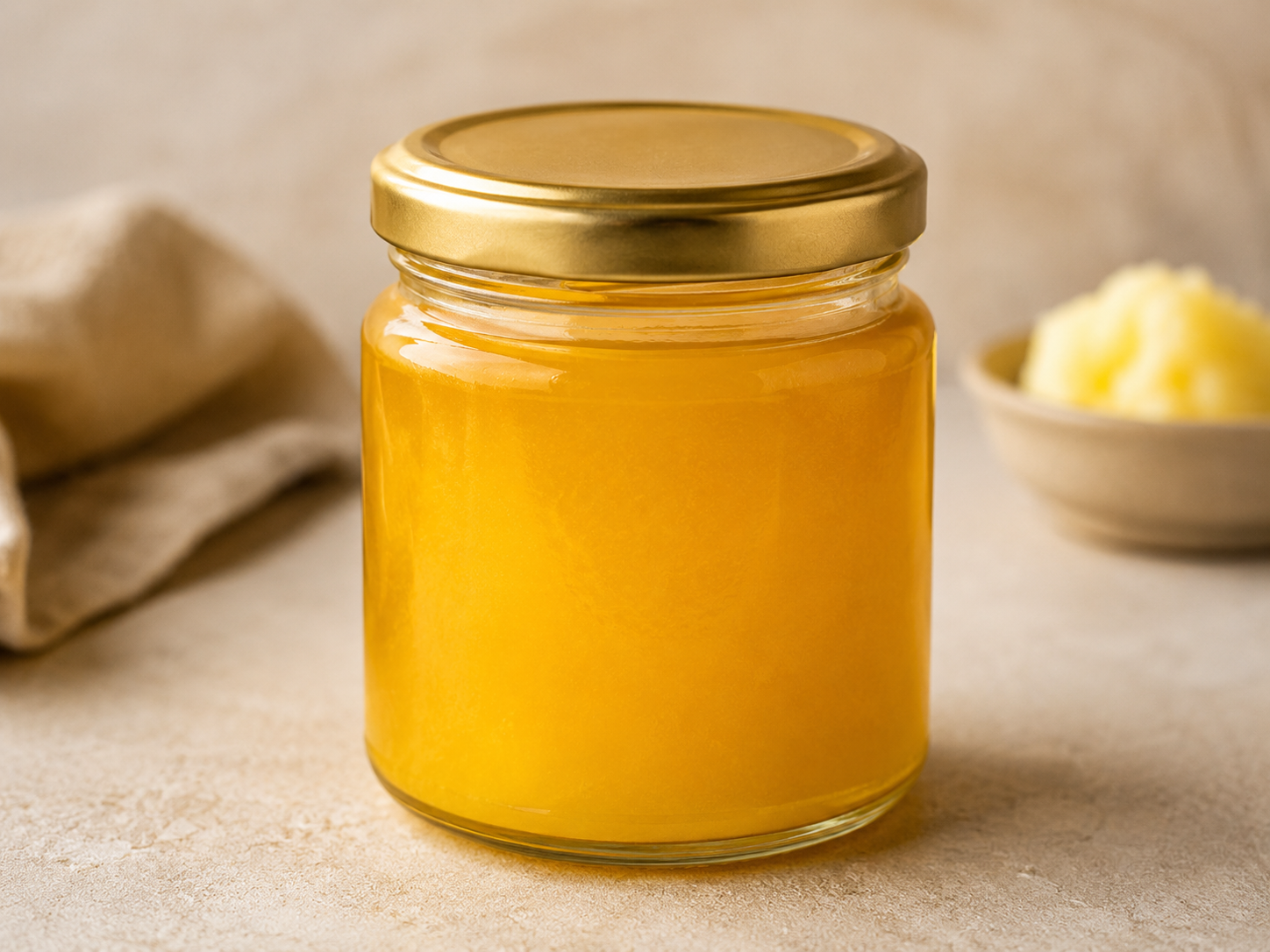
The short answer is yes. Ghee is clarified butter, which means the water and milk solids have been cooked out, leaving almost pure butterfat. Because of its low moisture content, it has a longer shelf life than regular butter and many dairy products. Bacteria need water to grow, and ghee barely has any, so it sits happily at room temperature in a way fresh butter never could.
But “shelf-stable” is not the same as “immortal.” Ghee can still go bad over time, mostly through rancidity rather than the kind of spoilage you’d see with dairy. Even with proper storage, it can spoil over time if exposed to heat, air, or moisture. I’ll get to what rancid ghee looks and smells like in a minute, because that’s the part that actually matters for your skin.

How Long Does Ghee Last?
Here’s the rough timeline I go by. Unopened in a cool, dark place, a jar of ghee will keep for 12 to 24 months. Once you open it, you’re looking at a shorter window. Most makers suggest using it within 3 to 6 months of opening, though in practice it often stays fine longer than that if you’ve stored it well.
One thing worth knowing: that date stamped on the jar isn’t a hard cutoff. It’s a best-by date that tells you how long the product stays at its freshest, and it has little to do with actual spoilage. I’ve used ghee a couple of months past its date with no issue, because I trust my nose more than the label. If you want a deeper dive into how ghee stacks up against other fats, Healthline has a solid breakdown.
For skincare specifically, I treat the open jar a little more cautiously than I would for cooking, just because I’m dipping clean fingertips in regularly. More on that below.
So does ghee go bad faster once it’s open? A little, yes, but not as fast as the date suggests.
Signs Your Ghee Has Gone Bad
This is the part I actually want you to remember, because your senses are better than any expiry date. Fresh ghee smells nutty and a bit sweet, and it’s smooth and golden. When it turns, a few things change.
The biggest tell is smell. A strong, sour, or sharp smell is the most common sign of rancid ghee. If you open the jar and your nose recoils even slightly, trust that. Smell really is the most reliable test there is.
Then there’s appearance and texture. A sour smell, an off taste, or any visible mold all mean the jar should go. Any mold at all, and the whole thing gets tossed, no scraping off the top. I learned that one the hard way with a jar I’d left near a sunny window.
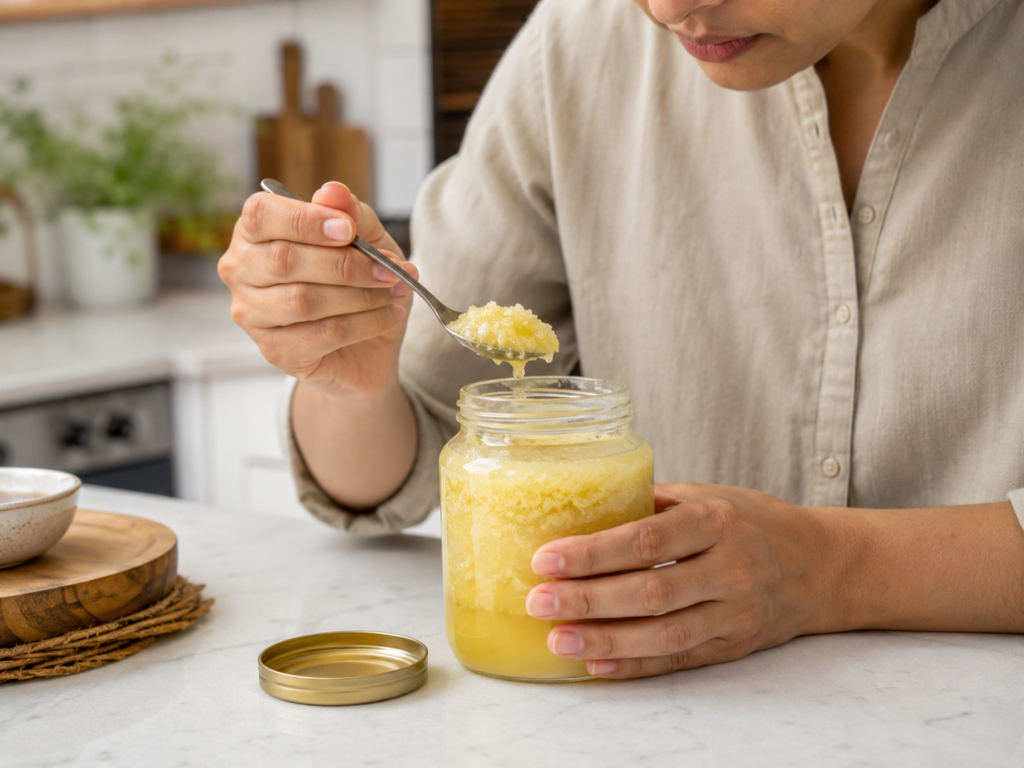
A quick note so you don’t bin a perfectly good jar: a granular or grainy texture, especially in slow-cooked traditional ghee, is normal and often a sign of quality, not spoilage. Slight color shifts between batches are fine too. It’s smell and mold you’re watching for, not graininess.
Why Ghee Goes Rancid (And How to Slow It Down)
So why does ghee go bad in the first place? It comes down to oxidation. Ghee turns when the fats break down after being exposed to oxygen, heat, or light. So everything about good storage comes down to keeping those three things away from your jar.
That’s also why a damaged skin barrier and a degraded fat have something in common, they both break down faster under stress. If you’re curious about why fat quality matters once it’s on your face, I get into that more in my piece on whether ghee clogs pores. Spoiled, oxidized fat is exactly the kind you don’t want sitting on your skin overnight.
The good news is that slowing oxidation is simple. It mostly comes down to a clean spoon and a tight lid, which I’ll cover next.
How to Store Ghee for Skincare
Storing ghee for your face isn’t really different from storing it for cooking, but I’m a bit fussier with my bathroom jar. The way you store it is the main thing that decides whether your ghee goes bad early, so here’s what works.
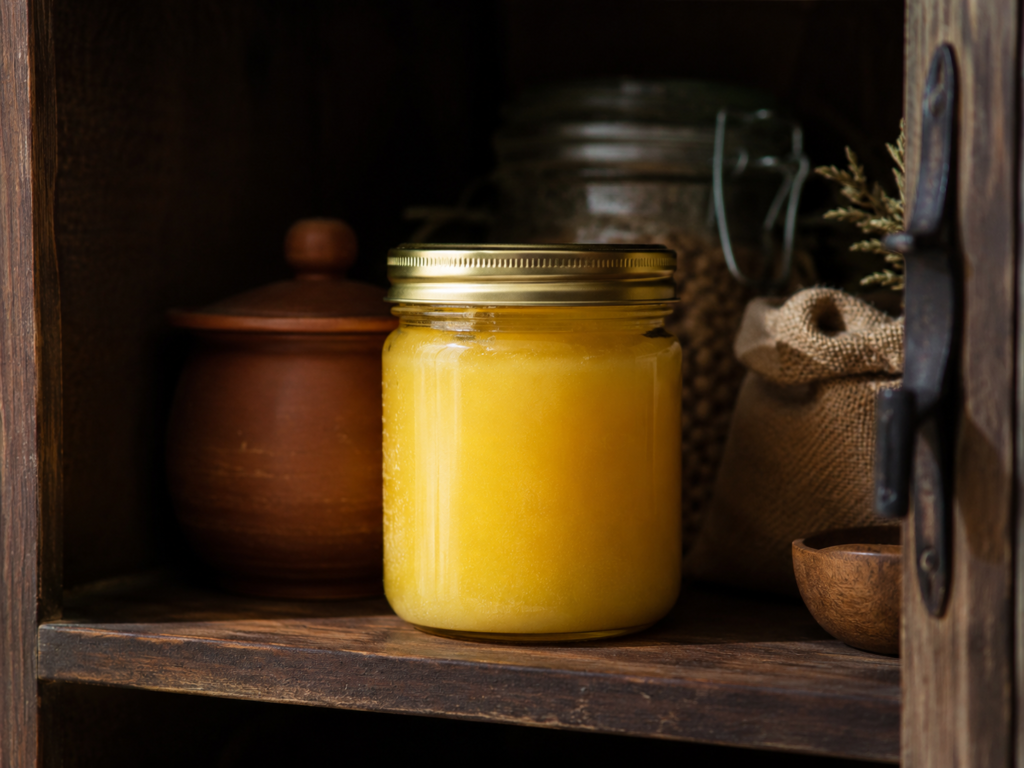
Use an airtight, dry container, ideally a glass jar with a tight lid, and keep it away from light, moisture, heat, and air. A cupboard or a shelf out of direct sun is perfect. Always scoop with a clean, dry utensil. This is the big one for skincare, because every time you dip a damp finger in, you’re introducing water and bacteria that shorten the jar’s life.
If you live somewhere hot or humid, refrigerate it. In a hot or tropical climate, keeping ghee in the fridge stops it from turning sooner. I keep mine at room temperature in Brooklyn most of the year, but I move it to the fridge in the thick of summer when my apartment turns into a sauna. It firms up in the cold, so I just warm a little between my fingers before applying.
Once you know your jar is good and well stored, the actual application is the fun part. I’ve got a full walkthrough on putting ghee on your skin at night if you want the routine.
Does Ghee Have Dairy?
People ask me this a lot, usually because they’re worried about a dairy sensitivity on their skin. Ghee is made from butter, so it starts as dairy, but the clarifying process removes most of the milk solids, which is where the lactose and casein live. That’s why a lot of people who react to butter tolerate ghee, on the skin and in food.
That said, most isn’t all, and trace amounts can remain depending on how carefully it’s made. If you’ve got a serious dairy allergy, patch test before you put it anywhere near your face, and talk to your doctor. I’m cautious about this one because skin reactions aren’t worth the gamble.
Cooking Ghee vs Skincare Ghee
This is where the question of whether ghee goes bad gets real for skincare. Kitchen ghee picks up steam, splatter, and crumbs, and all of that moisture and debris speeds up spoilage. Water, crumbs, or a dirty spoon are some of the fastest ways to make a jar turn.
So I keep a dedicated little jar for skincare, scoop it with a clean spoon, and never let it anywhere near a hot pan. It’s a minor habit, but it’s the reason my skincare ghee lasts and my nose stays happy.
When to Toss It
When in doubt, throw it out. Rancid fat isn’t worth saving over a few dollars, and it’s definitely not something you want on your skin. Does ghee go bad in a way that’s dangerous? Usually it just smells off and loses its goodness rather than making you seriously ill, but oxidized fat is the opposite of what you’re after in a skincare ingredient.
My rule is simple: if it smells sour instead of nutty, if there’s any mold, or if the color looks really off, it goes in the bin. Everything else, a good jar stored in a cool dark spot with a clean spoon, will treat your skin well for months. That’s really all there is to whether ghee goes bad, and how to keep yours from getting there.