
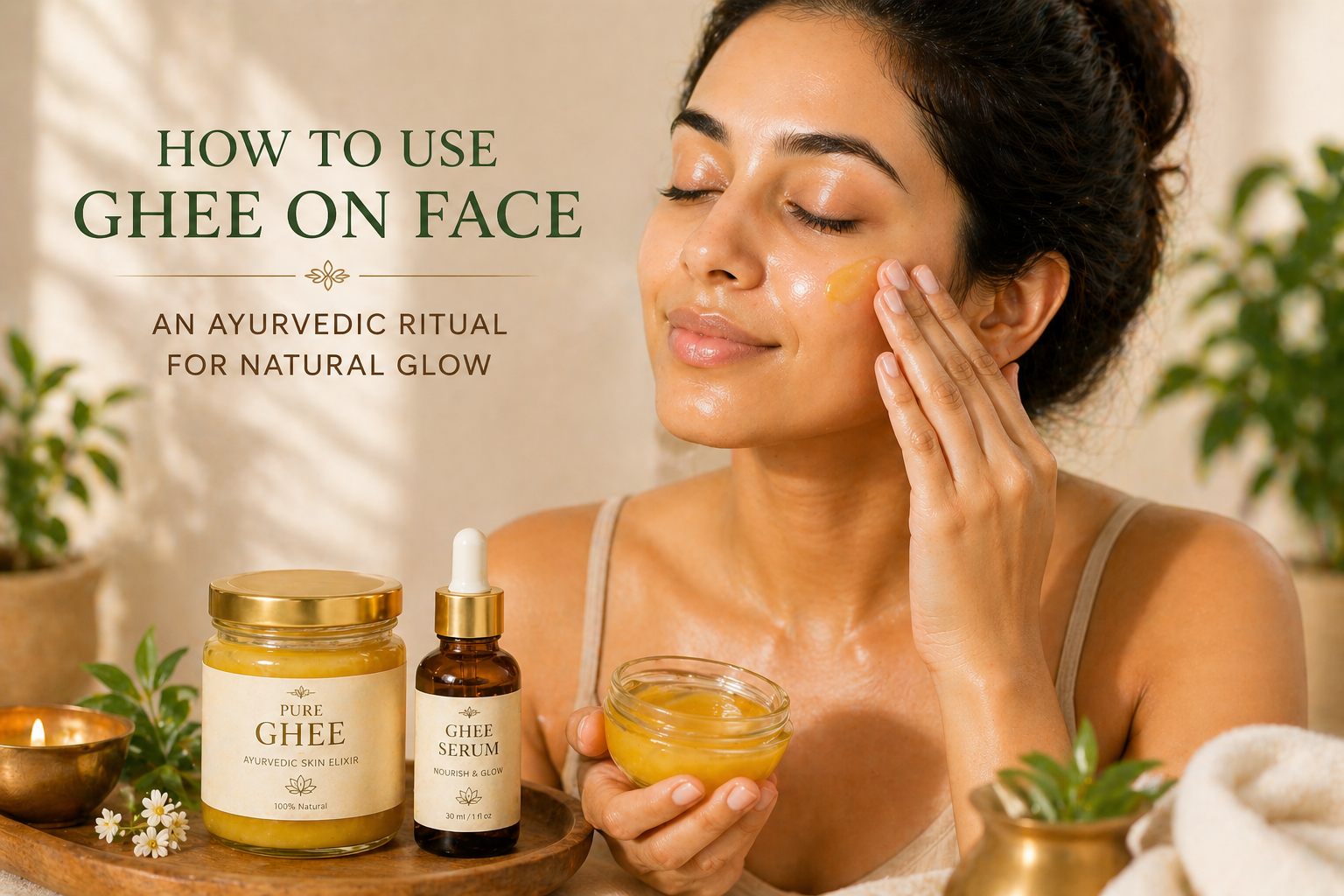
How to Use Ghee on Your Face: A Step-by-Step Ritual Guide
If you’ve been curious about how to use ghee on face but weren’t sure where to start, this guide is for you. Ghee has been used in Ayurvedic facial rituals for thousands of years, but applying it effectively requires a little more intention than just scooping it out of a jar and hoping for the best.
Here’s a practical, step-by-step approach that works.
Why Use Ghee on Your Face at All?
Before getting into the how, it helps to understand the why.
Ghee is clarified butter with a fatty acid profile that closely mirrors the natural lipids your skin produces. This biocompatibility means your skin recognizes it, absorbs it efficiently, and responds well to it. It’s rich in fat-soluble vitamins A, D, E, and K, all of which play documented roles in skin health, from cell turnover to collagen synthesis to barrier repair.
Its butyric acid content gives it anti-inflammatory properties that make it particularly useful for skin dealing with redness, sensitivity, or post-breakout marks. And unlike many modern moisturizers, ghee doesn’t contain water, synthetic emulsifiers, or preservatives. What you’re applying is a single, pure ingredient that has been refined to remove everything except the beneficial fat.
Knowing how to use ghee on face properly unlocks all of these benefits without the risk of congestion or greasiness that comes from applying it incorrectly.
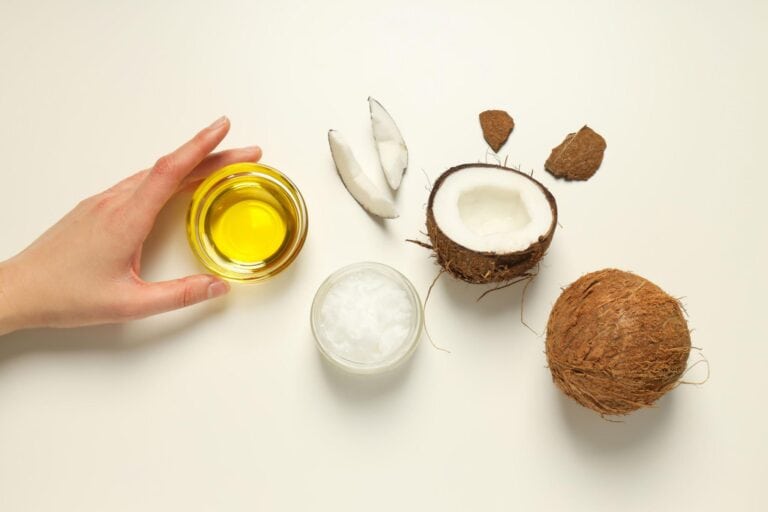
Not all fats behave equally on skin. If you’re wondering how ghee compares to other popular options like coconut oil, this breakdown of ghee vs coconut oil for skin explains exactly why they behave so differently on the face.
Choosing the Right Ghee for Your Face
Not all ghee is appropriate for facial use. The quality, sourcing, and processing method matter significantly.
For skin application, you want ghee that is grass-fed, slow-cooked, and free from additives. The color should be a deep golden yellow, which indicates a high beta-carotene content from grass-fed cows. Pale or white ghee has typically come from grain-fed animals and contains fewer of the fat-soluble vitamins that make ghee useful for skin.
If you’re using a ghee-based skincare product rather than raw ghee, look for formulations where ghee appears near the top of the ingredient list. Products that list ghee as one of the first three to five ingredients will deliver more meaningful skin benefits than those where it appears as a minor component near the bottom.
Step-by-Step: How to Use Ghee on Face
There are 2 ways to use ghee on your face :
Raw ghee directly from the jar, or a formulated ghee-based serum. The steps below cover the raw ghee method. If you prefer a simpler daily approach, skip to the section below on formulated serums , the process is significantly more straightforward.
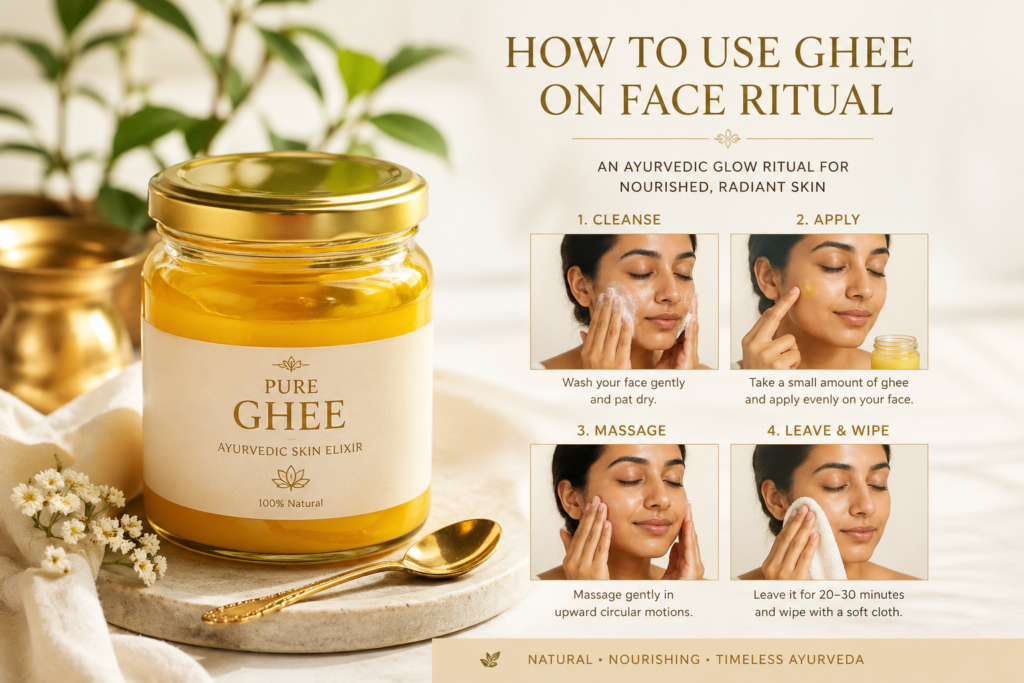
Step 1 : Start with clean skin
This is non-negotiable. Applying ghee to skin that still has makeup, sunscreen, or the day’s pollution on it will trap those impurities against your pores. Cleanse thoroughly with a gentle cleanser and pat dry, leaving the skin slightly damp. The slight dampness helps the ghee absorb more evenly.
Step 2 : Warm the ghee between your fingertips
Take a very small amount, about the size of a grain of rice for normal to oily skin, or a small pea for dry skin. Ghee is solid at room temperature but melts instantly on contact with body heat. Press it between your fingertips for five to ten seconds until it becomes liquid.
Step 3 : Press, don’t rub
Apply the melted ghee to your face using pressing motions rather than rubbing. Start at the center of your face and work outward. The pressing action encourages the oil to penetrate the skin rather than just sitting on the surface. Give particular attention to dry areas like the cheeks, around the nose, and the forehead.
Step 4 : Include a gentle facial massage
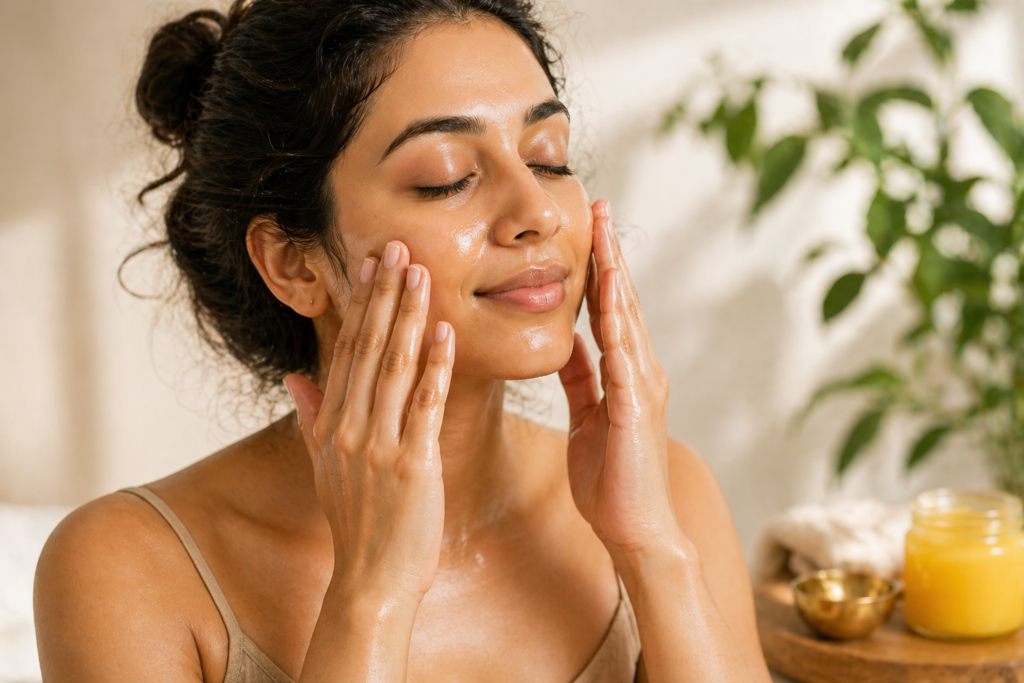
Once the ghee is applied, take two to three minutes to massage your face using upward, circular movements. In Ayurveda, facial massage, or Mukhaabhyanga, is considered as important as the ingredient itself. The massage stimulates lymphatic drainage, boosts circulation, and helps the ghee penetrate more deeply. Use your fingertips and work from the jawline upward.
Step 5 : Leave it or layer it
For a nighttime ritual, you can leave the ghee on as your final step and let it work overnight. Your skin will absorb most of it while you sleep, and you’ll wake up with noticeably softer, more supple skin.
For daytime use, apply a thin layer and wait five minutes for it to absorb before applying any additional products like SPF. A very light application of ghee works well under makeup for dry skin types, though oilier skin types may prefer to keep it as a nighttime treatment only.
Step 6 : Or simply use a formulated ghee serum
Everything described in steps 1 to 5 applies to raw ghee used as a facial treatment. It works, but it requires some intention and a little practice to get the texture and quantity right.
If you want the benefits of ghee on your face without any of that, a formulated serum changes the equation entirely.
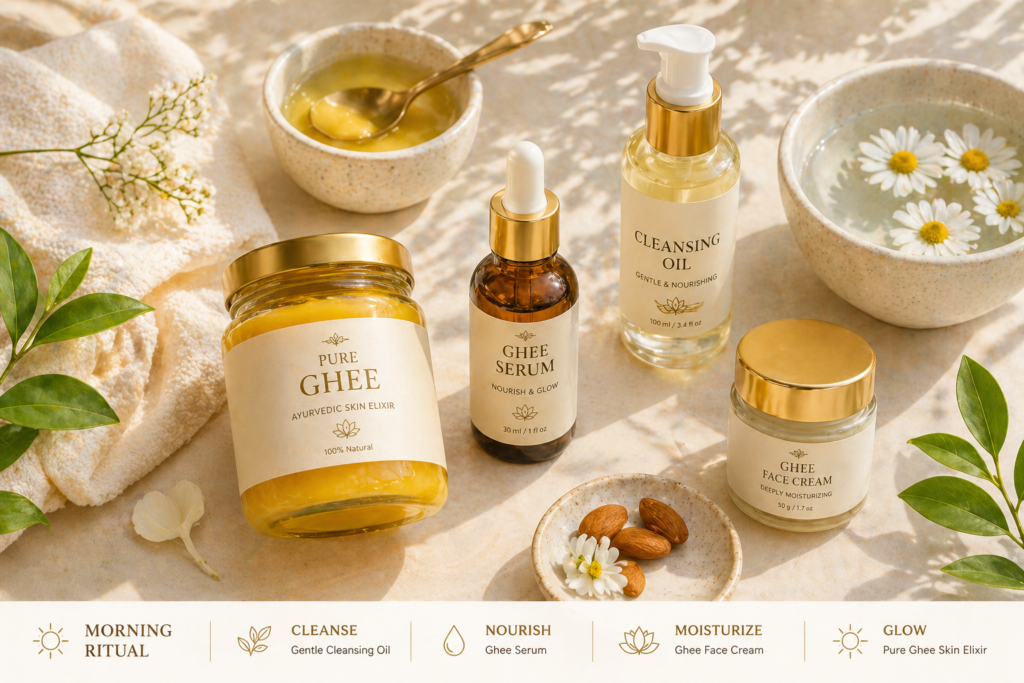
The Shvéta Labs Face Serum is ghee and Damask Rose in a lightweight, ready-to-use formula. The routine is this:
Cleanse your face, apply a few drops directly to clean skin, done. No warming between your fingers, no measuring, no risk of over-applying. The texture is already light and skin-ready, it absorbs in seconds, and there are no extra steps.
For most people, this is the version of a ghee facial ritual they will actually maintain every day. And daily consistency is what makes any skincare ingredient deliver results.
How Often Should You Use Ghee on Your Face?
For most skin types, using ghee on the face two to three times per week is a good starting point. This gives your skin time to adapt and lets you monitor how it responds before committing to daily use.
If your skin responds well after two to three weeks, you can increase to daily use, typically as part of your evening routine. For very dry or mature skin, daily use is often well tolerated from the beginning.
For oily or combination skin, once or twice a week as a targeted treatment rather than an all-over application tends to work better. Focus on dry areas and avoid the T-zone.
Common Mistakes to Avoid
Using too much is the most common error. Ghee is concentrated. A little goes a long way, and using more than your skin can absorb will leave it feeling greasy without delivering additional benefits.
Applying to unwashed skin, as mentioned earlier, is the second most common mistake. Ghee will lock in whatever is already on your skin, good or bad.
Expecting overnight transformation is the third. Ghee is a nourishing, restorative ingredient. Its benefits accumulate over weeks of consistent use rather than appearing dramatically after a single application.
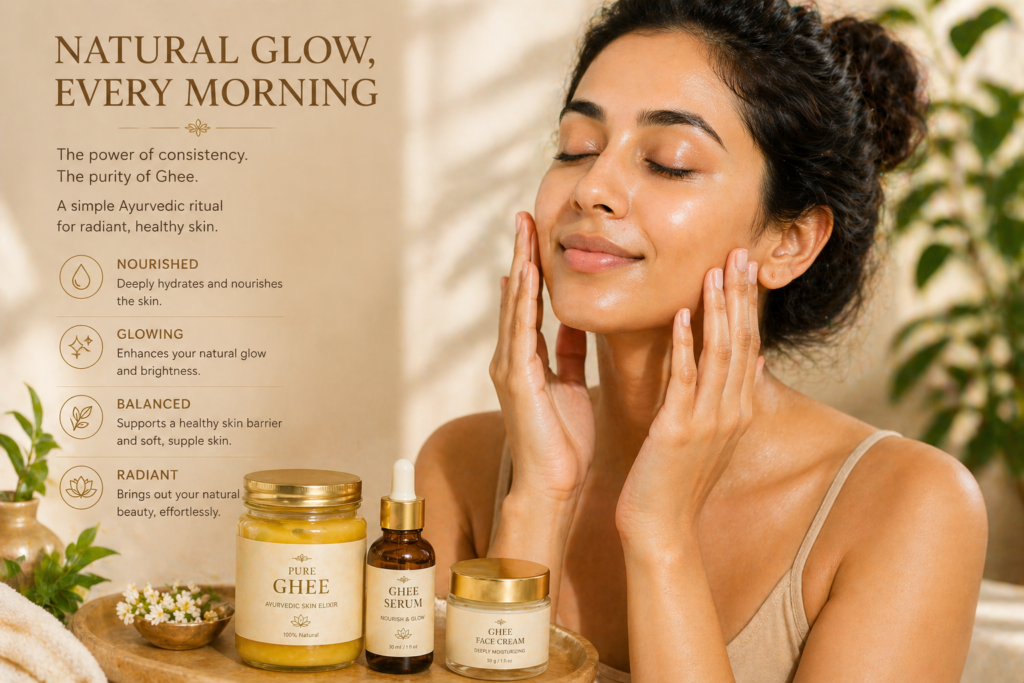
The Bottom Line
Learning how to use ghee on face properly comes down to three things: starting with clean skin, using a small amount warmed in your fingertips, and applying it with intention rather than speed.
Done consistently, it’s one of the most nourishing things you can do for your skin. Ayurvedic practitioners have known this for thousands of years. The rest of the beauty world is just catching up.



3 Comments