
Ghee vs Coconut Oil for Skin: Which Is Better for You?
Ghee vs coconut oil for skin is one of those debates that comes up constantly in natural beauty circles. Both are ancient ingredients with devoted followings. Both are rich in fatty acids and have been used in traditional wellness practices for centuries. And both have been somewhat mythologized by the clean beauty world.
But they are not the same ingredient, and they don’t behave the same way on skin. Here is an honest, side-by-side comparison so you can decide which one actually belongs in your routine.
What Is Ghee and What Is Coconut Oil?
Before comparing the two, it helps to be clear on what each ingredient actually is.
Ghee is clarified butter. Whole butter is slowly cooked until the water evaporates and the milk solids are removed, leaving behind pure golden fat. It’s rich in fat-soluble vitamins A, D, E, and K, as well as butyric acid, a short-chain fatty acid with documented anti-inflammatory properties.
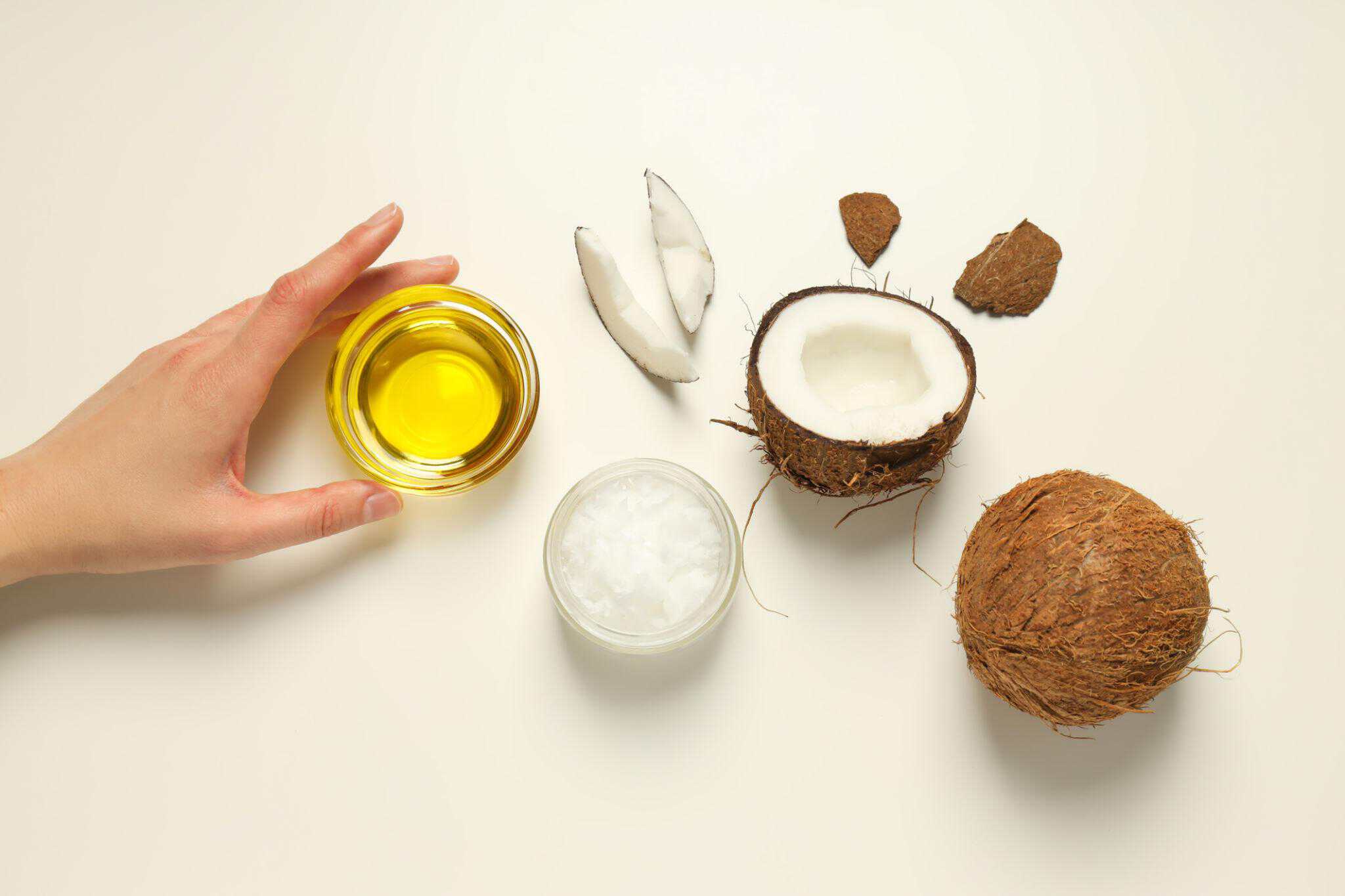
Coconut oil is extracted from the meat of mature coconuts. It’s predominantly made up of saturated fats, particularly lauric acid, which makes up roughly 50% of its fatty acid profile. Lauric acid has well-documented antibacterial properties, which is one of the reasons coconut oil became so popular in natural skincare.
Both are solid at room temperature and melt on contact with skin. That’s roughly where the similarities end.
Fatty Acid Profile: How They Differ
The fatty acid composition of an oil largely determines how it behaves on skin.
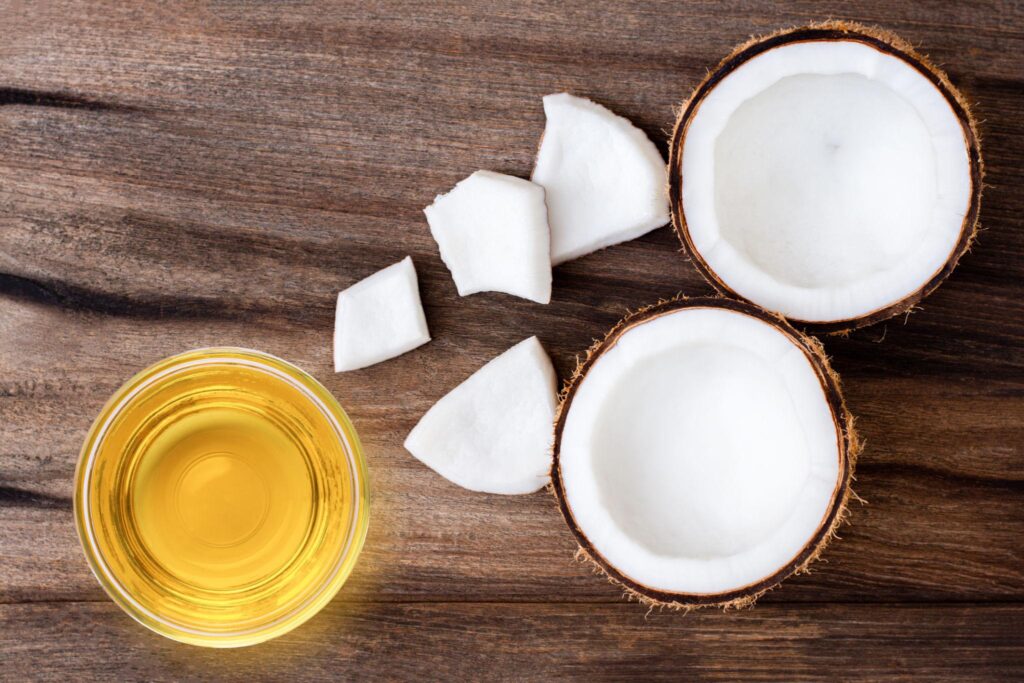
Coconut oil is roughly 90% saturated fat, dominated by lauric acid. Saturated fats tend to be more occlusive, meaning they sit on the surface of the skin and create a barrier rather than penetrating deeply. This can be beneficial for sealing in moisture, but it also means coconut oil doesn’t absorb as cleanly as other oils.
Ghee has a more complex fatty acid profile. It contains saturated fats, but also a meaningful proportion of monounsaturated and polyunsaturated fats, including Omega-3, Omega-6, and Omega-9. This broader profile more closely mirrors the natural lipid composition of human skin, which is why ghee is described as biocompatible. It integrates with the skin rather than sitting on top of it.
For deep nourishment, ghee has the edge. For surface-level barrier support, coconut oil performs well.
Comedogenic Rating: Which Is Safer for Acne-Prone Skin?
This is where the comparison gets particularly interesting.
Coconut oil has a comedogenic rating of 4 out of 5. That’s high. Despite its popularity in natural beauty circles, coconut oil is one of the more pore-clogging ingredients available, which is why many people with oily or acne-prone skin find it causes breakouts.
Ghee has a comedogenic rating of 2 out of 5. That places it in the low to moderate range, making it significantly safer for congestion-prone skin than coconut oil.
| Ingredient | Comedogenic Rating |
| Ghee | 2 |
| Coconut Oil | 4 |
| Argan Oil | 0 |
| Jojoba Oil | 2 |
| Rosehip Oil | 1 |
If you have oily, combination, or acne-prone skin and you’ve been using coconut oil on your face, switching to ghee is worth considering. The difference in comedogenic rating is significant enough to matter in practice.

Vitamins and Nutrients: A Clear Winner
When it comes to micronutrient content, ghee vs coconut oil for skin isn’t really a close contest.
Ghee is naturally rich in fat-soluble vitamins A, D, E, and K. Vitamin A supports cell turnover and collagen production. Vitamin E is one of the most researched antioxidants for skin health. Vitamin D plays a role in skin barrier function. Vitamin K has been studied for its role in reducing dark circles and improving skin elasticity.
Coconut oil contains very little in the way of fat-soluble vitamins. Its primary nutritional contribution to skin is its fatty acid content, particularly lauric acid.
For anyone looking to nourish their skin with bioavailable vitamins as well as fatty acids, ghee delivers meaningfully more.
Anti-Inflammatory Properties
Both ingredients have anti-inflammatory properties, but through different mechanisms.
Coconut oil’s lauric acid has antibacterial and antifungal properties that can help with inflammation caused by bacterial overgrowth on the skin. This is why it’s sometimes recommended for conditions like fungal acne.
Ghee’s butyric acid has direct anti-inflammatory effects. Butyric acid has been studied for its role in reducing inflammatory markers in the gut and on the skin. For inflammatory skin conditions like eczema, redness, or general sensitivity, ghee’s anti-inflammatory profile is particularly relevant.
For general skin inflammation and redness, ghee has a more direct mechanism. For bacterial-related inflammation, coconut oil’s lauric acid is useful.

Texture and Absorption
This is one of the most noticeable practical differences between the two ingredients.
Coconut oil melts quickly on contact with skin but leaves a noticeable oily film. For many skin types, this film doesn’t fully absorb, leaving the skin feeling greasy. In hair, this can be a benefit for very dry or coarse hair. On the face, it’s often too heavy for daytime use.
Ghee absorbs more cleanly. Its biocompatibility with human skin lipids means it integrates rather than sits. Applied in appropriate amounts, ghee doesn’t leave the same greasy residue. This makes it more practical for use in serums and lightweight formulations designed for daily use.
Ghee vs Coconut Oil for Skin: Which Should You Choose?
The honest answer is that it depends on your skin type and what you’re trying to achieve.
Choose ghee if you have dry, sensitive, or combination skin. If you want deeper nourishment from fat-soluble vitamins. If you have acne-prone skin and want a lower comedogenic option. If you want an ingredient that absorbs cleanly rather than sitting on the surface.
Choose coconut oil if you have very dry, non-acne-prone skin that benefits from occlusive ingredients. If you’re dealing with fungal acne or bacterial-related skin issues. If you’re using it as a body moisturizer rather than a face treatment, where the higher comedogenic rating matters less.
For most face applications, ghee is the more versatile and skin-compatible choice. Coconut oil has a legitimate place in natural beauty, but its comedogenic rating makes it unsuitable for a significant proportion of skin types when used on the face.

How to Use Ghee in Your Skincare Routine
If you’re ready to give ghee a try, the easiest way to start is with a well-formulated ghee-based product rather than raw ghee straight from the jar.
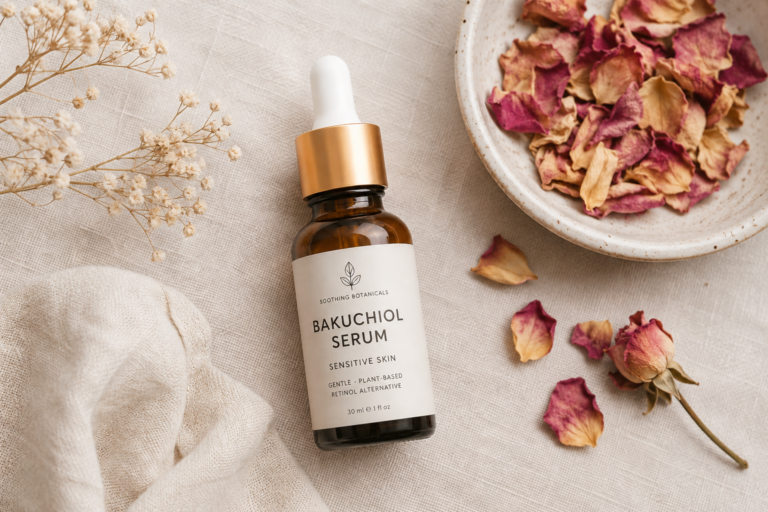
The Shvéta Labs Ghee and Rose Face Serum is a good starting point for the skin. Ghee is combined with Damask Rose in a lightweight formula that absorbs quickly and works for most skin types, including combination and sensitive skin.
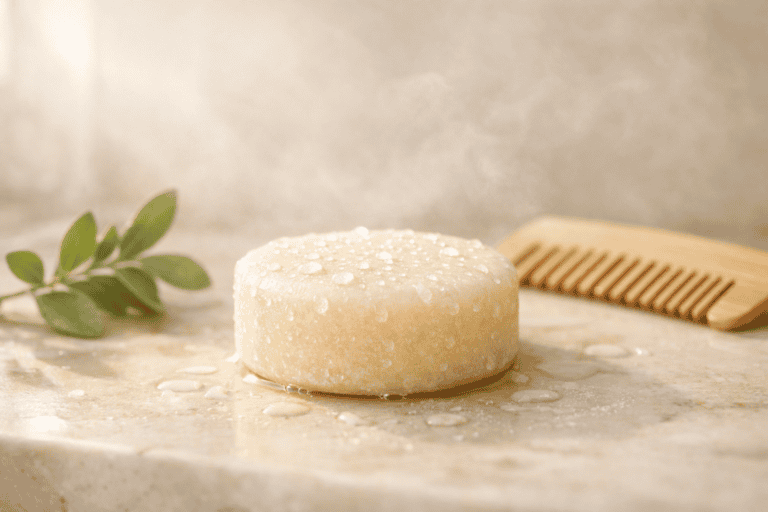
For hair and scalp, the Shvéta Labs Ghee Shampoo Bar uses ghee as a base alongside coco glucoside, a coconut-derived cleanser that lathers without stripping. It’s a good example of how ghee and coconut-derived ingredients can work together effectively when formulated thoughtfully.
The Bottom Line
Ghee vs coconut oil for skin comes down to this: ghee is more biocompatible, less comedogenic, and richer in fat-soluble vitamins. Coconut oil is more occlusive and has stronger antibacterial properties through its lauric acid content.
For face use, especially for combination, sensitive, or acne-prone skin, ghee is the stronger choice. For body use or very dry skin types, coconut oil remains a solid option.
The best approach is understanding what each ingredient actually does, rather than following the ingredient of the moment.




One Comment