Rice Bran Oil for Hair: The Japanese Secret for Shine and Strength
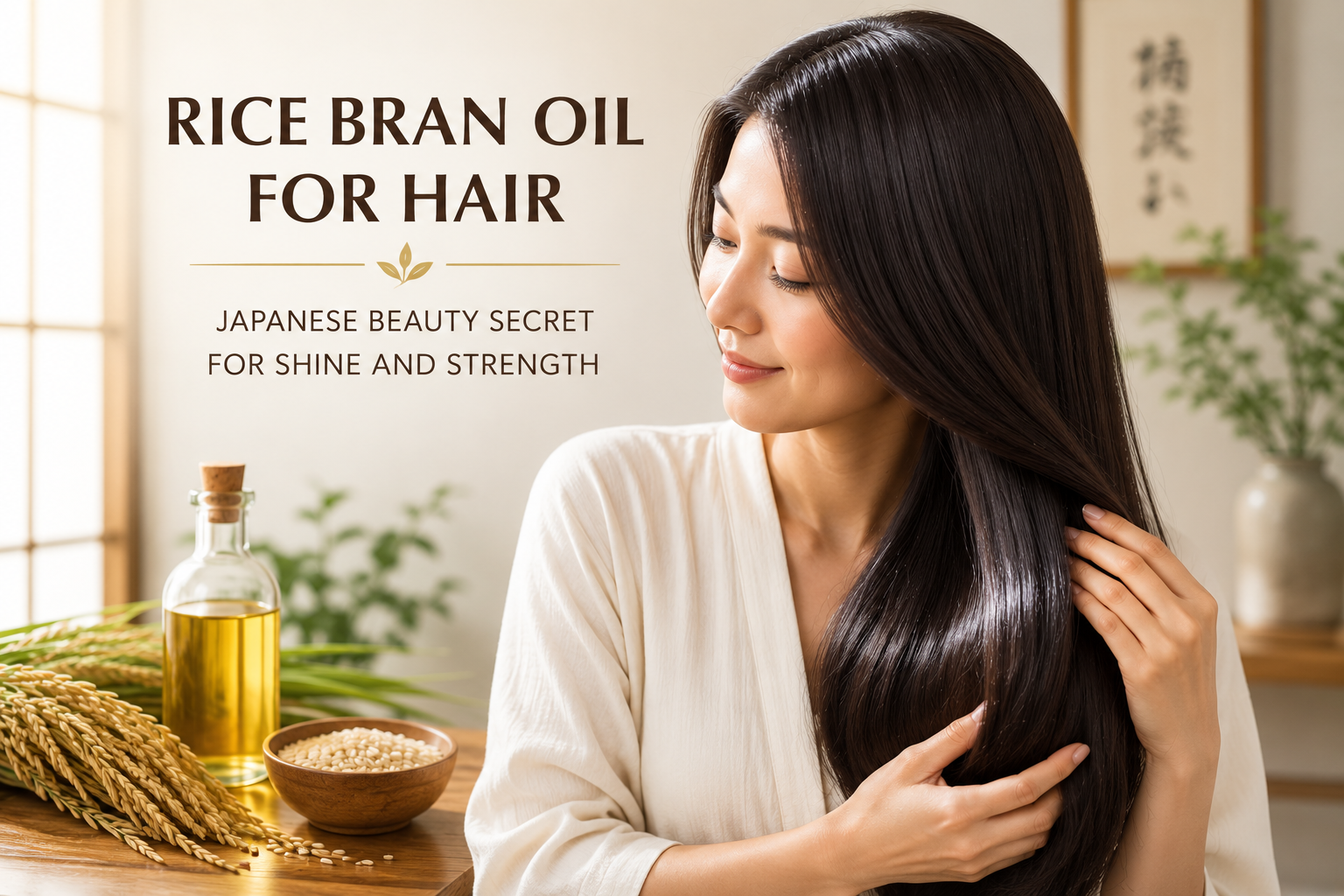
Rice bran oil for hair is not a new discovery. Japanese women have been using it for centuries, long before the Western beauty industry started paying attention. And while trends come and go, this particular ingredient has stayed relevant for a simple reason: it works, and it works consistently.
Here’s what it actually does, why the science backs it up, and how to use it.
Where Rice Bran Oil Comes From
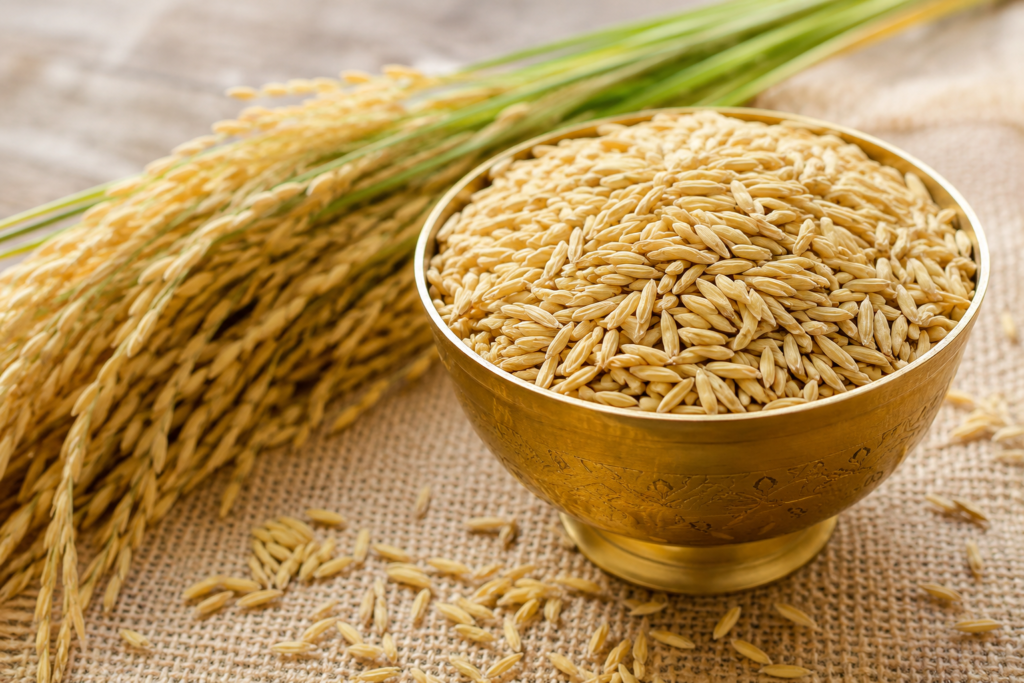
Rice bran oil is extracted from the hard outer layer of the rice grain, the part that sits between the husk and the white kernel inside. It’s a byproduct of rice milling, which makes it one of the more sustainable ingredients in natural hair care.
In Japan, the tradition goes back a long time. Geishas historically used the water left over from washing rice to cleanse their skin and hair. Rice bran oil followed as the concentrated, more potent version of that same practice. It has a warm golden color, absorbs quickly, and has almost no scent, which makes it easy to work with.
What makes it interesting from a hair perspective isn’t the history. It’s the composition.
What’s Actually in Rice Bran Oil
The reason rice bran oil for hair performs so well comes down to a compound called gamma-oryzanol. It’s unique to rice bran and does three things simultaneously: it reduces oxidative stress on the scalp, has anti-inflammatory properties, and acts as a natural UV filter. Most hair oils don’t offer all three in a single ingredient.
On top of that, rice bran contains both tocopherol and tocotrienol forms of vitamin E, at concentrations of around 860 ppm. That’s higher than most vegetable oils and significantly higher than what you’d find in coconut or argan oil. Vitamin E is one of the most well-researched antioxidants for scalp health, and having it in both forms matters.
The fatty acid profile, oleic acid, linoleic acid, and palmitic acid, rounds out the picture. These are the building blocks that nourish the hair shaft, improve elasticity, and help the hair hold onto moisture between washes.
Then there’s the hair growth research, which is genuinely impressive. A 2014 study in Biological and Pharmaceutical Bulletin found that rice bran extract promoted hair growth to a similar extent as 3% minoxidil in animal models. More hair follicles were induced into the active growth phase. For a natural ingredient with no side effects, that’s a meaningful finding.
What Rice Bran Oil for Hair Actually Does
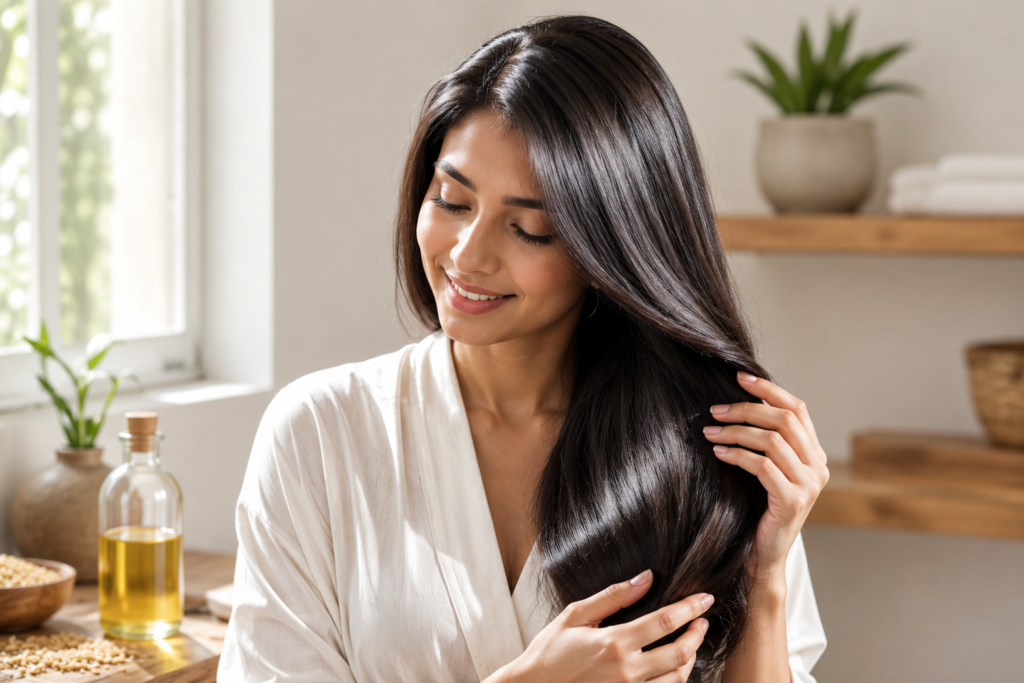
The most obvious benefit is shine. Not an artificial, product-coated kind of shine, but the kind that comes from a smooth cuticle reflecting light evenly. Rice bran oil for hair is light enough to coat the cuticle without weighing the hair down, which is why it works particularly well for fine hair that gets overwhelmed by heavier oils.
Beyond shine, the vitamin E and gamma-oryzanol work on the structural integrity of the hair shaft over time. Hair with better structural integrity stretches slightly under tension instead of snapping. That means less breakage during detangling, less split ends, and better length retention. These changes don’t happen overnight, but after four to six weeks of consistent use, most people notice a real difference.
For the scalp specifically, the anti-inflammatory properties of gamma-oryzanol are worth paying attention to. Scalp inflammation is one of the most common and most overlooked contributors to slow hair growth. Reducing it creates a better environment for the hair follicles to do their job.
The UV protection angle is less talked about but genuinely useful. Sun exposure dries out hair, causes brittleness, and accelerates color fading. Applying rice bran oil for hair before spending time outdoors provides a layer of protection that most other natural oils simply don’t offer.
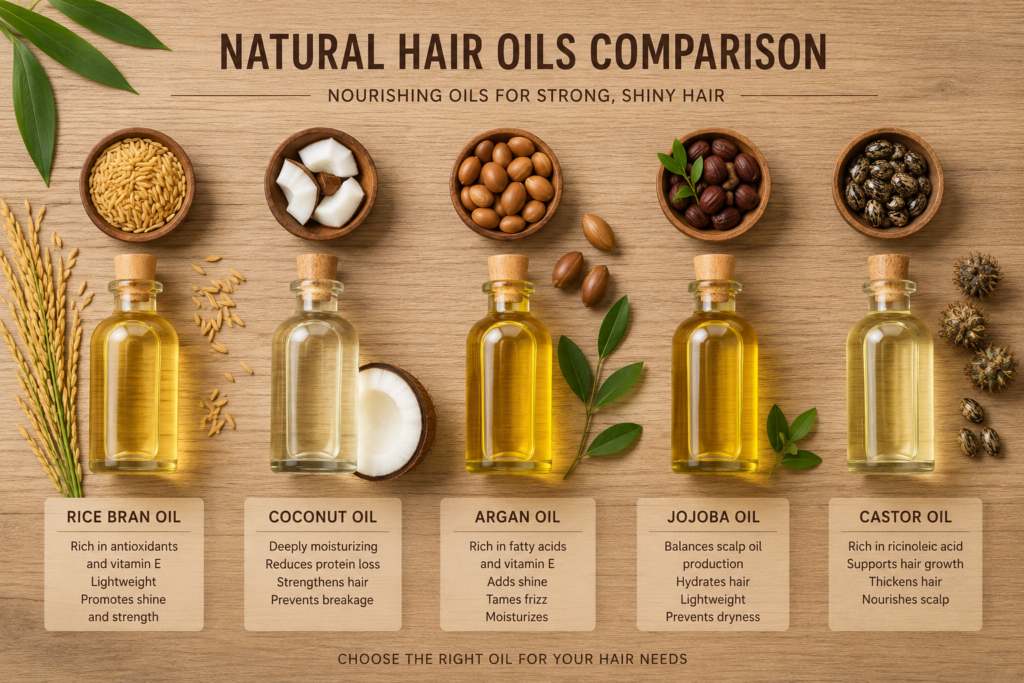
How It Compares to Other Oils
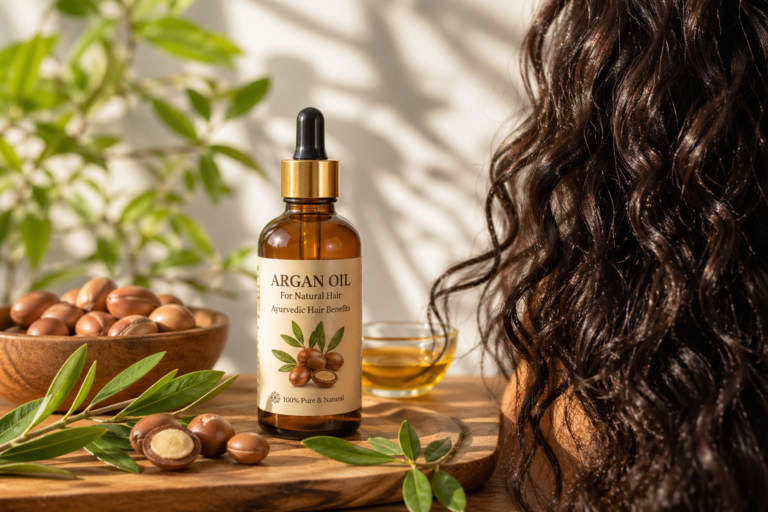
Argan oil is probably the closest comparison. Both are light in texture, both improve shine, and both work well on the hair shaft surface. The difference is that rice bran oil for hair adds the gamma-oryzanol and UV protection that argan oil doesn’t have. For everyday use, they complement each other well rather than competing.
Coconut oil is a different story. It’s heavier, has a comedogenic rating of 4 out of 5, and doesn’t suit oily or sensitive scalps. Rice bran oil is significantly more scalp-friendly and absorbs more cleanly without leaving residue.
Ghee works at a different level entirely. Where rice bran oil for hair addresses the surface of the hair shaft and the scalp environment, ghee nourishes more deeply and supports the lipid barrier at the root level. This is why combining the two in a conditioning product makes sense from both an Ayurvedic and a practical standpoint. The Ayurvedic hair care approach uses layered ingredients that address different dimensions of hair health at the same time, and ghee with rice bran oil is one of the more effective combinations in that framework.
How to Use Rice Bran Oil for Hair
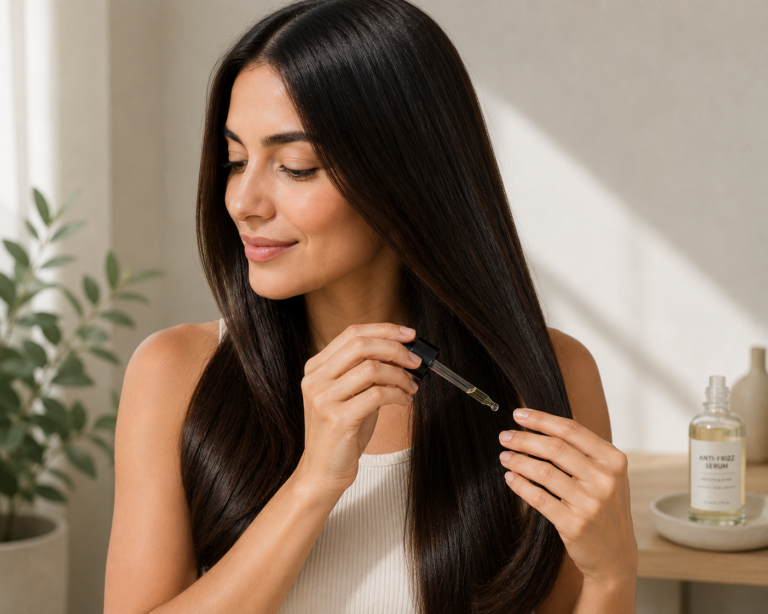
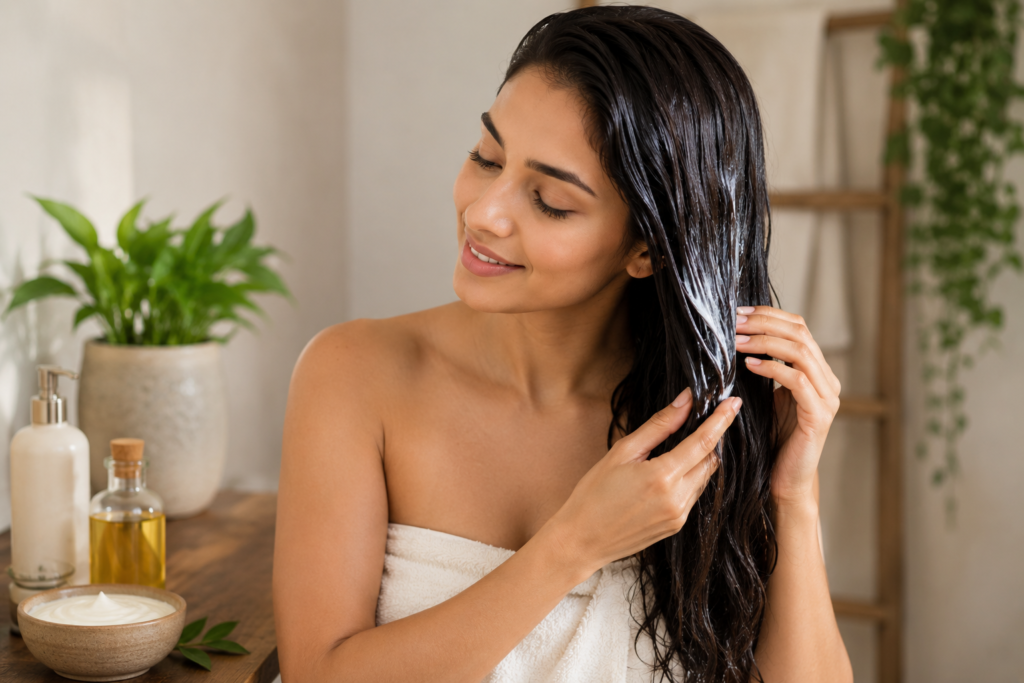
The simplest approach is applying a few drops to damp hair after washing, focusing on the mid-lengths and ends. The light texture absorbs quickly and doesn’t require rinsing. This alone will improve shine and reduce frizz noticeably over time.
For a deeper scalp treatment, apply rice bran oil for hair directly to the scalp before washing, massage for two to three minutes in circular movements, and leave it on for at least 30 minutes before shampooing. Do this once a week. The massage is as important as the oil. It stimulates blood flow to the follicles and helps the gamma-oryzanol reach the scalp where it can do its work.
On dry hair, a single drop warmed between your palms and smoothed lightly over the surface controls flyaways and adds a finishing gloss without weighing anything down. This is the technique most associated with Japanese hair rituals and it takes about ten seconds.
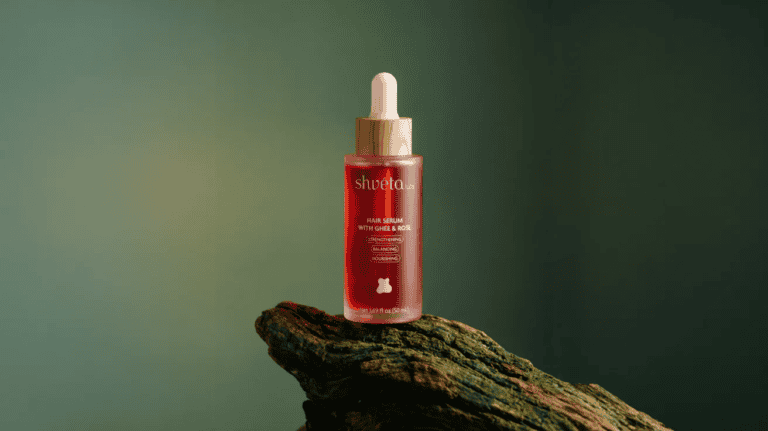
If you’d rather have rice bran oil as part of a formulated product, a conditioning cream that combines it with ghee covers both the surface and deeper nourishment in one step. The Shvéta Labs Hair Conditioning Cream uses ghee and rice bran oil together for exactly this reason. Apply to clean damp hair, leave for a few minutes, rinse. That’s the full process.
Who It Suits Best
Rice bran oil for hair works across most hair types, but it’s particularly well suited for fine or low-porosity hair that gets weighed down by heavier oils, hair that lacks shine or feels dull, color-treated or heat-damaged hair that needs antioxidant protection, and scalps that are sensitive or prone to inflammation.
It’s also a good starting point for anyone moving away from synthetic hair products. It’s light, easy to use, and doesn’t require much adjustment in terms of how much to apply.
The Bottom Line
Rice bran oil for hair is not glamorous. It doesn’t come in expensive packaging and it doesn’t have the marketing machine behind it that some other oils do. What it has is a genuinely impressive nutrient profile, centuries of consistent use in one of the world’s most hair-conscious cultures, and real science supporting its benefits.
Used regularly, rice bran oil for hair delivers on shine, on strength, on scalp health, and on protection. For a natural ingredient, that’s a strong combination.