Is Shea Butter Comedogenic? (And How Ghee Compares)
If you’ve ever asked yourself is shea butter comedogenic before slathering on a rich cream and waking up with a fresh breakout, you’re not alone. The short answer: shea butter sits low on the comedogenic scale, but “low” doesn’t mean “never” for everyone. I’ve spent years swapping rich butters and oils in and out of my own routine, and the comedogenic rating only tells you part of the story.
Let me walk you through what the rating actually means, where shea butter lands, and how it stacks up against ghee, which I reach for more often these days.
What Does Comedogenic Actually Mean?
A comedogenic ingredient is one that tends to clog your pores. “Comedo” is just the dermatology word for a clogged follicle, the thing that turns into a blackhead or a whitehead. So when people ask is shea butter comedogenic, they’re really asking whether it’s likely to block pores and trigger breakouts.
Here’s the part most articles skip: comedogenic ratings were originally based on rabbit ear tests from decades ago, not human faces. They’re a rough guide, not gospel. Your skin type, how much product you use, and what else is in the formula all change the outcome. I’ve seen people break out from “non-comedogenic” products and stay perfectly clear with “moderately comedogenic” ones.
The Comedogenic Scale Explained
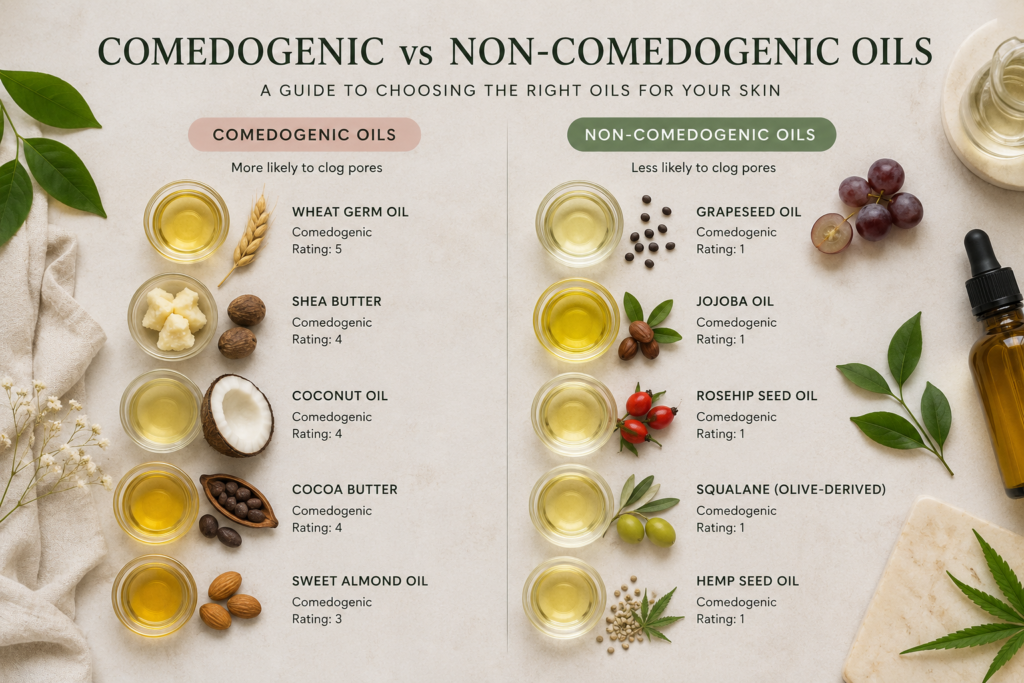
The comedogenic scale runs from 0 to 5. A zero means the ingredient won’t clog pores at all. A five means it’s very likely to. Most oils and butters fall somewhere in the middle, and that’s where the confusion starts.
Here’s the rough breakdown:
0 means non-comedogenic (argan oil, hemp seed oil) 1 to 2 means low (shea butter, jojoba, sunflower oil) 3 means moderate (olive oil, some avocado oil) 4 to 5 means high (coconut oil, cocoa butter, wheat germ oil)
The scale is useful as a starting point, but I treat it like a weather forecast. Helpful for planning, not a promise.
Where Does Shea Butter Fall on the Scale?
The most common answer you’ll find when researching is shea butter comedogenic is a rating of 0 to 2, depending on the source and how refined it is. That puts it on the low end, which is why it shows up in so many body butters and balms for dry, sensitive skin.
So when someone asks is shea butter comedogenic, the honest answer is: usually not very, but it depends on your skin and how you use it. Raw, unrefined shea butter is heavier and richer than the refined stuff, and some people with oily or acne-prone skin do find it too occlusive on the face. On my own skin, I can use it on my body all day long, but on my cheeks it sometimes feels like too much during humid New York summers.
Is Shea Butter Comedogenic for Acne-Prone Skin?
This is the question that actually matters for most people. If you’re acne-prone, a low comedogenic rating is reassuring but not a guarantee. Shea butter is rich in fatty acids and vitamins that support the skin barrier, which is great, but that same richness can feel heavy on skin that’s already congested.
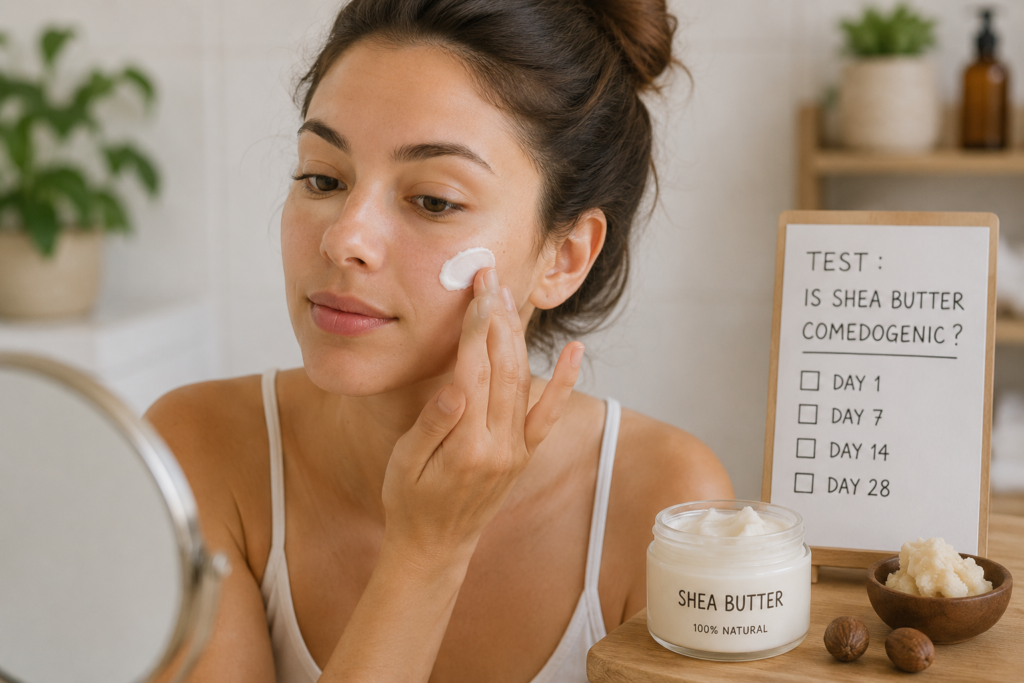
My rule of thumb: patch test on your jaw for a week before committing it to your whole face. And if you’re breakout-prone, use a small amount and watch how your skin responds over a few days, not a few hours.
How Ghee Compares to Shea Butter
Here’s where it gets interesting. Ghee, clarified butter that’s been a staple of Ayurvedic skincare for thousands of years, also lands low on the comedogenic scale, generally around a 1 to 2. So in raw numbers, ghee and shea butter are close cousins.
The difference I’ve noticed is texture and how it absorbs. Properly purified ghee feels lighter to me than raw shea, and it sinks in faster without that waxy film shea can leave behind. If you want the full breakdown on ghee specifically, I went deep on whether ghee clogs pores in a separate piece. Worth a read if you’re weighing the two.
Ghee also has a long history in traditional beauty that shea, for all its merits, doesn’t carry in the same way. If you’re curious about the wider world of ghee in skincare, it’s a rabbit hole worth falling into.
For my own face, I’ve leaned toward ghee-based formulas. A ghee and rose blend like the Face Serum from Shvéta Labs gives me the nourishment I used to get from heavier butters without the heaviness, which matters when you live somewhere with real summers.
Comedogenic vs Non-Comedogenic: What Really Predicts Breakouts
I’ll be blunt: the comedogenic label gets too much credit. What actually predicts breakouts for most people is the total formula, how much you apply, and whether you’re double-cleansing properly at night.
A “non-comedogenic” moisturizer layered over unwashed sunscreen and a full day of city grime will clog you faster than a thin layer of shea on clean skin. So before you swear off shea butter entirely, look at your whole routine.
Best Low-Comedogenic Alternatives to Try
If shea butter doesn’t agree with your face, you’ve got options that stay low on the scale:
Jojoba oil, which mimics your skin’s own sebum and sits around a 2. Argan oil, a true zero that’s light and absorbs cleanly. Squalane, derived from olives or sugarcane, lightweight and rated very low. And ghee, if you want something with a richer feel that still behaves.
I rotate between a few of these depending on the season. There’s no single winner, just what works for your skin right now.
The Bottom Line
So, is shea butter comedogenic? The scale says low, around 0 to 2, which means it won’t clog pores for most people. But “most people” isn’t everyone, and the rating is a guide rather than a guarantee. Patch test, watch your skin, and pay more attention to your full routine than to a single number.
For me, ghee edged out shea on my face for the lighter feel. But shea still earns a permanent spot in my body care, especially in winter. They don’t have to compete. They can just live in different parts of your routine.