Anti Frizz Serum: Do They Actually Work?
If you have ever spent twenty minutes smoothing your hair only to watch it puff back up the second you step outside, you have probably wondered whether an anti frizz serum is worth the money or just another bottle that promises everything and changes nothing. I have asked myself the same thing more times than I want to admit, usually standing in a humid subway station in Brooklyn watching my hair do its own thing.
So let me save you the trial and error. Some of these serums work, some don’t, and the difference comes down to what’s actually inside the bottle and how you use it.
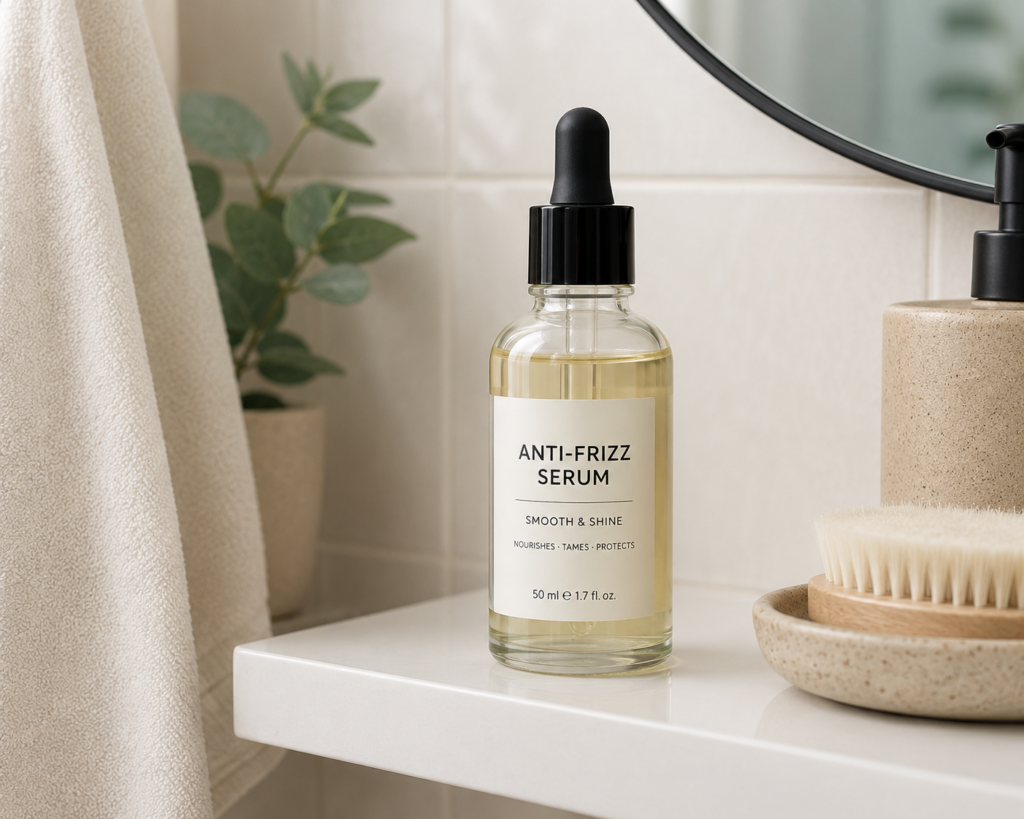
What Is an Anti Frizz Serum, Exactly ?
An anti frizz serum is a leave-in styling product, usually oil-based or silicone-based, that you smooth onto damp or dry hair to keep strands sleek and calm. It is not a deep treatment and it is not a conditioner. Think of it as a finishing layer that sits on the hair surface and manages how it behaves through the day.
Most formulas fall into one of two camps. The first relies on silicones to coat the hair shaft. The second leans on natural oils and butters to do something similar with plant-based ingredients. Both aim for the same result, just by different routes.
Why Does Hair Frizz in the First Place?
Frizz is mostly about moisture, but not the kind you think. When your hair is dry and the air around it is humid, the strands grab water from the air. That water swells the hair shaft, lifts the cuticle (the outer scaly layer), and the result is that fuzzy, undone look.
So frizz happens for two main reasons working together: the cuticle is already raised or damaged, and there is a moisture imbalance between your hair and the air. Curly and wavy hair tends to frizz more because the cuticle naturally lies less flat along the curve of each strand. If your hair is colored, heat-styled, or just naturally dry, the cuticle is rougher and frizz comes easier.
This matters because it tells you what a good product needs to do. It has to smooth the cuticle down and seal the hair so outside humidity can’t get in.
Do Anti Frizz Serums Actually Work?
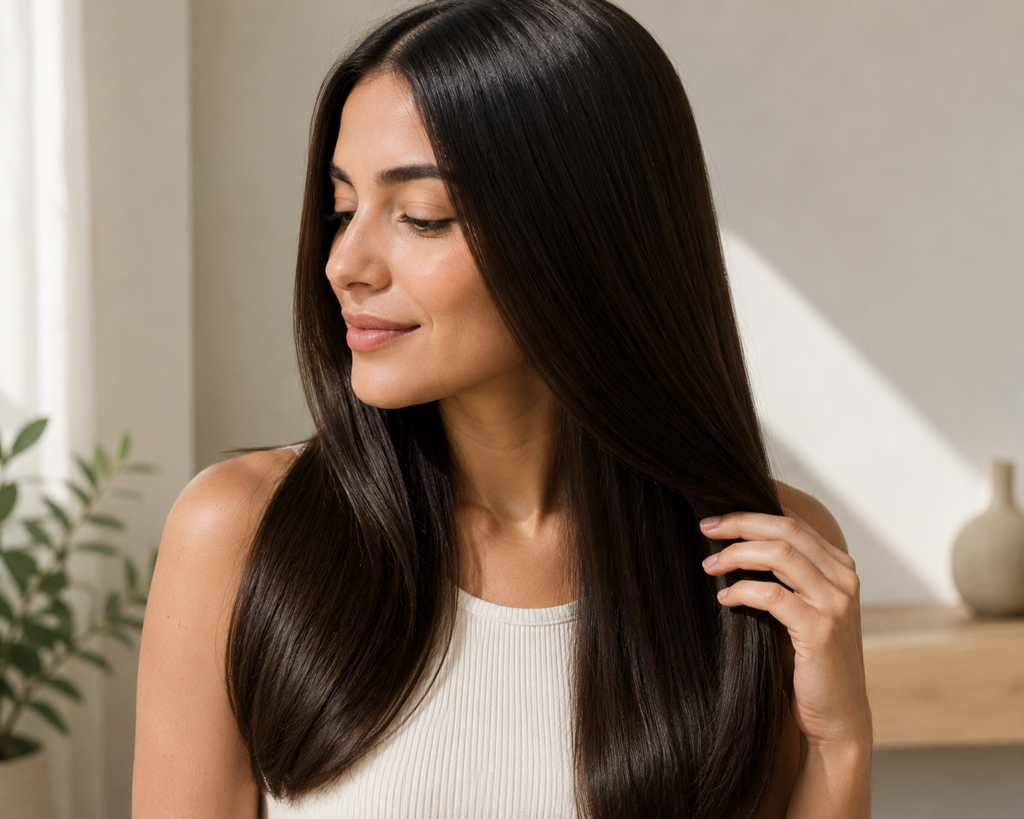
Yes, but with a real caveat. A good anti frizz serum works because it forms a thin barrier over the hair that smooths the cuticle and blocks humidity from sneaking in. That is genuinely effective for keeping hair smooth through a humid day.
What it does not do is repair damage or change your hair’s structure. The effect is temporary and washes out. So if your hair is frizzy because the cuticle is badly damaged, a serum will mask it beautifully but won’t fix the underlying issue. You would need to pair it with proper conditioning, less heat, and patience over weeks.
I will be honest, I went years assuming all of these were a gimmick because the cheap drugstore one I tried as a teenager left my hair greasy and flat by noon. The problem was the product, not the category. Once I switched to something lighter and used way less of it, my whole opinion changed. Frizz-prone hair like mine responds well when you treat the serum as a finishing touch rather than slathering it on.
Silicone vs Silicone-Free: Which One Should You Choose?
This is where it gets interesting, and where most people pick the wrong one for their hair.
Silicone serums (look for ingredients ending in “-cone” or “-xane” like dimethicone) give an immediate, dramatic smoothing effect. They are cheap, they work fast, and the shine is instant. The downside is that some silicones build up over time, especially the ones that don’t rinse out easily, and that buildup can leave hair feeling coated and dull until you clarify. For some people that’s a dealbreaker, for others it never causes a problem.
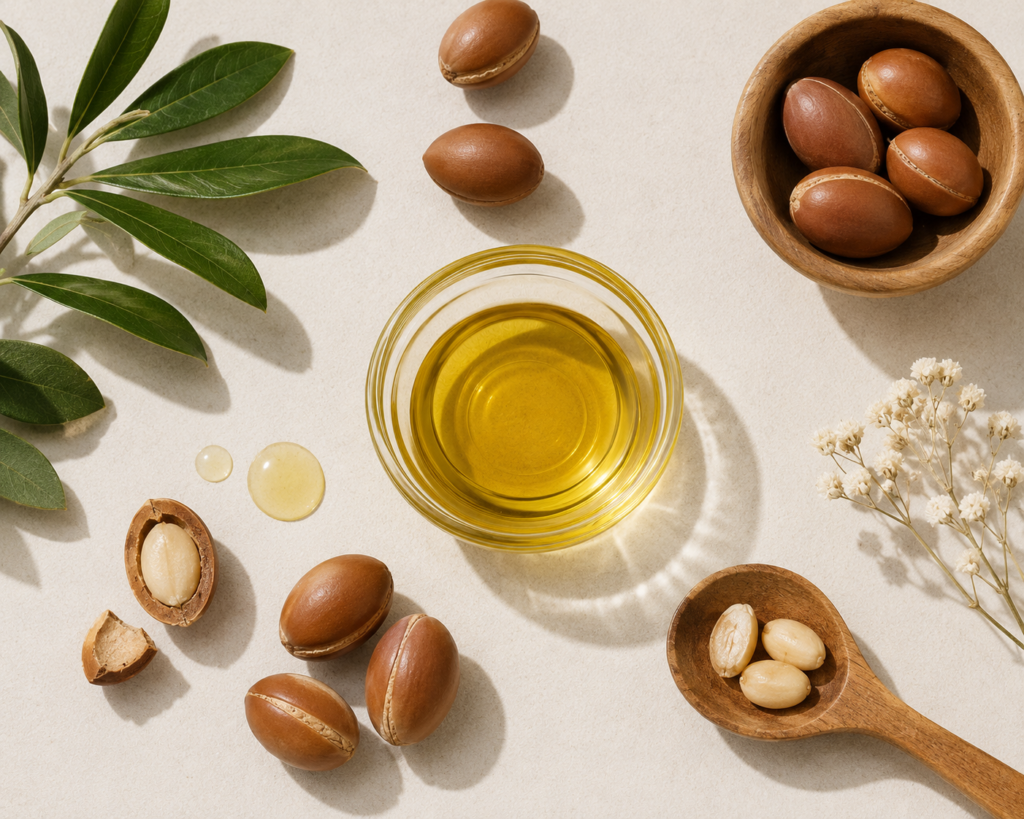
Silicone-free serums, usually built around oils like argan, jojoba, or ghee, work a little differently. They tend to absorb partly into the hair rather than just coating it, so the smoothing feels more natural and there’s no buildup to manage. The trade-off is that the effect can be subtler and you may need to reapply. I lean toward these now, partly because my hair feels lighter and partly because I like knowing what’s on it.
If your hair is fine and gets weighed down easily, a lightweight silicone-free oil serum is usually the safer bet. If your hair is thick, coarse, or very curly and you want maximum control in serious humidity, a silicone serum often wins. There is no universal right answer here, which is why so many people give up before finding their match.
If you want to go the natural route, ingredients like argan oil are a classic choice for smoothing and shine. I wrote more about why argan oil earns its reputation for hair if you want the deeper version.
The Ingredients That Actually Make a Difference
Beyond the silicone question, a few ingredients consistently earn their place in a frizz-fighting formula.
Argan oil is the famous one, rich in fatty acids that smooth and add shine without heaviness. Jojoba oil is interesting because it is structurally close to the natural oil your scalp produces, so it absorbs cleanly. Ghee is the one I have come to appreciate most, because it is rich in omega fatty acids and vitamins A, D, E, and K that seal the cuticle and lock in moisture rather than just sitting on top. In Ayurvedic hair care it has been used for exactly this for centuries, which is part of why I started paying attention to it.
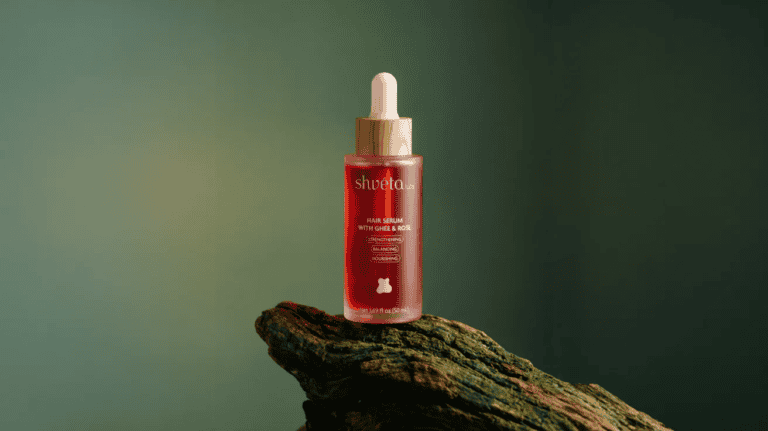
The ghee-based hair serum I’ve been reaching for is the Hair Serum with Ghee & Rose from Shvéta Labs. It is lightweight, smooths frizz on damp or dry hair, and does not leave the greasy film I used to dread. A couple of drops smoothed over my ends is all I need, and it doubles as a bit of scalp care, which I appreciate on the days I skip everything else.
How to Apply an Anti Frizz Serum (Without Greasy Hair)
Most frizz serum disasters come down to application, not the product. Here is what actually works.
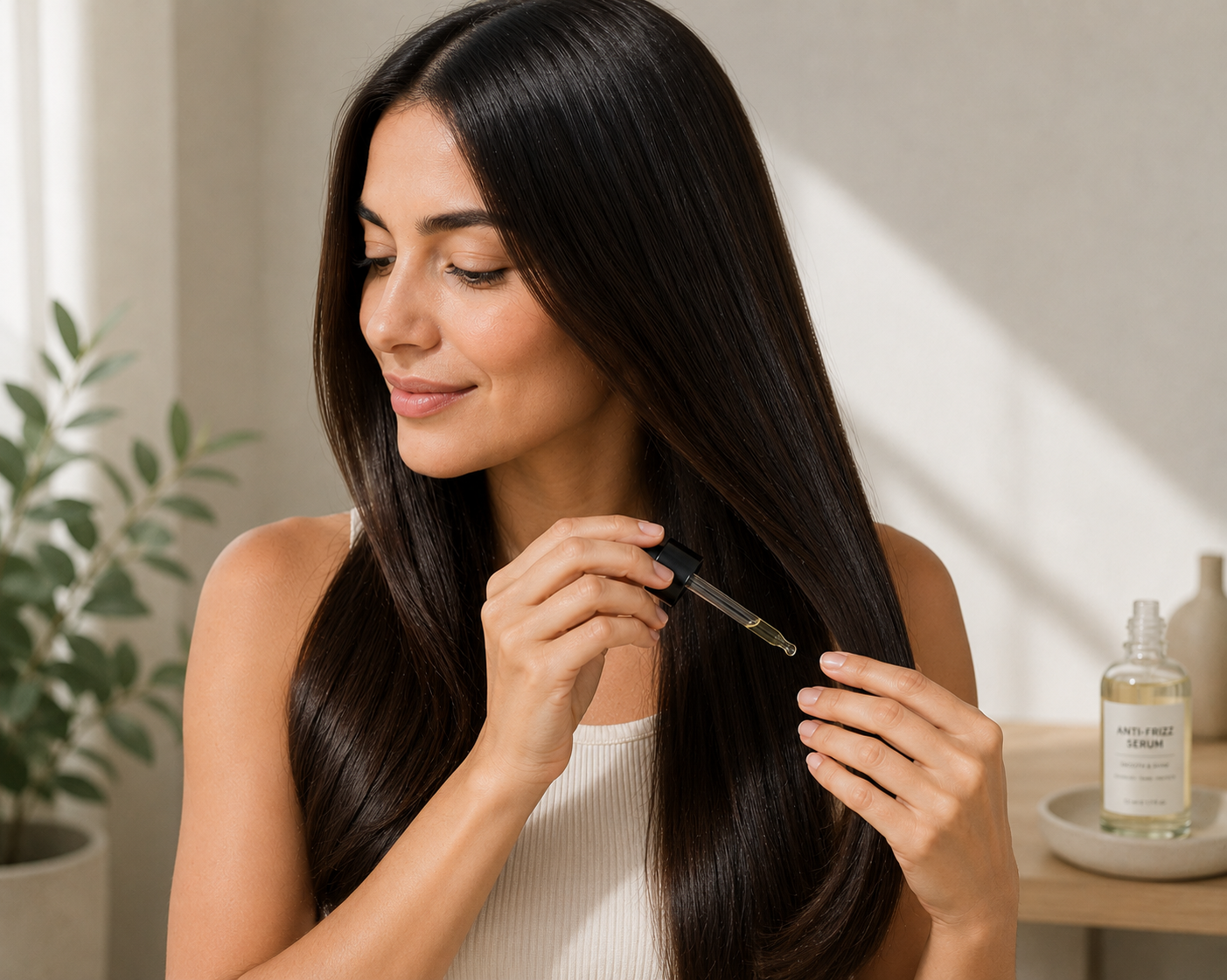
Start with way less than you think. For most hair, one to two drops or a dime-sized amount is plenty. Warm it between your palms first so it spreads evenly instead of landing in one greasy patch. Then smooth it over the mid-lengths and ends, the parts that frizz and need it most. Keep it away from your roots unless your scalp runs very dry, because that’s where greasiness starts.
You can use most serums on damp hair before air-drying or styling, or on dry hair as a midday touch-up to tame whatever has gone rogue. Damp application gives smoother all-day results, dry application is your emergency fix. Personally I do a tiny bit on damp hair after washing and keep the bottle in my bag for the subway-station moments.
If you have curls, the rules shift slightly. You want to scrunch the serum in rather than smooth it down, so you keep the curl pattern intact while still calming the frizz. I go deeper into this in my guide to keeping natural curls defined, which pairs well with the right serum.
What to Look For When You’re Shopping
A few quick filters before you buy. Check whether it’s silicone or silicone-free and match that to your hair as we covered above. Look at where the oils sit in the ingredient list, since something with argan or jojoba near the top is more substantial than one where they appear after a long list of fillers. Watch the texture too, because a serum that feels heavy in the bottle will usually feel heavy on your hair.
And ignore the marketing photos. Glass-smooth hair in an ad has been styled, filmed, and edited. A realistic anti frizz serum keeps your hair calm and manageable, not robotically flat. If frizz is tied to dryness, supporting your hair from the inside with nourishing oils matters as much as any styling product, something I touch on in my piece on why ghee works for healthier hair.
So, Are They Worth It?
After all the bottles I’ve gone through, my honest answer is yes, a good anti frizz serum is worth it, as long as you treat it for what it is. It is a smoothing and finishing product, not a repair treatment. Match the formula to your hair, use a fraction of what you think you need, and apply it to the right parts of your hair.
The frizz won’t vanish forever, because that’s not how hair works. But on a humid morning when you actually want to leave the house without a fight, the right serum genuinely earns its spot on the shelf. Mine has, and that’s coming from someone who spent a decade convinced none of them did anything.