Ayurvedic Hair Oils for Hair Growth: A Complete Guide
If you’ve ever scrolled past a bottle of bhringraj oil and wondered whether it actually does anything, you’re in the right place. Ayurvedic hair oils for hair growth have been used for thousands of years across India, and they’re having a real moment now that people are tired of harsh treatments that promise a lot and deliver flakes. I came to them through my Ayurveda training in Kerala, where oiling your hair isn’t a luxury, it’s just Tuesday.
What Makes a Hair Oil “Ayurvedic”
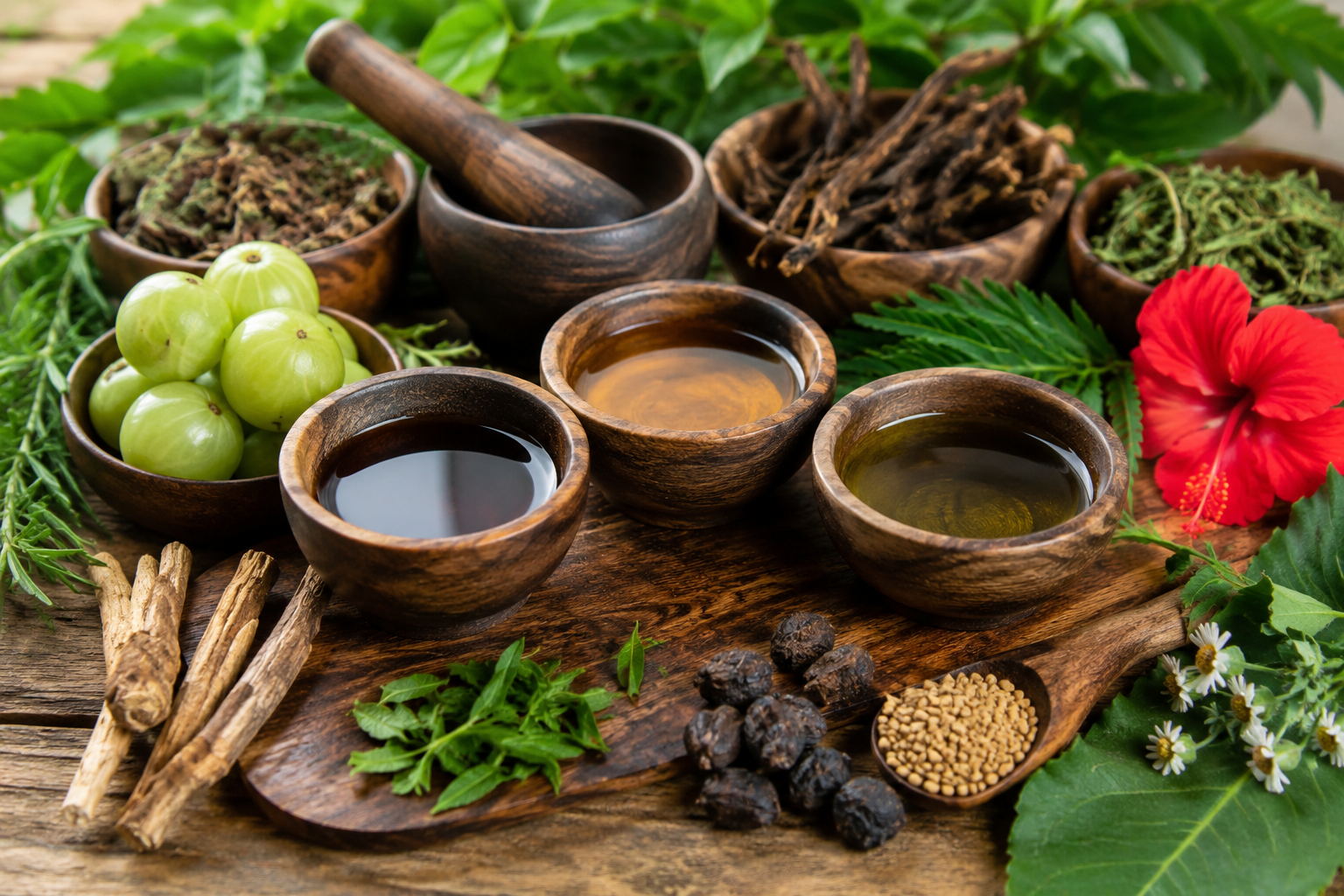
Not every oil in a pretty bottle counts. An Ayurvedic hair oil is traditionally made by simmering specific herbs into a base oil, usually sesame or coconut, until the plant compounds infuse into the fat. The base carries the actives down into the scalp, and the herbs do the targeted work.
This is different from your average drugstore “argan oil serum,” which is usually one oil plus silicones for shine. A real Ayurvedic blend is herb-forward. Think bhringraj, amla, brahmi, and neem, slow-cooked into the oil rather than just added as a fragrance note.
The method matters as much as the ingredients, and it’s what separates real ayurvedic hair oils for hair growth from a drugstore bottle of fragrance oil. A full ayurvedic routine makes this clearer once you see how the steps build on each other.
The Best Ayurvedic Oils for Growth
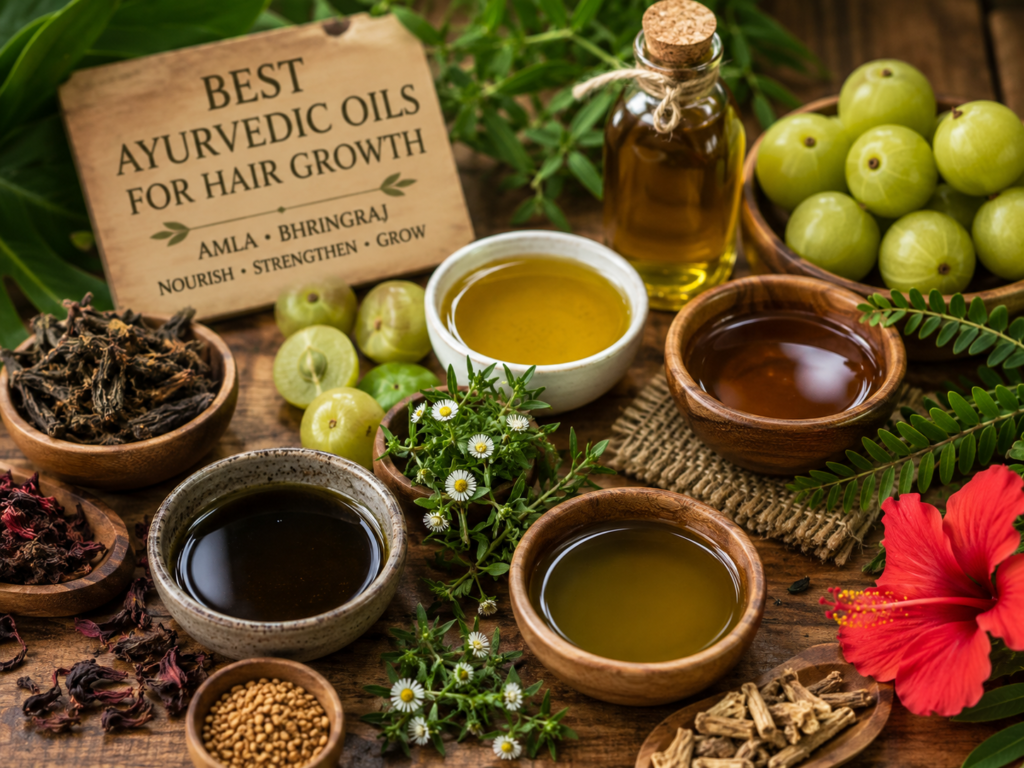
Here are the oils that actually have tradition and a bit of research behind them, not just marketing.
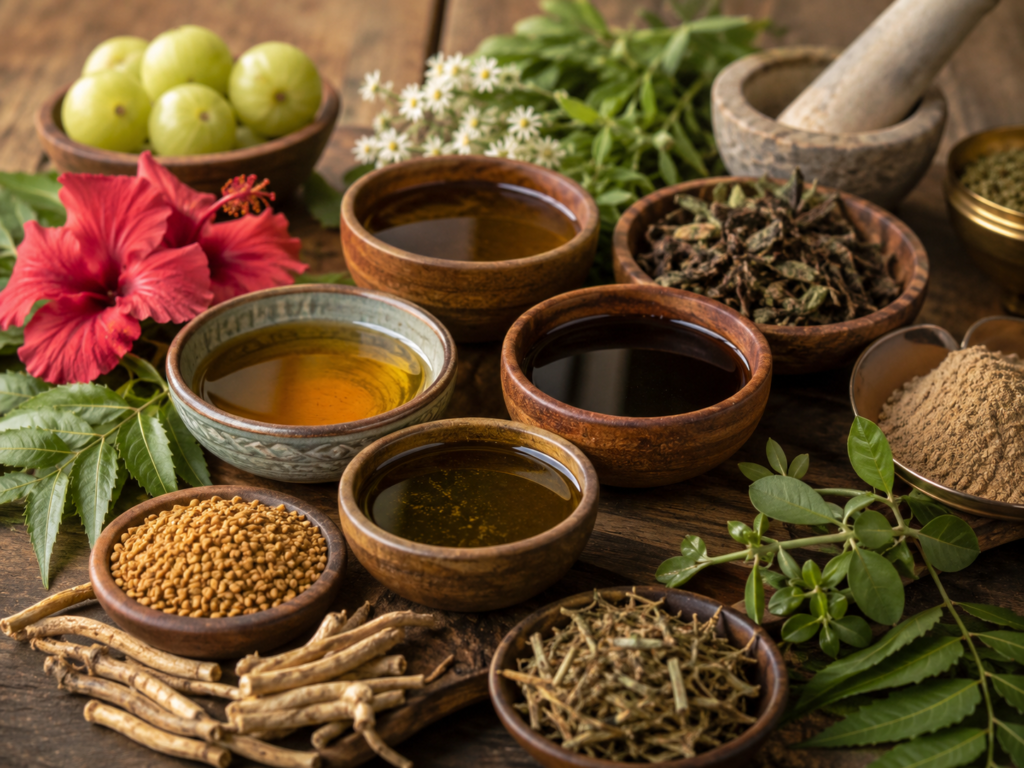
Bhringraj is the headline act. Called “king of hair” in Sanskrit, it’s the one most associated with reducing shedding and supporting density. It’s earthy and a little green-smelling, which I personally don’t mind but my husband does.
Amla (Indian gooseberry) is loaded with vitamin C and antioxidants. It’s the one I reach for when my scalp feels stressed. It also helps with premature greying, which is partly why it’s in nearly every Indian household.
Brahmi is more of a scalp-calming, circulation supporter. If you’re someone whose hair fall spikes when life gets chaotic, this is your herb.
Bhringraj, amla, and brahmi together cover most of what people want from ayurvedic hair oils for hair growth: less shedding, a calmer scalp, and stronger strands over time.
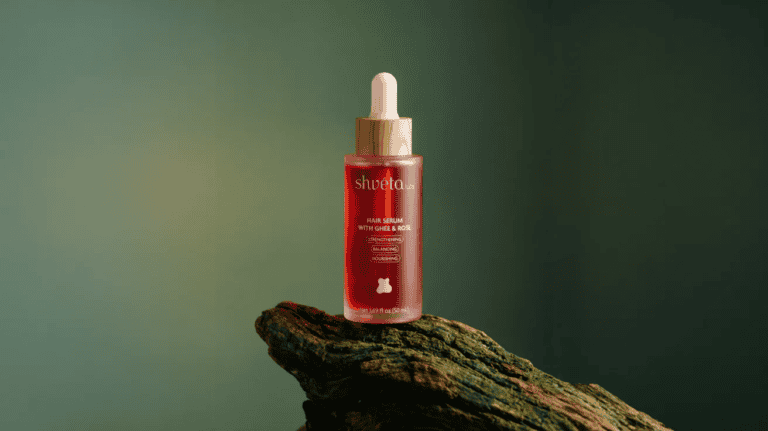
Ghee deserves a spot here too, and it’s the one people sleep on. It’s rich in omega fatty acids and vitamins A, D, E, and K that feed the follicle rather than just coating the strand. If you want to go deeper on why, I broke it down in this piece on ghee for hair. One formula I keep coming back to is the Hair Serum with Ghee & Rose from Shvéta Labs, which pairs ghee with rose and pumpkin seed extract. It’s lighter than a traditional oil, so it’s what I use on days I don’t have two hours to sit around with a towel on my shoulders.
How They Actually Work
People always ask me whether ayurvedic hair oils for hair growth genuinely work, and the honest answer is: nobody’s growing hair out of a bald scalp with oil alone. What these oils do well is create the conditions for healthier growth.
Massage increases blood flow to the scalp, which supports the follicles you already have. The herbs deliver antioxidants that reduce oxidative stress, one of the quieter culprits behind thinning. And the oil itself reduces breakage, so the hair you’re growing actually makes it past your shoulders instead of snapping off. So when people say their hair “grew faster,” what usually happened is less of it broke.
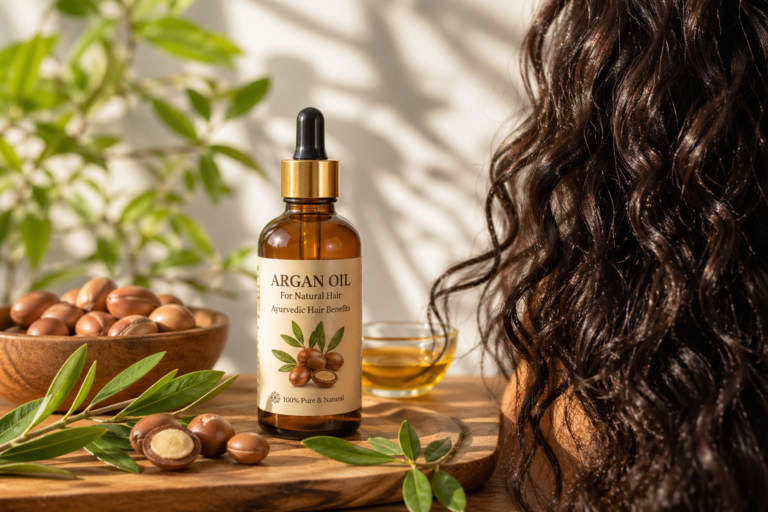
If you want one of the more readable overviews of how scalp massage affects hair, argan oil works beautifully on the ends too, and pairs well with a heavier scalp oil.
How to Apply (The Champi Method)
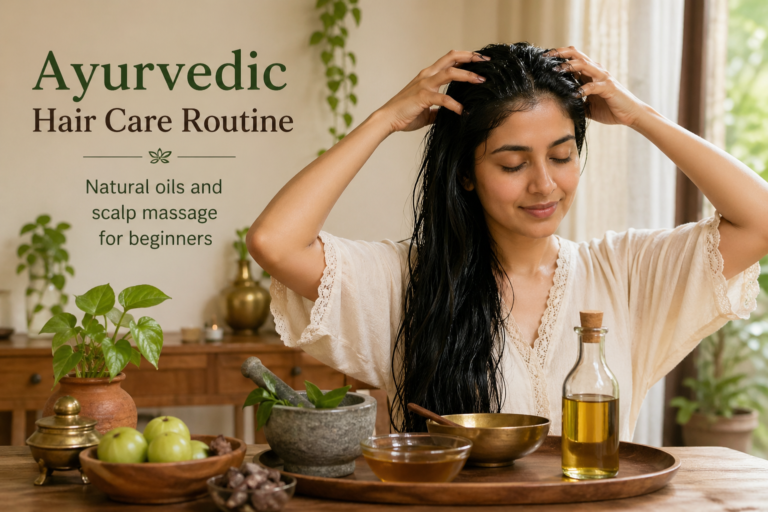
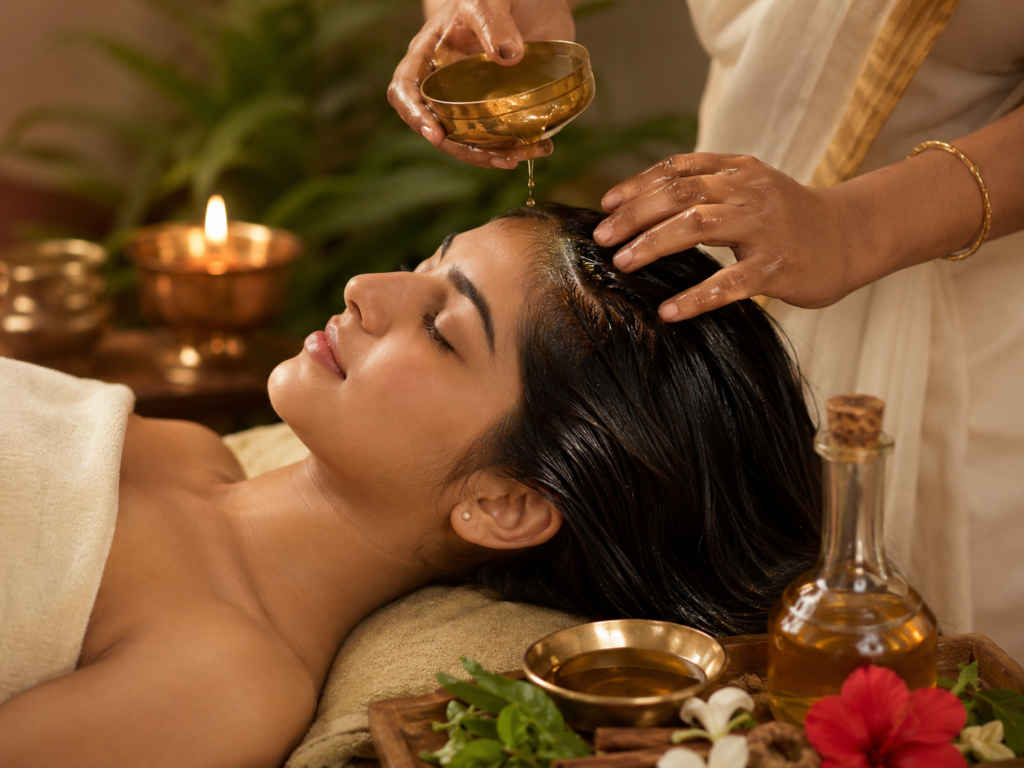
Champi is just the Hindi word for a head massage, and it’s the part most people skip or rush. Don’t.
Warm a few tablespoons of oil until it’s pleasantly warm, never hot. Part your hair in sections and apply directly to the scalp with your fingertips, not your palms. Then massage in slow circles for at least five minutes. Ten is better. Work outward and down the lengths once the scalp is covered.
Leave it on for at least an hour. Overnight if you can, with an old pillowcase you don’t care about. Then wash with a gentle shampoo, and yes, you’ll probably need two rounds.
How Often Should You Oil
When it comes to ayurvedic hair oils for hair growth, once or twice a week is plenty for most people. I do Sunday nights, partly because it’s relaxing and partly because washing it out fits into my actual life.
If your scalp runs oily, once a week or even every ten days is fine, and use less. If it’s dry or you’re in a brutal winter, twice. There’s no medal for over-oiling, and a greasy scalp can actually trap buildup.
What to Realistically Expect
Here’s where I’ll be straight with you. Hair grows roughly half an inch a month, and oiling doesn’t change that ceiling. What changes is the quality and how much you keep.
Give it three months of consistency before you judge anything. Most people notice less shedding first, then a bit more density at the roots around the three-to-four-month mark. If you’re dealing with significant or sudden hair loss, oil is a supporting actor, not the cure, and that’s worth seeing a doctor about. That slow payoff is exactly why ayurvedic hair oils for hair growth have lasted thousands of years, and it’s honestly the most Ayurvedic thing about them.