
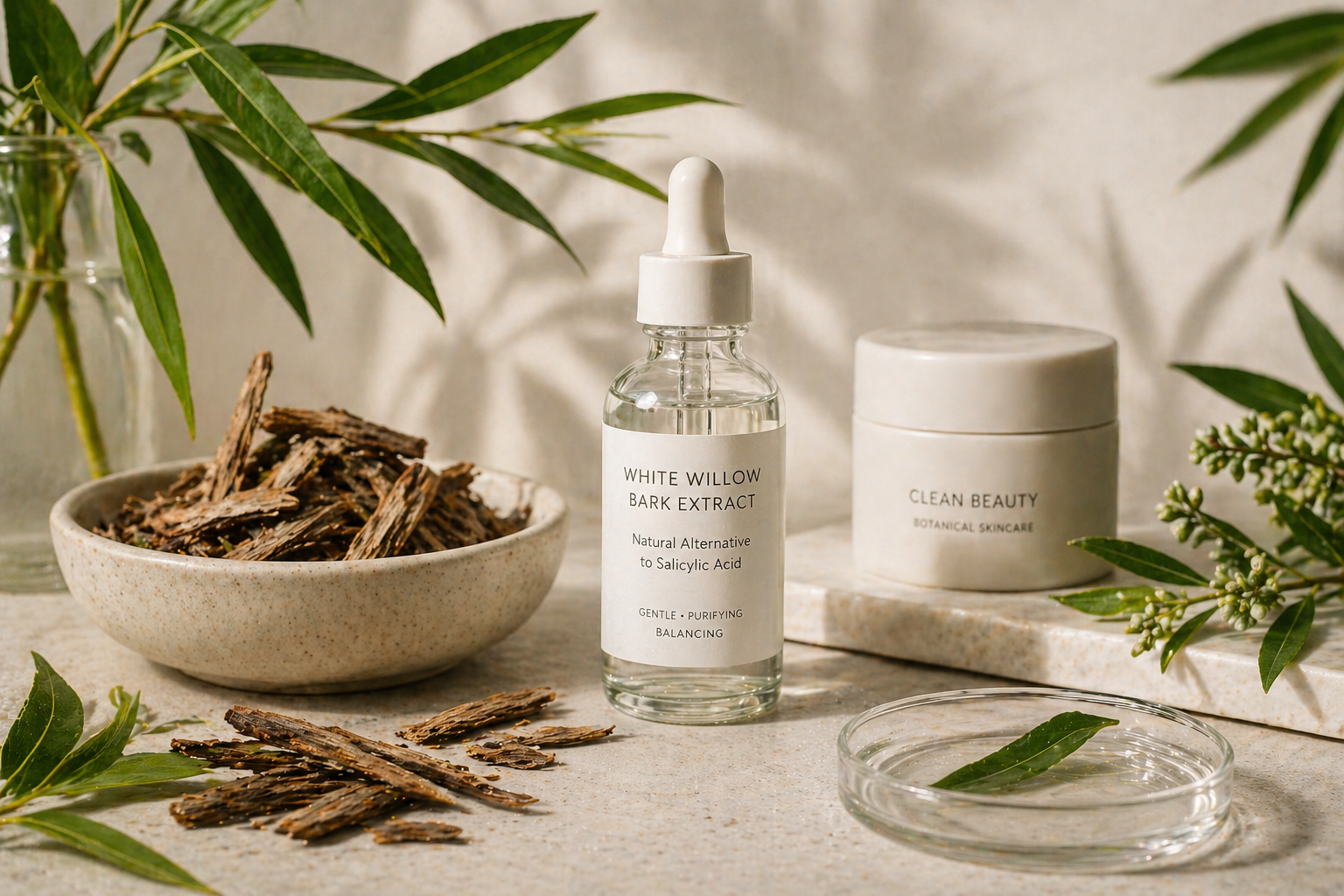
White Willow Bark in Skincare: The Natural Alternative to Salicylic Acid
White willow bark skincare is having a moment, and it’s one of the more deserved trends in natural beauty. If you’ve been looking for a gentler alternative to salicylic acid that still delivers real results for congested, acne-prone, or dull skin, white willow bark is worth understanding properly.
Here’s what it is, what it does, and how it compares to the synthetic version most people already know.
What Is White Willow Bark?
White willow bark comes from the Salix alba tree, a species native to Europe and central Asia that has been used medicinally for thousands of years. Hippocrates wrote about its pain-relieving properties in the 5th century BC. Ancient Egyptians used willow bark preparations for fever and inflammation. It is, in many ways, one of the oldest medicines in human history.
The active compound in white willow bark is salicin. When salicin is metabolized, it converts to salicylic acid in the body. This is the same salicylic acid that appears in countless acne treatments and chemical exfoliants. The difference is in how the conversion happens and at what rate.
In the 19th century, chemists isolated salicin and eventually synthesized acetylsalicylic acid, which became aspirin. Synthetic salicylic acid followed, and the pharmaceutical version became the standard in both medicine and skincare. White willow bark, the original source, remained in traditional herbal medicine but largely fell out of mainstream use.
Until now.

White Willow Bark vs Salicylic Acid: What’s the Difference?
This is the question most people ask first, and the answer is more nuanced than most skincare content acknowledges.
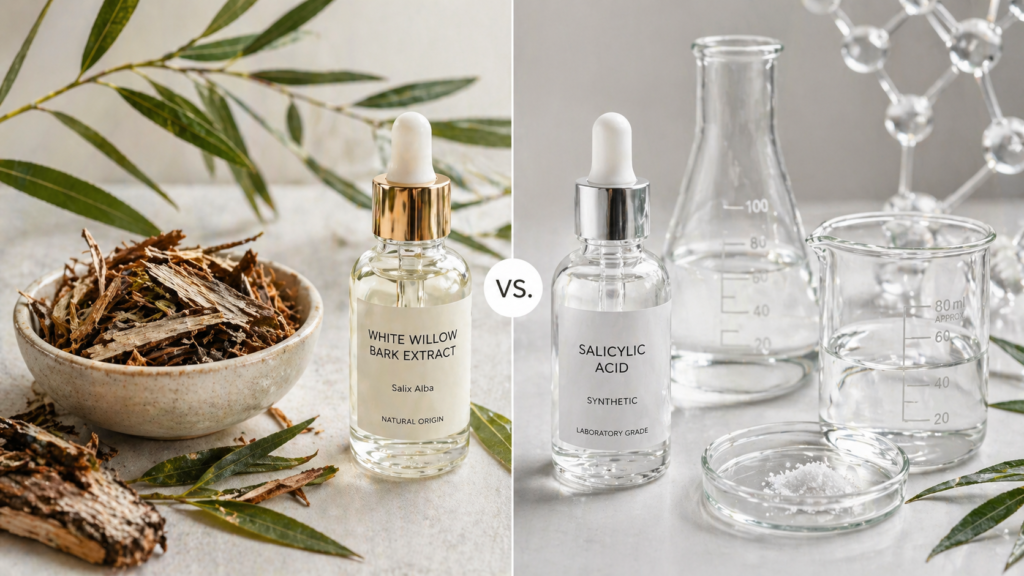
Synthetic salicylic acid is a single, isolated compound at a standardized concentration. It works predictably, penetrates the pore lining, dissolves the bonds between dead skin cells, and clears congestion efficiently. At higher concentrations, it can be irritating, drying, and sensitizing, particularly for people with reactive or compromised skin barriers.
White willow bark extract contains salicin alongside a complex of other naturally occurring compounds including flavonoids, tannins, and polyphenols. These accompanying compounds have their own anti-inflammatory and antioxidant properties. They also appear to moderate the rate at which salicin acts on the skin, making white willow bark a gentler, more gradual exfoliant than its synthetic counterpart.
The trade-off is potency. Synthetic salicylic acid at 2% will outperform white willow bark extract for severe acne or significant congestion. But for everyday maintenance exfoliation, mild congestion, and skin that reacts badly to strong acids, white willow bark skincare is a genuinely effective and more comfortable alternative.
White Willow Bark Skincare Benefits
The benefits of white willow bark in skincare fall into three main categories.
Gentle exfoliation
Salicin and its derivatives gently loosen the bonds between dead skin cells on the surface and inside the pore lining. This helps prevent the buildup of dead skin that leads to dullness, uneven texture, and congestion. Unlike physical scrubs, this exfoliation happens chemically and without abrasion, making it suitable for sensitive skin types that can’t tolerate granular exfoliants.
Anti-inflammatory action
The flavonoids and tannins in white willow bark have documented anti-inflammatory properties. For acne-prone skin, this means white willow bark is doing two things simultaneously: clearing the congestion that leads to breakouts while calming the inflammation that makes existing breakouts worse. Synthetic salicylic acid exfoliates effectively but doesn’t offer the same broad anti-inflammatory profile.
Antioxidant protection
The polyphenols in white willow bark neutralize free radicals that contribute to premature aging, hyperpigmentation, and general skin damage. This antioxidant dimension is entirely absent in isolated salicylic acid, making white willow bark a more holistic active ingredient.

Who Should Use White Willow Bark in Skincare?
White willow bark skincare suits a broader range of skin types than synthetic salicylic acid.
It’s particularly well suited for sensitive skin that reacts to strong acids. If you’ve tried salicylic acid and experienced dryness, peeling, or redness, white willow bark is a logical next step. The gentler exfoliation delivers many of the same pore-clearing benefits without the irritation.
For combination and oily skin dealing with mild to moderate congestion, white willow bark is an effective daily maintenance ingredient. It keeps pores clearer over time without the risk of over-exfoliation that comes with stronger acids used too frequently.
For aging skin, the combination of gentle exfoliation, anti-inflammatory action, and antioxidant protection makes white willow bark a smart addition to a routine focused on texture, tone, and collagen preservation.
The main caveat is severe acne. If you’re dealing with cystic acne or significant inflammatory breakouts, white willow bark alone is unlikely to be sufficient. In that case, a dermatologist-prescribed treatment with pharmaceutical-grade salicylic acid or benzoyl peroxide is a more appropriate starting point.
For anyone building a clean, intentional skincare routine for sensitive or acne-prone skin, white willow bark is one of the most compatible active ingredients available. It works with the skin rather than forcing a reaction.
How to Use White Willow Bark in Your Routine
White willow bark appears most commonly in cleansers, toners, and serums. The ideal placement in your routine depends on the product format.
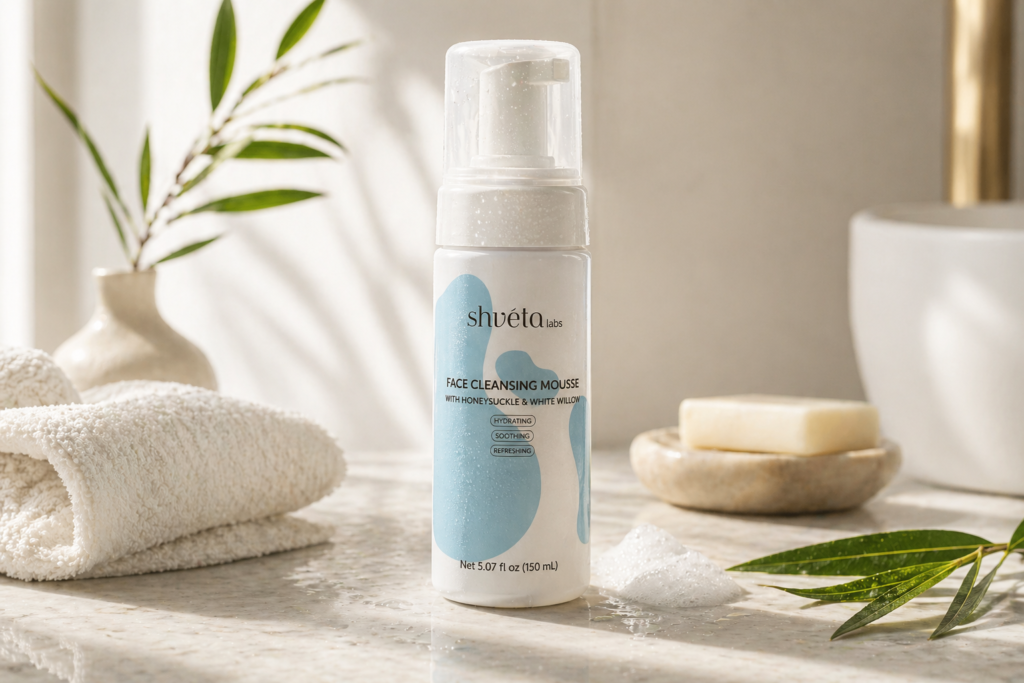
In a cleanser, white willow bark provides a light exfoliation at the cleansing step without leaving a concentrated active on the skin. This is the gentlest approach and suits people new to chemical exfoliation or those with reactive skin. A well-formulated cleansing mousse with white willow bark, like the Shvéta Labs Face Cleansing Mousse, delivers this light exfoliating action as part of the cleansing process itself, making it easy to incorporate without adding a separate exfoliation step to your routine.
In a toner or essence, white willow bark is left on the skin after cleansing, which allows more time for the salicin to work. This format is more active than a cleanser but gentler than a dedicated exfoliant.
In a serum, white willow bark is typically at its highest concentration and combined with other actives. This is the most potent format and suits skin that has already adapted to regular exfoliation.
Regardless of format, white willow bark pairs well with hydrating ingredients like hyaluronic acid and soothing ingredients like Centella Asiatica. It can be used morning or evening, though if you use it in the morning, applying SPF afterward is important.
What to Watch Out For
Despite being gentler than synthetic salicylic acid, white willow bark is not entirely without considerations.
People with aspirin sensitivity should approach white willow bark with caution. The salicin content can potentially cause reactions in people who are sensitive to aspirin or other salicylates, though topical use generally poses a lower risk than oral consumption.
Pregnant or breastfeeding women are typically advised to avoid salicylate-containing products as a precaution, including white willow bark skincare. Consulting a healthcare provider is advisable in this case.
At high concentrations, white willow bark can still cause irritation for very sensitive skin. Patch testing before introducing any new active ingredient is always a sensible step.
The Bottom Line
White willow bark skincare occupies a valuable middle ground between doing nothing and using strong synthetic acids. For the majority of people dealing with mild congestion, dull texture, or skin that reacts badly to conventional exfoliants, it delivers genuine results with a significantly better tolerance profile.
It’s an ancient ingredient with modern relevance. And in a beauty landscape full of ingredients that are more marketing than substance, that’s worth something.

3 Comments