
Ghee for Skin: The 5,000-Year-Old Ayurvedic Secret Explained
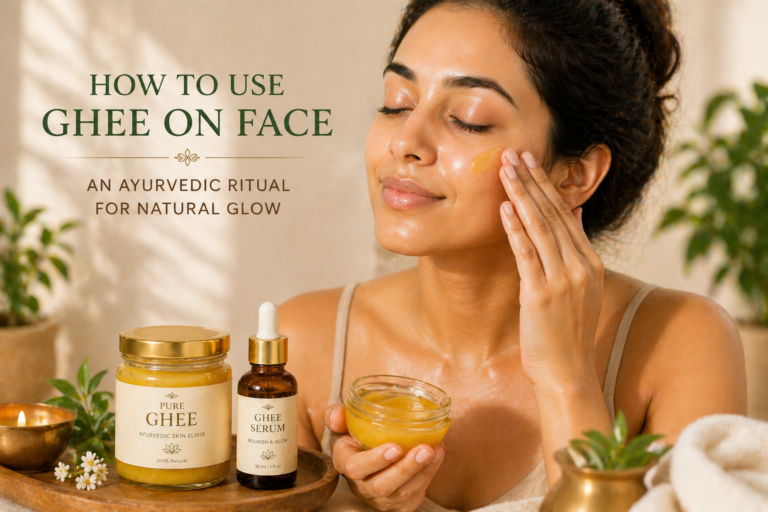
Ghee for skin is not a new concept. It has been used in Ayurvedic beauty rituals for over 5,000 years, and the reason it’s showing up in modern formulas is simple: it works.
Here’s everything you need to know.
What Is Ghee, Exactly?
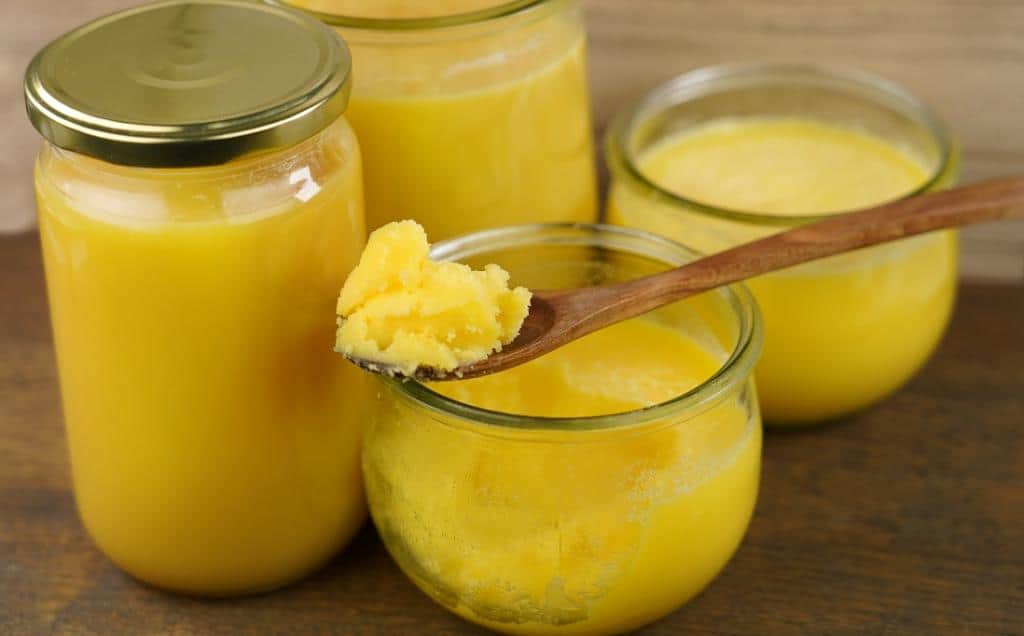
Ghee is clarified butter. Whole butter is slowly cooked until all the water evaporates and the milk solids separate and are removed. What’s left is pure, golden fat, stable, shelf-stable, and extraordinarily rich in fat-soluble nutrients.
In Indian households, ghee has been a kitchen staple for millennia. In Ayurveda, it’s considered one of the most sacred and healing substances in existence, used both internally and externally.
The clarification process matters more than most people realize. By removing the milk solids and water, you’re left with something that behaves completely differently from regular butter on skin. It absorbs cleanly, doesn’t go rancid quickly, and delivers nutrients in a bioavailable form.
Why Ghee Works on Skin
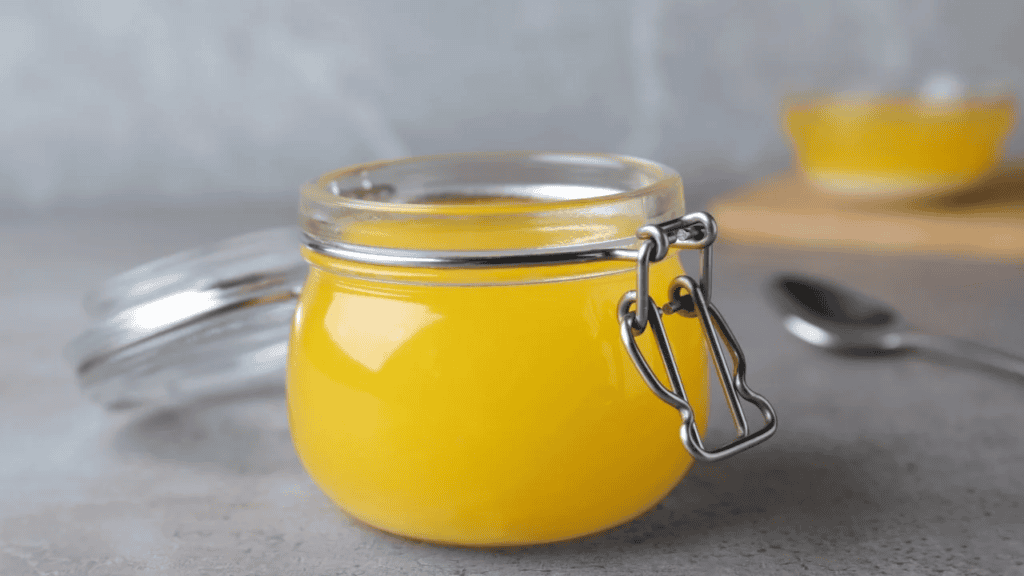
Most modern moisturizers work by sitting on top of the skin and creating a barrier. Ghee does something different. This is what makes ghee for skin so different from conventional moisturizers.
Its fatty acid profile, rich in Omega-3, Omega-6, and Omega-9, closely mirrors the natural lipid structure of human skin. This is what Ayurvedic practitioners mean when they call ghee biocompatible. It doesn’t just coat the surface. It absorbs, integrates, and nourishes from within.
On top of that, ghee is naturally rich in fat-soluble vitamins A, D, E, and K. These aren’t water-soluble vitamins that sit in your bloodstream. They travel through fat, which means ghee is an excellent delivery vehicle for getting them into the deeper layers of your skin.
The result is genuine hydration, not the illusion of it.
A 5,000-Year-Old Tradition
In Ayurveda, ghee isn’t just an ingredient. It’s a symbol of purity, transformation, and care. The Sanskrit concept of Samskara, transformation through intention, applies directly to how traditional ghee is made: slowly, carefully, with attention to every step of the process.
Ancient Ayurvedic texts like the Charaka Samhita describe ghee as one of the finest substances for skin health, recommending it for everything from dry skin conditions to wound healing and anti-aging rituals.
This isn’t folklore. The science supports it. The butyric acid in ghee has documented anti-inflammatory properties. The conjugated linoleic acid, or CLA, has antioxidant effects. The fat-soluble vitamins are essential for cell regeneration and collagen synthesis.
Is Ghee Good for All Skin Types?
When people first discover ghee for skin, this is usually the first question they ask, especially if they have oily or acne-prone skin.
Ghee has a comedogenic rating of 2 out of 5, which means it’s relatively unlikely to clog pores. For context, coconut oil sits at 4. Pure ghee, properly made, is one of the safer oils for most skin types.
For dry and sensitive skin, ghee is genuinely excellent. It restores the lipid barrier without irritating compromised skin. For combination skin, it works well when used in small amounts, particularly as a targeted treatment rather than an all-over moisturizer.
For acne-prone skin, the key is formulation. Raw ghee applied heavily to acne-prone skin isn’t ideal. But ghee as an ingredient within a well-formulated serum, where it’s balanced with other actives, is a very different story.
What Makes a Good Ghee-Based Skincare Product?
Not all ghee is created equal. The sourcing, the production method, and the formulation all matter enormously.
Grass-fed ghee contains significantly higher levels of Omega-3 fatty acids and CLA than ghee from conventionally raised cows. Slow-cooked, small-batch ghee retains more of its nutritional integrity than mass-produced versions. And ghee from biodiverse, mineral-rich environments carries a more complex fatty acid and nutrient profile than ghee from industrial farms.
This is why we’re particularly interested in brands that control their entire supply chain, from the pasture to the formula.

One brand that takes this seriously is Shvéta Labs, whose ghee comes from their own farm in Malaysia. Ethically raised cows, grazing on land from one of the oldest rainforests in the world. The difference in potency is real, and it shows up in how their products perform.
How to Start Using Ghee in Your Skincare Routine
If you’re new to using ghee for skin, the easiest entry point is a serum or a cleansing product rather than pure ghee straight from the jar.
A well-formulated ghee serum gives you the benefits of the ingredient in a stable, skin-ready form, combined with complementary actives that enhance absorption and address specific concerns like dryness or dullness.
Start with one product. Use it consistently for four to six weeks. Pay attention to how your skin responds rather than looking for overnight results. Ghee is a nourishing ingredient, not a quick fix, and that’s exactly the point.
The Bottom Line
Ghee for skin isn’t a trend. It’s an ingredient with thousands of years of documented use, a strong nutritional profile, and a biocompatibility with human skin that very few other oils can match.
If you’ve been curious about Ayurvedic skincare but didn’t know where to start, ghee is a good place. It’s the foundation of an entire approach to beauty, one that prioritizes deep nourishment over surface-level results.
Slow down. Let it sink in.

2 Comments