
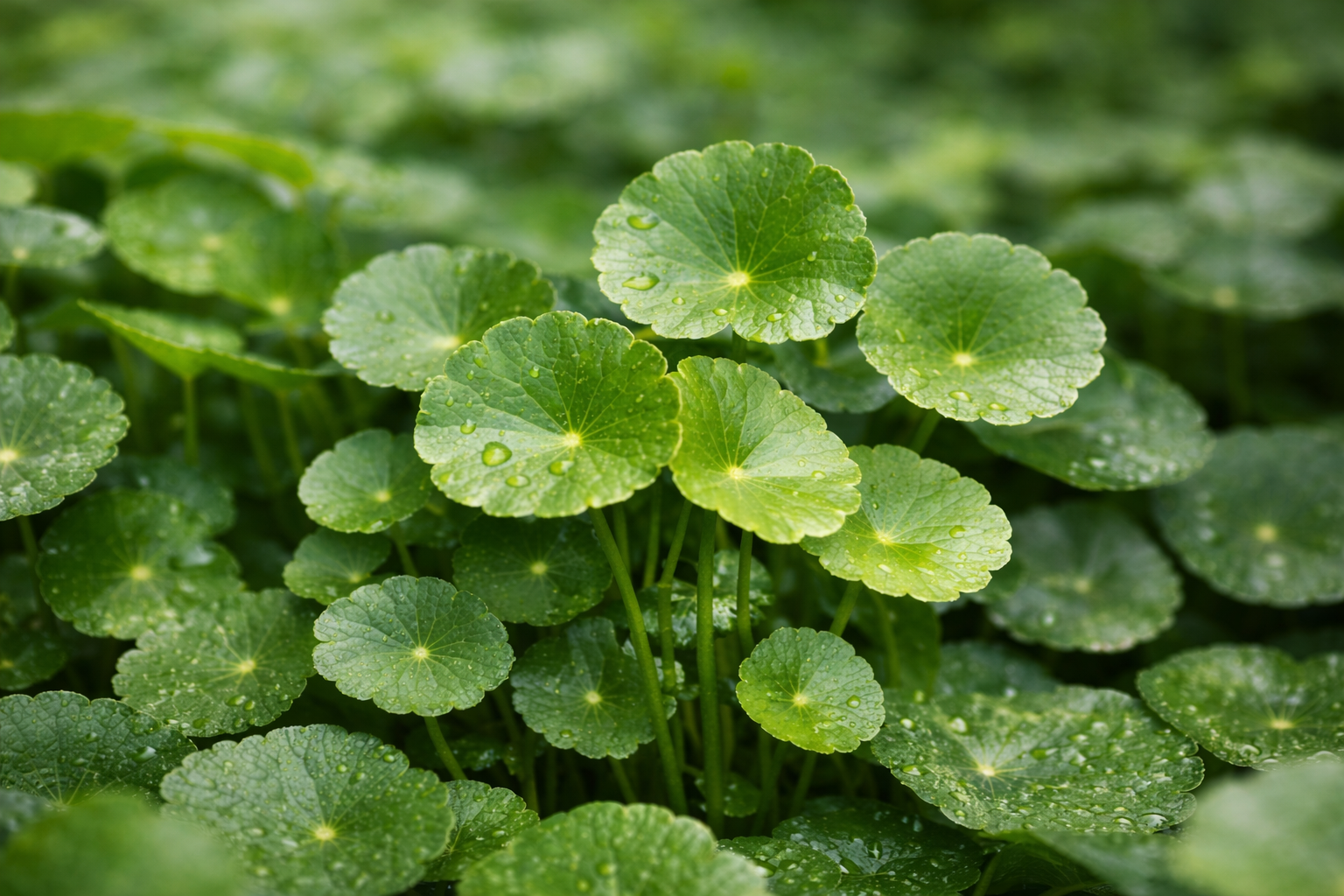
What Is Centella Asiatica? Why It’s In Every Skincare Product
If you’ve been reading ingredient labels lately, you’ve probably noticed Centella Asiatica showing up everywhere. Serums, moisturizers, sunscreens, toners. It’s in budget drugstore products and high-end formulas alike. That kind of ubiquity usually means one of two things: genuine efficacy or clever marketing.
In the case of Centella Asiatica, the science is solid. Here’s what it actually does, why it became so popular, and whether it belongs in your routine.
What Is Centella Asiatica?
Centella Asiatica is a small herbaceous plant native to Asia, particularly India, Sri Lanka, and parts of Southeast Asia. It goes by many names: gotu kola, tiger grass, Indian pennywort. In traditional Ayurvedic and Chinese medicine, it has been used for centuries to treat wounds, improve circulation, and support skin healing.
The plant grows in wet, tropical environments and has a long history of both internal and topical use. In Ayurveda specifically, it’s considered a rasayana herb, meaning it’s associated with longevity, rejuvenation, and overall vitality.
Modern skincare discovered it relatively recently, but the ingredient itself is anything but new.
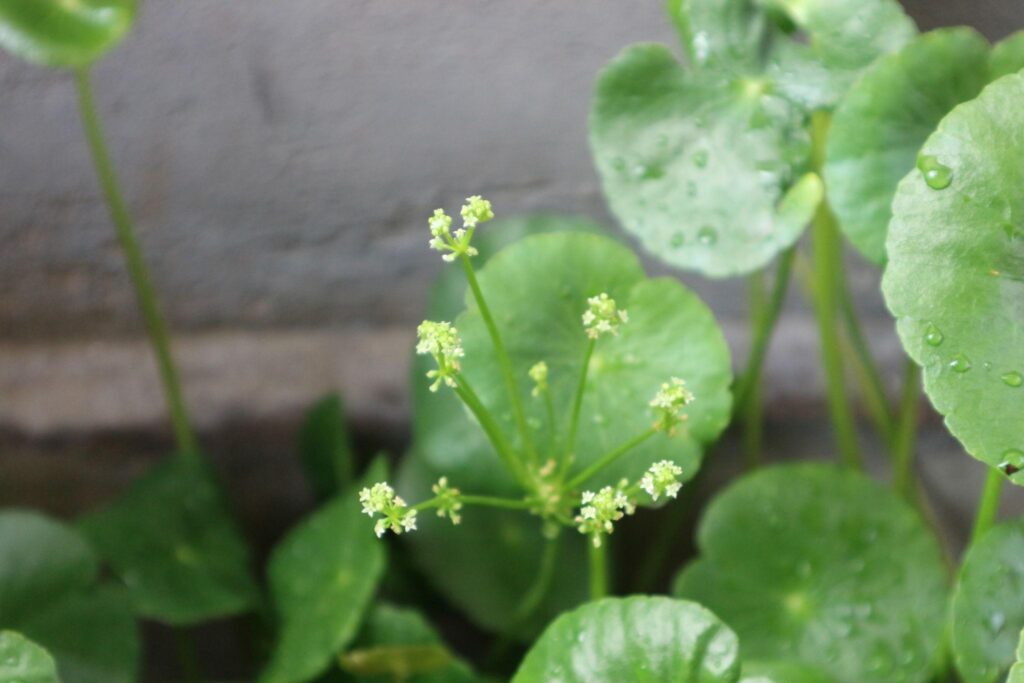
The Active Compounds That Make It Work
The reason Centella Asiatica has attracted so much attention from cosmetic chemists is its unique combination of active compounds.
The four main ones are asiaticoside, madecassoside, asiatic acid, and madecassic acid. These are collectively referred to as triterpenes, and they are responsible for most of the skin benefits associated with the ingredient.
Asiaticoside and madecassoside stimulate collagen synthesis. This is one of the primary reasons Centella Asiatica shows up in anti-aging formulations. By supporting the skin’s natural collagen production, these compounds help improve skin firmness and reduce the appearance of fine lines over time.
Asiatic acid and madecassic acid have potent anti-inflammatory and antioxidant properties. They help calm irritated skin, reduce redness, and protect against oxidative stress caused by UV exposure and environmental pollutants.
Together, these compounds make Centella Asiatica genuinely multi-functional, which is rare for a single ingredient.
Centella Asiatica Skin Benefits: What the Research Shows
The centella asiatica skin benefits that appear most consistently in the research are wound healing, anti-inflammation, and collagen stimulation.
A 2013 study published in the Journal of Ethnopharmacology reviewed the evidence for Centella Asiatica in wound healing and found consistent support for its role in accelerating the healing process and reducing scar formation.
For anti-aging, a 2015 study in the Annals of Dermatology found that madecassoside significantly increased collagen synthesis in human skin cells.
For sensitive and reactive skin, the anti-inflammatory properties of the triterpenes have been studied in the context of conditions like eczema and rosacea, with positive results in several small trials.
What’s notable is that the research isn’t just in vitro, meaning it’s not only showing effects in a lab dish. Several studies have looked at topical application on human skin and found meaningful results.
Why It Works So Well for Sensitive Skin
One of the reasons Centella Asiatica became particularly popular in Korean skincare, which introduced it to Western audiences in a significant way, is its exceptional tolerance profile.
It’s suitable for almost every skin type, including sensitive, reactive, and compromised skin. It doesn’t irritate. It doesn’t cause purging. It doesn’t disrupt the skin barrier. For people who react to many active ingredients, Centella Asiatica is one of the few that can be introduced without hesitation.
This is also why it pairs so well with other actives. Retinol, AHAs, and BHAs can cause irritation. Adding Centella Asiatica to a routine that includes these ingredients helps buffer the inflammatory response without reducing their efficacy.
If you have acne-prone or sensitive skin and are building a clean skincare routine, Centella Asiatica is one of the safest and most effective additions you can make.
Centella Asiatica and Sun Damage
This is one of the less discussed but well-supported benefits of the ingredient.
The antioxidant compounds in Centella Asiatica help neutralize free radicals generated by UV exposure. While it’s not a replacement for sunscreen, it complements sun protection by addressing the oxidative damage that gets through even when you’re wearing SPF.
Several studies have also looked at Centella Asiatica’s role in reducing hyperpigmentation and post-inflammatory marks, with promising results. The collagen-stimulating compounds appear to support more even skin tone over time.
This is why Centella Asiatica shows up frequently in sunscreens and post-sun care products. It’s doing double duty: soothing the inflammation caused by UV exposure while supporting the skin’s recovery process.

How Centella Asiatica Fits Into an Ayurvedic Skincare Philosophy
For anyone interested in Ayurvedic skincare ingredients and their modern applications, Centella Asiatica is a particularly interesting case.
It’s one of the few ingredients that bridges the gap between ancient herbal tradition and modern cosmetic science. It has centuries of documented use in Ayurvedic and Chinese medicine, and it has accumulated a meaningful body of peer-reviewed research supporting those traditional uses.
This alignment between traditional wisdom and modern science is exactly what makes an ingredient worth paying attention to. It’s not being used because it sounds exotic. It’s being used because it works, and people have known it works for a very long time.
How to Use Centella Asiatica in Your Routine
Centella Asiatica is stable and compatible with most other ingredients, which makes it easy to incorporate.
It works well in serums, where the concentration tends to be highest and the skin contact most direct. It also appears in moisturizers and sunscreens, where it provides secondary anti-inflammatory and antioxidant benefits alongside the primary function of the product.
For best results, look for products where Centella Asiatica or one of its active compounds, asiaticoside or madecassoside, appears in the first half of the ingredient list. Ingredients listed near the end of a formula are present in very small concentrations and are unlikely to provide meaningful skin benefits.
There’s no specific time of day that’s better for Centella Asiatica. It can be used morning and evening without any concerns about photosensitivity.
Who Should Use Centella Asiatica?
Almost everyone. That’s the honest answer.
It’s particularly well suited for sensitive, reactive, or compromised skin that needs calming without irritation. For aging skin that wants to support collagen production naturally. For acne-prone skin dealing with post-inflammatory marks. For anyone using strong actives like retinol or exfoliating acids who wants to balance their routine.
The only people who might want to approach it with some caution are those with known allergies to plants in the Apiaceae family, which includes carrots, celery, and parsley. Cross-reactivity is possible but uncommon.
The Bottom Line
Centella Asiatica earned its place in modern skincare. The centella asiatica skin benefits, collagen stimulation, anti-inflammation, wound healing, and antioxidant protection, are backed by a meaningful body of research and centuries of traditional use.
It’s not a trend ingredient. It’s a functional one. And for sensitive, aging, or acne-prone skin especially, it’s one of the more reliable additions you can make to a clean skincare routine.


2 Comments