Natural Alternatives to Retinol That Actually Work
Three years ago I started looking, somewhat skeptically, at natural alternatives to retinol. It wasn’t that retinol wasn’t working for me, it was. My skin looked smoother, the fine line near my left eye had softened, and my Brooklyn dermatologist would have probably told me to keep going. But my face was also constantly red, peeling around the corners of my nose, and the kind of irritated that no amount of moisturizer could fix.
The good news for anyone in the same spot: the research on plant-based retinol alternatives has come a long way. Some of these actually do hold up, with real studies behind them. Others are good for your skin but not technically retinol substitutes. This guide sorts through both.
What Is Retinol and Why Look for Alternatives
Retinol is a form of vitamin A. On skin, it speeds up cell turnover, boosts collagen production, and over time helps soften lines, even tone, and reduce acne. It’s, no exaggeration, one of the most studied ingredients in dermatology.
So why would anyone look for natural alternatives to retinol in the first place?
A few honest reasons. It can be brutal on sensitive skin, with peeling, redness, dryness, and stinging in the first weeks (and sometimes long after). It’s not considered pregnancy-safe, so most OB-GYNs advise stopping during pregnancy and breastfeeding. It can interact poorly with other actives like vitamin C or AHAs unless your routine is carefully built. And some people just don’t love the idea of using a synthetic vitamin A derivative every night.
None of this means retinol is bad. It just means it isn’t for everyone, and there are now serious plant-based options worth knowing about.
Bakuchiol: The Star Alternative
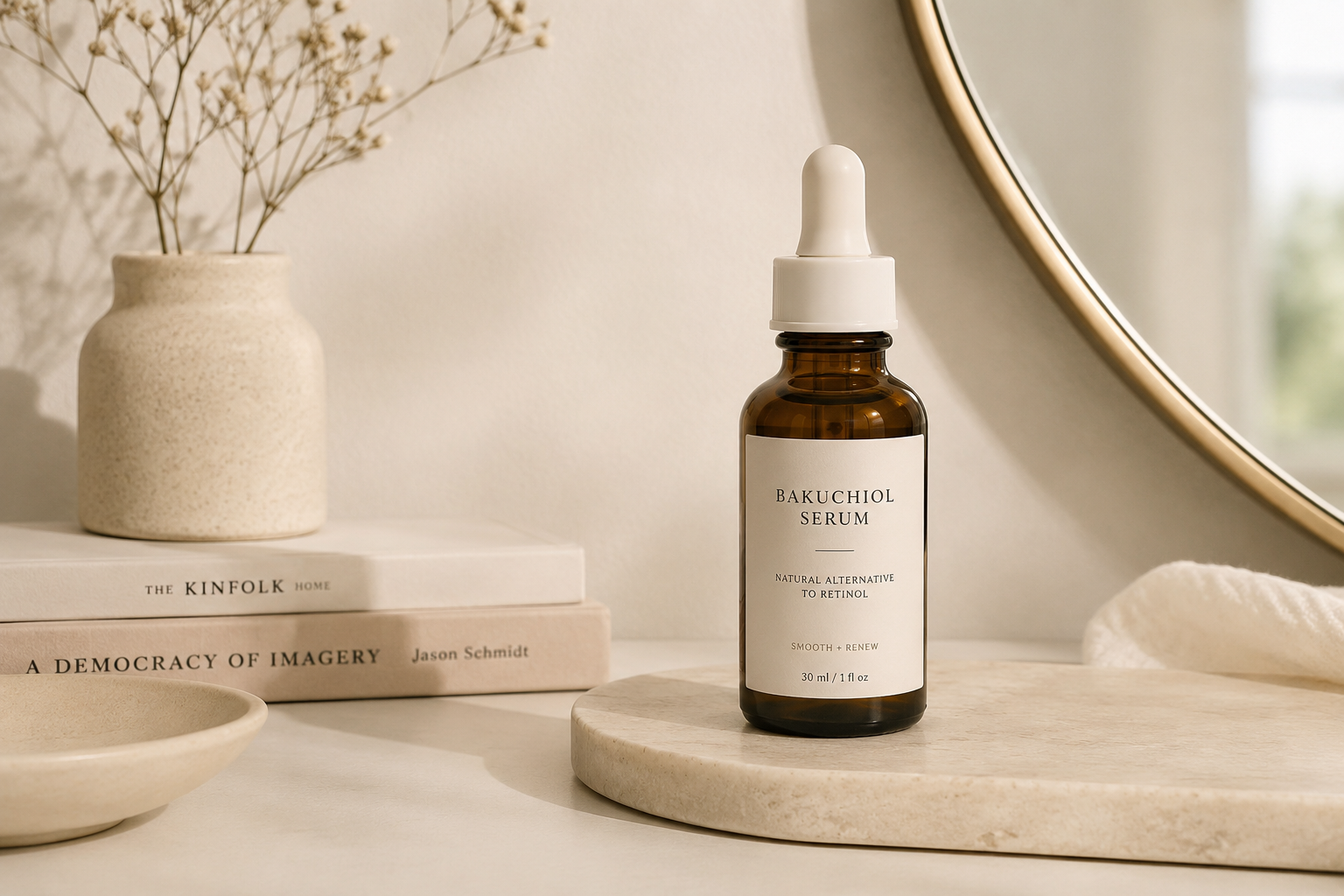
If you’ve read anything about natural alternatives to retinol in the last five years, you’ve heard of bakuchiol. It’s an extract from the seeds of the Psoralea corylifolia plant, used in Ayurveda for centuries under the name babchi.
A 2018 study published in the British Journal of Dermatology compared a 0.5% bakuchiol cream to 0.5% retinol, used twice daily over 12 weeks. The results were genuinely surprising: bakuchiol was comparable to retinol in reducing wrinkle depth and hyperpigmentation, with significantly less irritation. Healthline has a clear plain-English overview if you want the longer version.
Bakuchiol is also pregnancy-safe, can be used morning or night, and plays well with other actives. For a deeper dive on how it stacks up against retinol specifically, I wrote about that comparison in a side-by-side breakdown for sensitive skin.
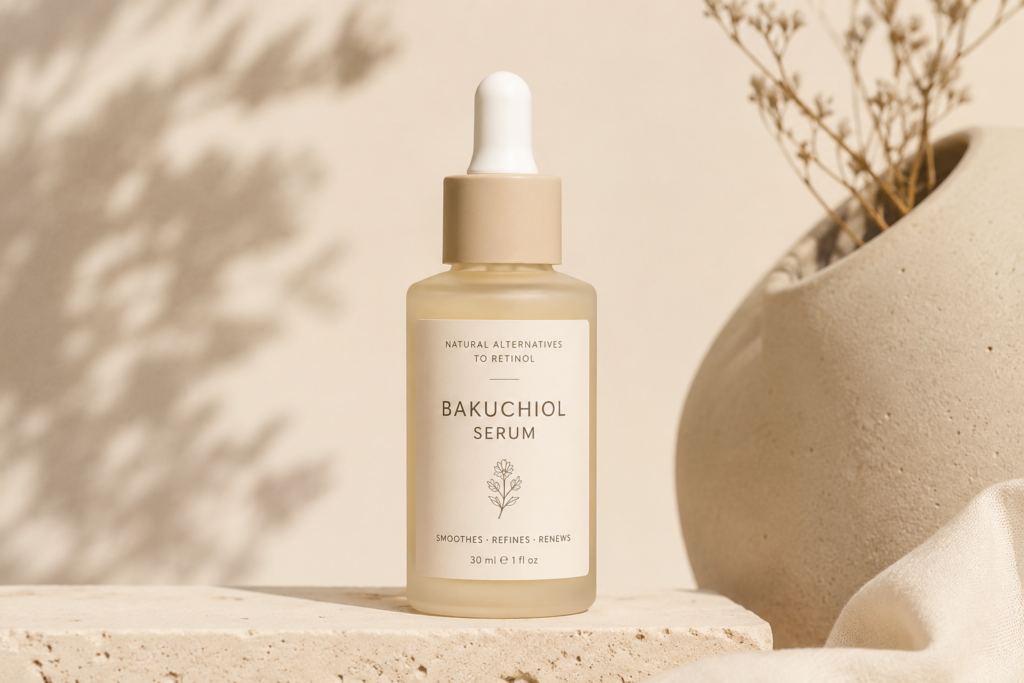
In short: of all the natural alternatives to retinol, bakuchiol is the one with the actual clinical data. It’s the one I went with first when I stopped using retinol, and it’s still in my routine now.
Other Plant-Based Retinol Alternatives Worth Knowing
Bakuchiol gets the headlines, but there are a few other plant-based options that show up consistently in good formulations.
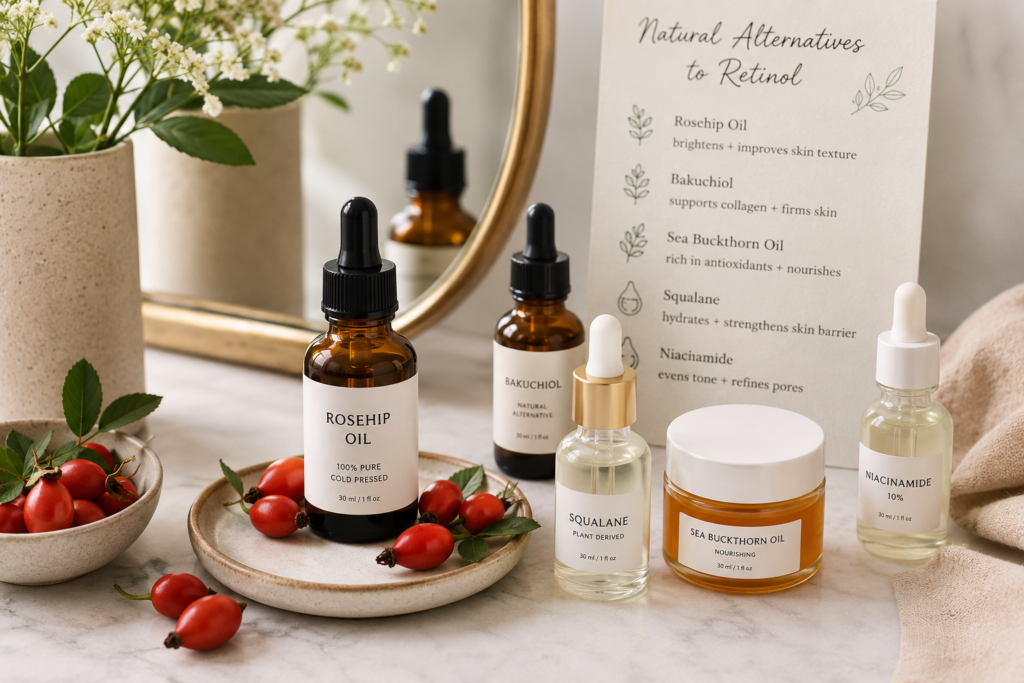
Rosehip seed oil. Cold-pressed rosehip oil naturally contains trans-retinoic acid, a form of vitamin A. It’s gentler than retinol but works in a similar direction, encouraging cell turnover and supporting skin elasticity. It’s also rich in linoleic acid, which helps with barrier function. I’ve used it on its own as a night oil, layered under a moisturizer. Wonderful for dry or dehydrated skin types.
Sea buckthorn. Sea buckthorn berries are loaded with carotenoids, particularly beta-carotene (a vitamin A precursor). When applied topically in oil form, sea buckthorn supports skin regeneration and brightness. It also has a vivid orange color, so use it in small amounts unless you want a temporary glow.
Carrot seed oil. Another carotenoid-rich option. Less studied than bakuchiol but traditionally used in Ayurvedic and herbal skincare for skin tone and brightness. Often used in blends rather than alone.
Niacinamide (the bonus inclusion). Niacinamide isn’t a plant, it’s vitamin B3. But it deserves a mention because it does many of the things people use retinol for: improving texture, reducing fine lines, calming redness, regulating sebum. It pairs beautifully with bakuchiol and is one of the most well-tolerated actives in skincare.
The honest takeaway: the natural alternatives to retinol that have actual research behind them are bakuchiol first, then rosehip oil. Sea buckthorn and carrot seed are supporting players in a good routine, not standalones.
How Effective Are Natural Alternatives to Retinol, Really?
This is the question everyone wants answered, so I’ll be honest about it.
Bakuchiol has the strongest case. The 2018 study isn’t the only one, but it’s the one that put bakuchiol on the map, and follow-up research has been consistent. It’s not a perfect 1-to-1 swap for prescription tretinoin, but for over-the-counter retinol levels, it’s competitive.
Rosehip oil has good evidence for hydration, elasticity, and scar healing. The retinol-like effects are real but milder. Don’t expect it to clear acne or dramatically smooth deeper lines.
Sea buckthorn and carrot seed oil are more about brightness and barrier support than active anti-aging. They’re additive ingredients, not main characters.
A realistic expectation: with consistent use of natural alternatives to retinol, you can expect visibly improved tone, smoother texture, softer fine lines, and calmer skin over 8 to 12 weeks. You probably won’t get the same dramatic results as a prescription retinoid. That’s the trade-off. For a lot of us, the trade-off is worth it.
How to Use Them in Your Routine
The simplest routine looks like this.
In the morning: gentle cleanser, vitamin C serum (optional), moisturizer, mineral SPF.
In the evening: cleanse, apply a bakuchiol serum (or a rosehip oil if your skin is drier), follow with a nourishing serum or face oil, then a moisturizer if your skin needs it.
A few practical notes from doing this for a while. Start with bakuchiol 3 to 4 nights a week and build up, because even though it’s gentle, your skin still adjusts. Don’t layer too many actives at once. Bakuchiol plus niacinamide is fine. Bakuchiol plus AHAs every night is asking your skin to do too much. Always use SPF in the morning, because natural doesn’t mean your skin gets a pass on UV damage.
A nourishing oil or serum at the end of your routine helps lock everything in. I’ve been reaching for the Face Serum with Ghee & Rose from Shvéta Labs for that step. It sits well over bakuchiol and feels less greasy than straight oil.
The point isn’t to build a 12-step routine. The whole appeal of switching to natural alternatives to retinol is that you can keep things calm and minimal.
Who Should Actually Switch
Not everyone needs to make the swap. Here’s how I’d think about it.
Switch if retinol consistently irritates your skin even at low doses, if you’re pregnant, breastfeeding, or trying to conceive, if your skin barrier is already compromised and you need to back off actives, if you want a gentler long-term anti-aging approach, or if you prefer plant-derived ingredients for personal or ethical reasons.
Stick with retinol if you tolerate it well and are seeing the results you want, if you’re treating significant acne or deeper signs of aging and your dermatologist has prescribed a retinoid, or if you don’t mind the adjustment period.
There’s no purity test in skincare. Some people I know use bakuchiol six nights a week and retinol on the seventh. Others have moved fully to natural alternatives to retinol and never looked back. Both are fine. The point is to find a routine your skin actually likes and that you’ll actually stick with.
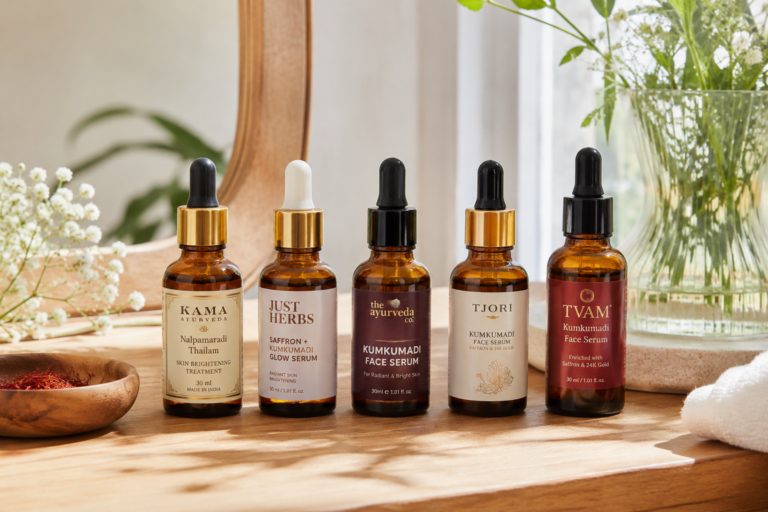
If you’re still figuring out which serum direction makes sense for you, I’d recommend reading through my breakdown of the best ayurvedic face serums on the market, which covers a few of the bakuchiol-forward options. And for anyone with reactive skin in particular, the minimalist routine guide for sensitive skin is a gentler place to start.
The Bottom Line
5 years ago, the conversation around natural alternatives to retinol was largely wishful thinking. Today, there’s actual research, actual formulations, and a real choice to make. Bakuchiol is the headline, rosehip oil is the reliable supporting act, and the rest fill in around them.
If you’ve been pushing through retinol irritation because you thought there was no other option, there is. The results take a little longer, the routine asks less of your skin, and for many of us, that’s the whole point.