Bakuchiol vs Retinol: Which One Is Better for Sensitive Skin?
If you’ve spent any time on skincare TikTok or in a dermatologist’s waiting room lately, you’ve heard both names thrown around like rival siblings. Bakuchiol vs retinol is the comparison everyone wants settled, especially if your skin reacts to anything stronger than aloe. I’ve been there. I once tried a 0.5% retinol on a Sunday night, woke up Monday looking like I’d fallen asleep on a radiator, and spent the next two weeks repairing the damage with sheet masks and regret.
So let’s actually talk about it. Which one wins for sensitive skin, what the research really says, and how to know which side of the bakuchiol vs retinol debate your skin belongs on.
What Retinol Actually Does to Your Skin
Retinol is a derivative of vitamin A, and dermatologists have been prescribing it in various forms since the late 1970s. It works by speeding up cell turnover, which is the rate at which your skin sheds old cells and produces new ones. Faster turnover means fewer clogged pores, smoother texture, less visible pigmentation, and over time, more collagen.
The catch is that retinol is a powerful active. It binds to retinoic acid receptors in your skin cells and essentially tells them to work harder. For most people, that initial period of working harder shows up as redness, peeling, and a kind of raw tightness that anyone who’s tried it will recognize immediately.
For oily or resilient skin, this passes in two to four weeks and the results are real. For sensitive skin, it often doesn’t pass. It just becomes the new normal, which isn’t a win.
What Bakuchiol Is and Where It Comes From
Bakuchiol comes from the seeds of the Psoralea corylifolia plant, used in Ayurveda for centuries long before anyone in a lab thought to compare it with retinol. In Sanskrit, the plant is called bakuchi, and traditional Ayurvedic medicine used it for skin conditions like vitiligo and psoriasis.
What makes the bakuchiol vs retinol conversation interesting is that bakuchiol works on similar pathways in the skin, increasing collagen and improving the look of fine lines, but it doesn’t activate the same receptors that cause retinol’s irritation. It’s slower, gentler, and from a structural standpoint, completely different from vitamin A even though the results overlap.
I’ll be honest, I was skeptical the first time I read about it. A plant-based alternative to retinol sounded like the kind of thing wellness brands say to sell you something. Then I tried it.
The Study Everyone Cites in the Bakuchiol vs Retinol Debate
In 2019, a randomized double-blind study published in the British Journal of Dermatology compared 0.5% bakuchiol cream applied twice daily against 0.5% retinol cream applied once daily, over twelve weeks. The results, which you can read in full on PubMed, showed that both ingredients significantly decreased wrinkle surface area and hyperpigmentation, with no statistical difference between the two.
But the retinol group reported more facial scaling and stinging. The bakuchiol group reported almost none.
That’s one study, on 44 participants, and it’s not the final word. But it’s the first head-to-head clinical comparison we have, and it confirmed what a lot of estheticians had been saying for years: bakuchiol delivers retinol-like results without retinol-like reactions.
Bakuchiol vs Retinol for Sensitive Skin: The Honest Comparison
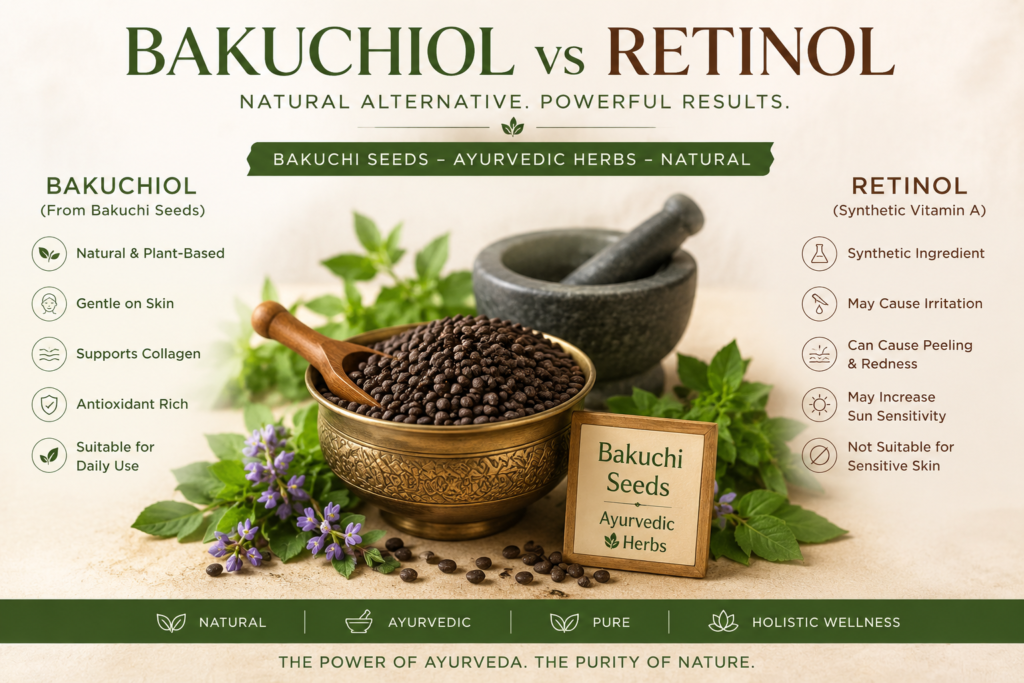
Here’s where the bakuchiol vs retinol question gets practical. If your skin flushes from a glass of red wine, reacts to fragrance, or has any rosacea tendencies, retinol is going to be a fight. Some people win that fight by buffering with moisturizer, starting at 0.01%, applying twice a week. Most sensitive skin types just give up halfway through and conclude their skin “can’t handle” actives.
It can. Just not that one.
Bakuchiol doesn’t require the build-up period. You can apply it twice a day from day one. It’s also stable in sunlight, which means you can use it morning and evening, where retinol is strictly a nighttime ingredient that breaks down in UV.
For sensitive skin specifically, bakuchiol wins on three fronts: tolerance, flexibility, and compatibility with other actives. You can layer it with vitamin C, exfoliating acids, or niacinamide without the chaos that comes from layering retinol with anything.
When Retinol Still Has the Edge
I don’t want to oversell bakuchiol. The bakuchiol vs retinol comparison isn’t a clean win in every category.
If you’re dealing with deep wrinkles, severe sun damage, or stubborn cystic acne, prescription-strength retinoids like tretinoin still have decades of evidence behind them and work faster. Bakuchiol is gentler, but gentler often means slower. You’ll start seeing real change at the eight-to-twelve-week mark, not at four.
There’s also the resilience question. Some people’s skin can handle retinol just fine after a short adjustment period, and for them, there’s no reason to switch. If your barrier is intact and your skin tolerates it, retinol is a proven workhorse.
The bakuchiol vs retinol decision should come down to how your skin behaves, not which one sounds trendier on Instagram.
Who Should Choose Bakuchiol
A few situations where I’d point someone toward bakuchiol every time:
You have sensitive, reactive, or rosacea-prone skin. You’ve tried retinol and your barrier never recovered. You’re pregnant or breastfeeding, since retinol isn’t recommended during pregnancy and bakuchiol is generally considered safe (though I’d still check with your OB, not just a blog). You want a morning-and-night option. You’re new to actives and want to start gentle. You prefer plant-based actives and want something with traditional roots.
If you’re building out a gentler routine from scratch, the rest of my sensitive skin rituals cover the supporting cast: cleansers, moisturizers, and the barrier-friendly basics that make an active like this actually work.
My personal take? I started with bakuchiol three years ago, briefly tried adding low-dose retinol, and my skin made it very clear which one it preferred. I’m sticking with bakuchiol.
How to Use Bakuchiol If You’re Switching from Retinol
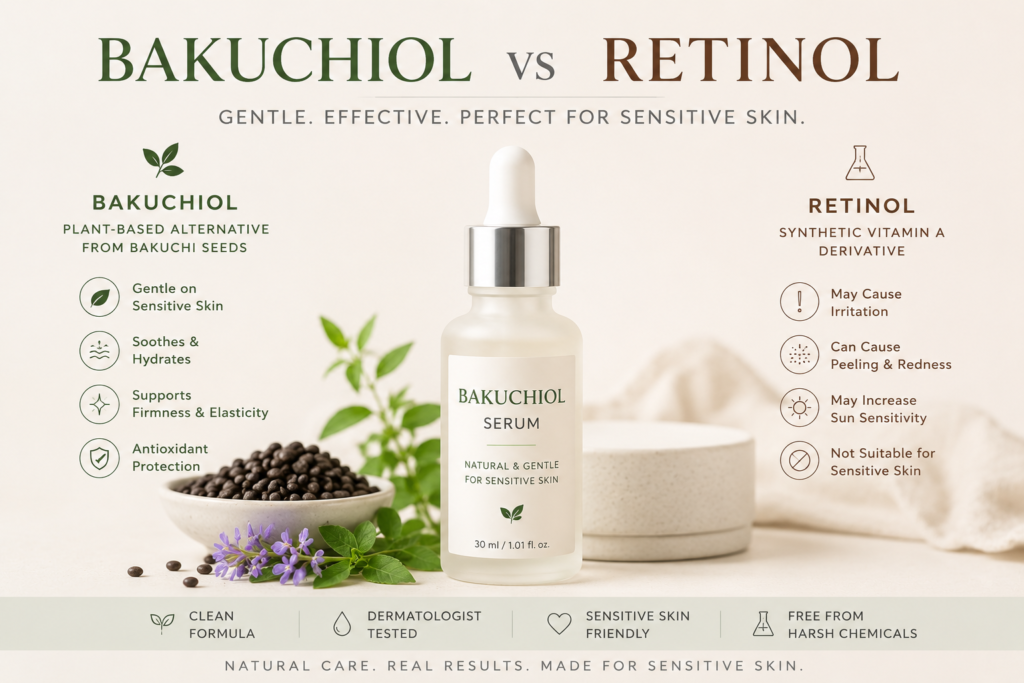
If you’re transitioning from retinol to bakuchiol, give your skin a two-week reset first. Drop the retinol, focus on ceramides, gentle cleansing, and a barrier-friendly moisturizer. Once your skin feels calm again, introduce bakuchiol at 0.5% to 1%, applied to clean dry skin before your moisturizer.
You can use it morning and evening. Apply sunscreen during the day regardless, because good sense doesn’t disappear just because the active is gentler.
Most people see visible results in eight to twelve weeks. Texture improves first, then tone, then fine lines. Stay consistent. Don’t expect overnight changes, because that’s not how either ingredient really works, despite the marketing.
The Bottom Line on Bakuchiol vs Retinol for Sensitive Skin
If your skin is sensitive, the bakuchiol vs retinol comparison isn’t really close. Bakuchiol gives you most of retinol’s benefits without the cost of an irritated, compromised barrier. It’s slower, but it works. It’s gentler, but it’s not weak.
Retinol still earns its reputation for resilient skin and for specific concerns like deep wrinkles or stubborn acne. But for everyone else, especially those of us who’ve spent years apologizing to our skin for what we put on it, bakuchiol is the obvious starting point.
Your skin doesn’t have to suffer to look better. That’s the part the older generation of skincare advice got wrong.