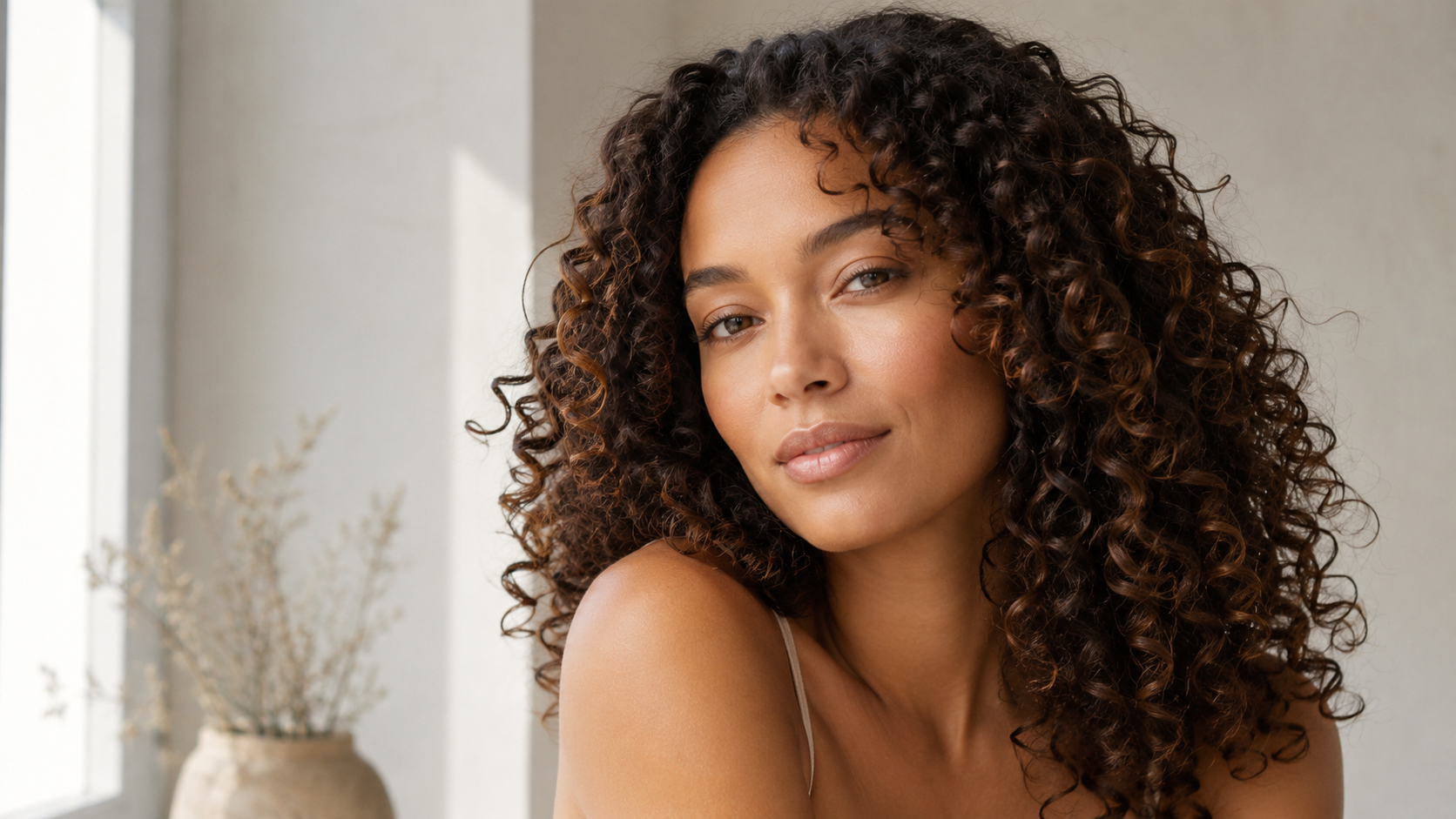
Natural Curl Definition: How to Get Bouncy, Frizz-Free Curls Without Silicones
Natural curl definition is one of those things that sounds simple until you try it. Without silicones doing the heavy lifting, you have to actually understand what your curls need and give it to them. The good news is that once you figure it out, the results are better than anything a silicone-heavy product ever delivered.
Here’s what natural curl definition actually means, why silicones are worth leaving behind, and how to get hold that lasts.
Why Silicones Are a Problem for Curly Hair
Silicones work by coating the hair shaft. They create a smooth surface that looks shiny and feels soft, at least initially. The problem is that they don’t actually penetrate the hair. They sit on top of it, and over time that coating builds up.
For curly hair, buildup is a particular problem. Curly hair is naturally more porous than straight hair, and the coiled structure means moisture has a harder time traveling from the scalp down the hair shaft. When silicones coat the outside of already moisture-hungry strands, they seal out the water and conditioning ingredients the hair actually needs. The result is curls that look defined on wash day but feel increasingly dry, brittle, and limp over time.
Removing silicones from your routine forces your hair to rely on actual moisture and nourishment rather than a coating. The adjustment period can be uncomfortable, a week or two where your curls feel different and unfamiliar. But on the other side of that adjustment is natural curl definition that comes from genuinely healthy, hydrated hair rather than a synthetic film.
What Natural Curl Definition Actually Requires
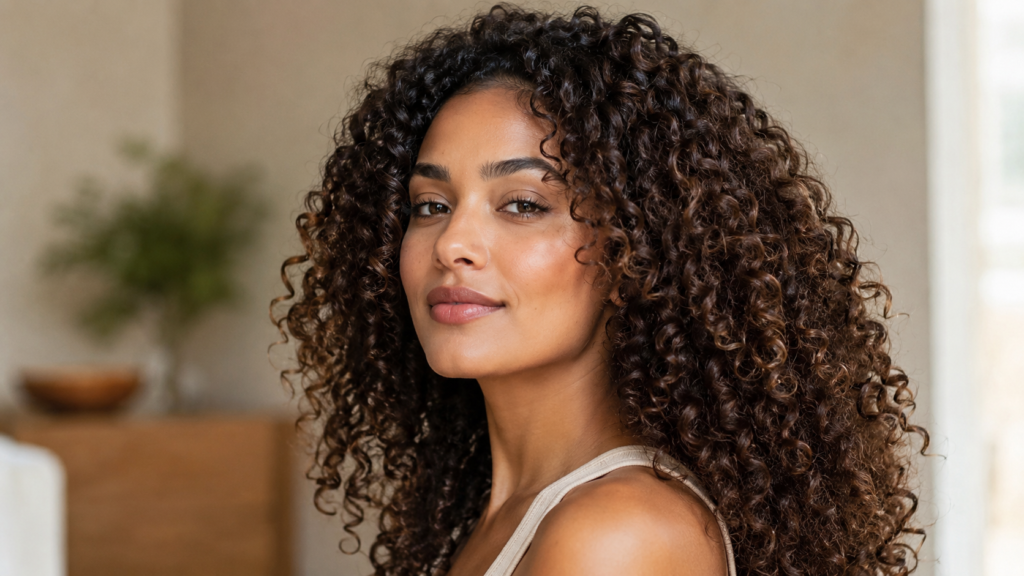
Curls define themselves when they have three things: moisture, structure, and hold.
Moisture is the foundation. Dry curls don’t clump, they frizz. Every step of a natural curl routine should be oriented around getting water into the hair shaft and keeping it there. This is why the order of products matters, and why applying products to soaking wet hair rather than damp hair makes such a significant difference.
Structure comes from the ingredients you use to encourage the curl pattern. Natural botanicals, plant-derived film formers, and ingredients that add slip without coating help the curls group together into defined clumps rather than separating into individual frizzy strands.
Hold is what keeps the definition in place once the hair dries. This is where most silicone-free routines struggle, because the hold has to come from somewhere. Natural waxes and plant-based hold ingredients are the most effective alternatives, but they require understanding how to apply them correctly.
The Role of Natural Waxes in Curl Definition
This is where it gets interesting from an ingredient perspective.
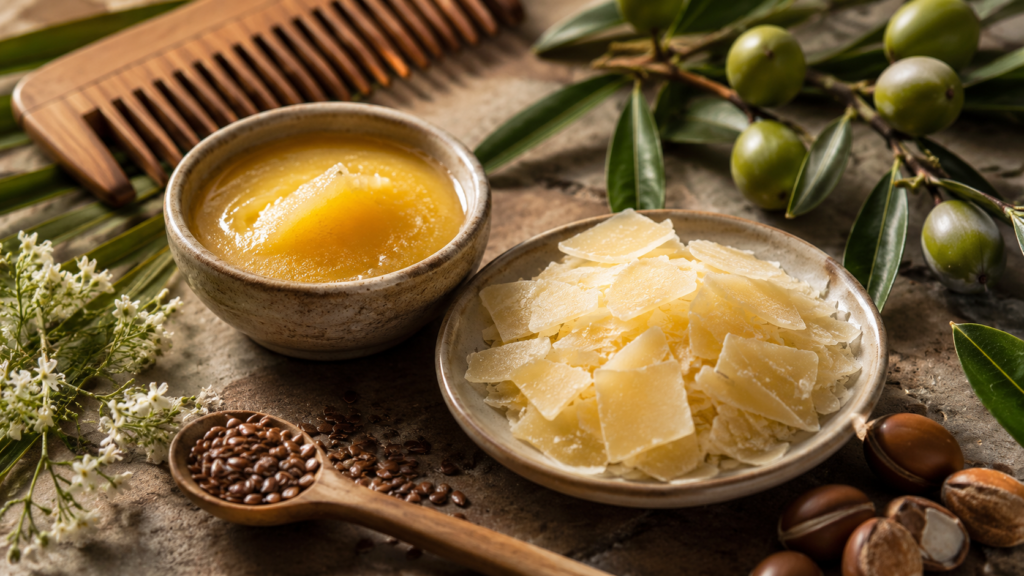
Carnauba wax comes from the leaves of the Brazilian carnauba palm tree. It’s one of the hardest natural waxes available and has been used in everything from car polish to food coatings. In hair care, a very small amount provides a flexible hold that keeps curls in shape without stiffness or flaking. Unlike silicones, carnauba wax doesn’t build up on the hair because it can be removed with a regular sulfate-free shampoo.
Ghee adds a different dimension. Its fatty acid profile nourishes the hair shaft from within, improving elasticity and reducing the brittleness that causes frizz. Ghee-based products give curls the suppleness they need to hold their shape rather than expanding into frizz as humidity increases.
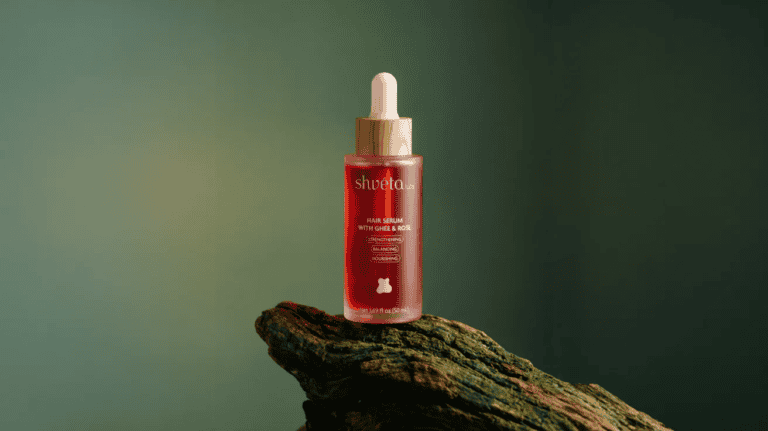
The combination of ghee and carnauba wax in a styling product addresses both the nourishment and the hold side of natural curl definition simultaneously. The Shvéta Labs Hair Conditioning Wax is built around exactly this combination, delivering flexible hold and deep conditioning in a single step rather than requiring multiple layered products.
The Natural Curl Definition Routine
Getting this right is mostly about sequencing. Here’s what works.
Start with soaking wet hair. This is not optional. Natural curl definition products work significantly better when applied to hair that is completely saturated with water. After washing, don’t towel dry. Squeeze out the excess water gently with your hands, but leave the hair wet enough that water is still dripping slightly.
Apply a leave-in conditioner or lightweight oil first. Argan oil is a particularly good choice here because its oleic acid content smooths the cuticle before you apply any styling product, which helps the curl pattern set more cleanly. One to two drops worked through the mid-lengths and ends is enough.
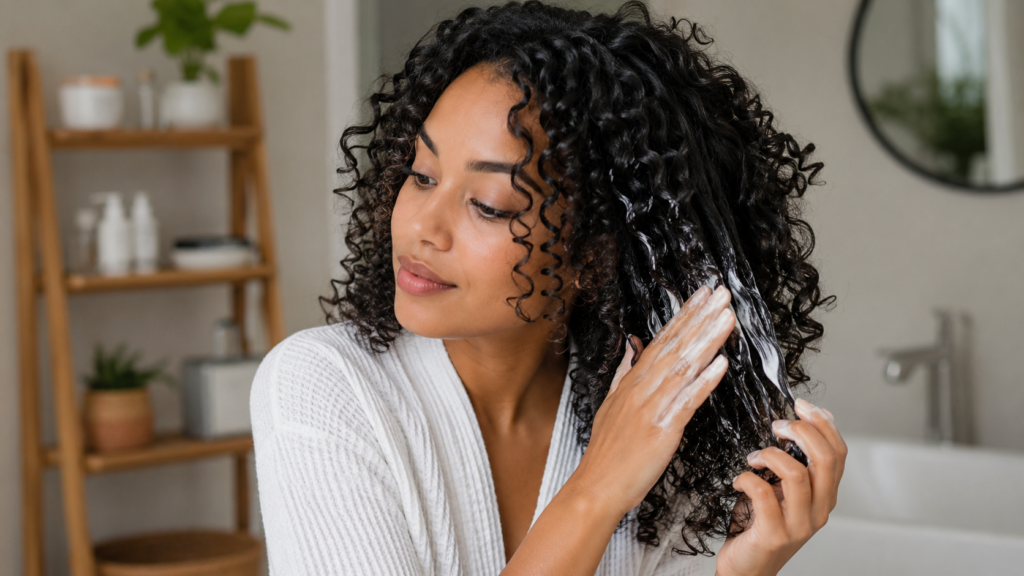
Apply your styling product to soaking wet hair in sections. Divide the hair into four to six sections and apply the product to each section separately. This ensures even distribution and helps every curl get coated. Rake the product through with your fingers, then scrunch upward toward the scalp to encourage the curl to form.
Do not touch your hair while it dries. This is where most people lose their definition. Every time you touch drying hair, you’re disturbing the curl clumps and creating frizz. Let the hair air dry completely or use a diffuser on low heat, scrunching upward every few minutes to encourage volume.
Once the hair is completely dry, you can scrunch out any crunchiness with a small amount of oil on your palms. This is called “scrunching out the crunch” in curly hair communities, and it’s what takes the curl from stiff and defined to soft and defined.
What to Avoid
Touching your hair while it’s drying, as already mentioned, is the biggest mistake. The second biggest is using too much product. Natural waxes and heavier ingredients need to be used sparingly. A pea-sized amount of a wax-based styler is usually enough for medium-length hair. More than that and you’ll end up with buildup, not definition.
Applying products to dry or only slightly damp hair is another common error. The products can’t distribute evenly through dry hair and the curl pattern won’t form properly.
Finally, expecting instant results. Natural curl definition takes a few wash days to fully emerge after transitioning away from silicones. Your hair needs time to relearn how to behave without the coating, and your routine needs time to adjust to what your specific curl type actually needs.
Adjusting for Your Curl Type
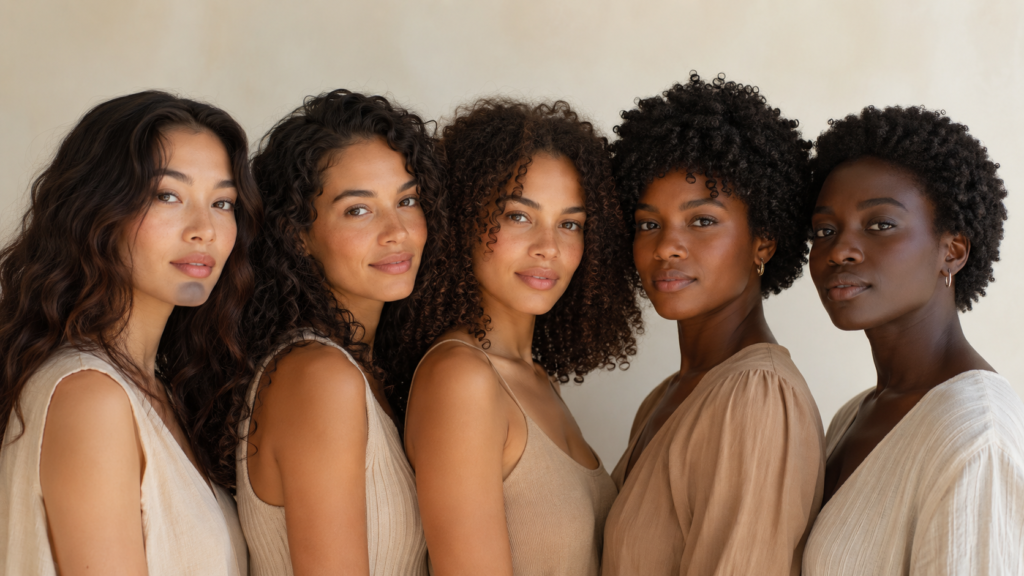
Loose waves, type 2 hair, need lighter products and less hold. A lightweight leave-in and a small amount of a wax-based styler is usually enough. Heavy products weigh down loose waves and pull them straight.
Classic curls, type 3, benefit from a medium hold product and more moisture. This hair type responds well to the ghee and carnauba wax combination because it needs both nourishment and hold in equal measure.
Tight coils and type 4 hair need the most moisture and the most hold. Richer products work better here, and the LCO method, liquid, cream, oil, helps ensure moisture is properly sealed in before styling.
The Bottom Line
Natural curl definition without silicones is not more complicated than styling with silicones. It just requires understanding what your curls actually need rather than relying on a coating to fake the result.
Moisture, structure, and hold. Get those three things right with the right natural ingredients, applied in the right order to soaking wet hair, and your curls will do the rest.