Ancient Forest Skincare: Why Ingredients From the World’s Oldest Rainforests Work Differently
Ancient forest skincare is not a marketing category. It’s a genuinely distinct approach to ingredients, one that starts from a simple premise: plants that have been evolving for tens of millions of years in some of the most biodiverse environments on earth develop a complexity that younger ecosystems simply cannot replicate.
Here’s why that matters for what you put on your skin.
The Age of a Forest Changes Everything
Most people think of forests as forests. Green, old, full of plants. But the age of an ecosystem fundamentally shapes the complexity of the organisms within it.
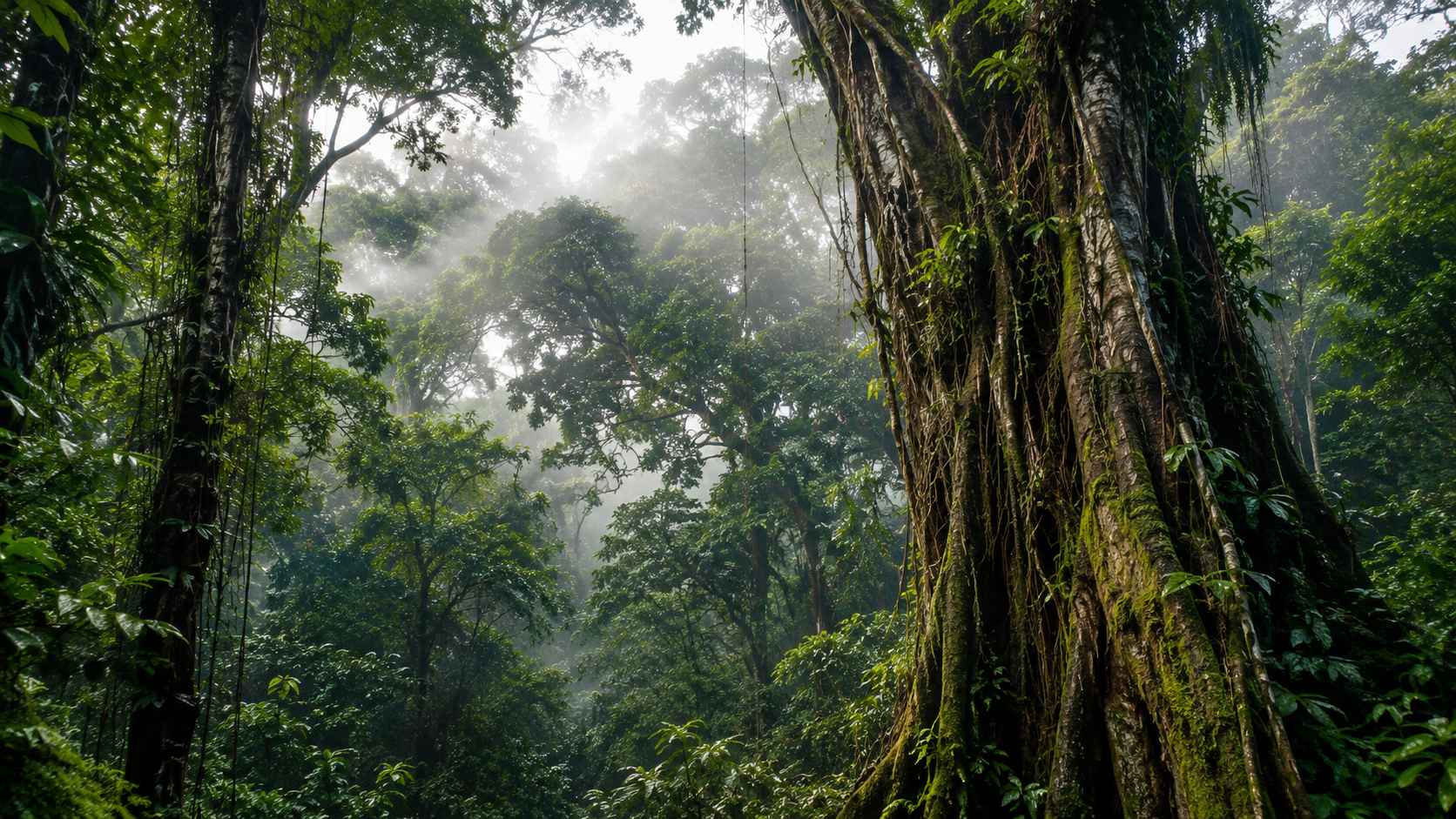
The Amazon rainforest, which most people think of first when they hear “tropical rainforest,” is approximately 55 million years old. That’s ancient by most standards. But the rainforest of the Malay Peninsula and Borneo is estimated to be over 130 million years old, making it the oldest tropical rainforest on the planet by a significant margin.
130 million years means 130 million years of plant adaptation, co-evolution, competition, and refinement. The plants that have survived in this environment have developed extraordinarily complex chemical profiles, producing compounds that younger ecosystems have simply not had time to evolve.
For skincare ingredients, this matters. The fatty acid profile of an oil, the concentration of antioxidants in a plant extract, the diversity of bioactive compounds in a botanical, these are all products of evolutionary time. Ancient forest skincare draws on this depth in a way that ingredients from younger agricultural contexts cannot match.
What Makes Ancient Forest Ingredients Different
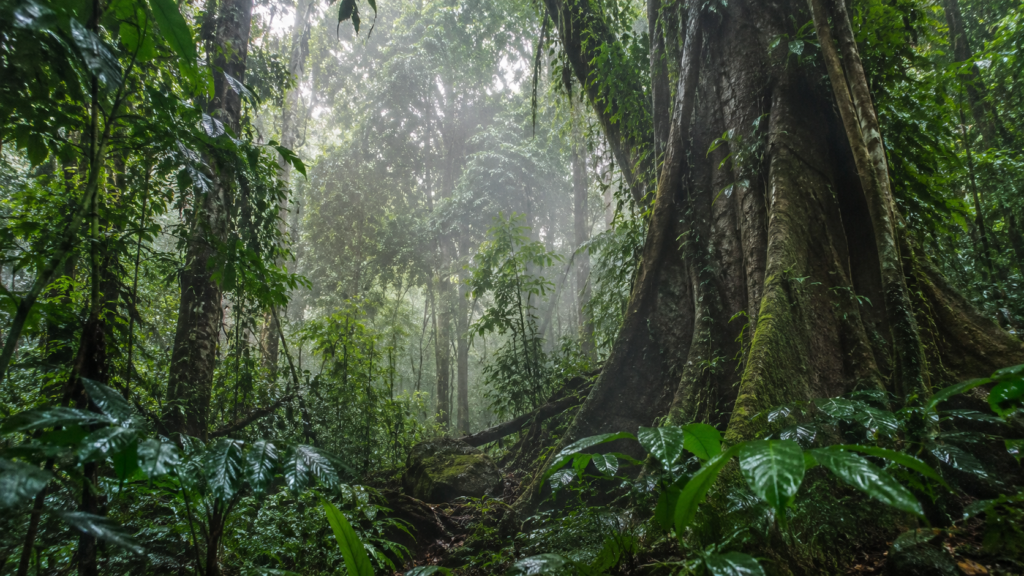
The scientific case for ancient forest skincare rests on a concept called terroir, a term borrowed from winemaking that describes how the specific environment in which something grows shapes its final character.
In wine, terroir explains why the same grape variety produces fundamentally different wines depending on the soil, climate, and microbiome of where it’s grown. In skincare ingredients, the same principle applies. An oil produced from plants grown in a 130-million-year-old rainforest environment carries the influence of that environment in its molecular composition.
Ancient rainforest soils are extraordinarily mineral-rich. Millions of years of leaf fall, decomposition, and microbial activity create a soil complexity that supports plants with higher concentrations of trace minerals, phytochemicals, and bioactive fatty acids. When animals graze on plants from these environments, that complexity passes into their milk and the fat derived from it.
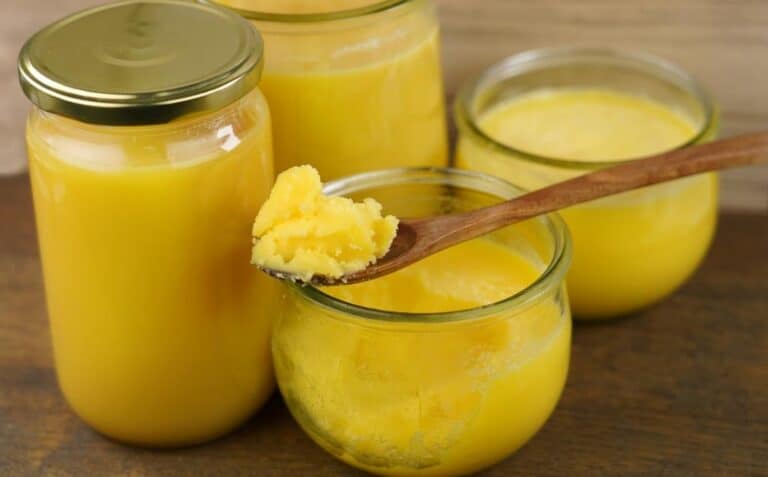
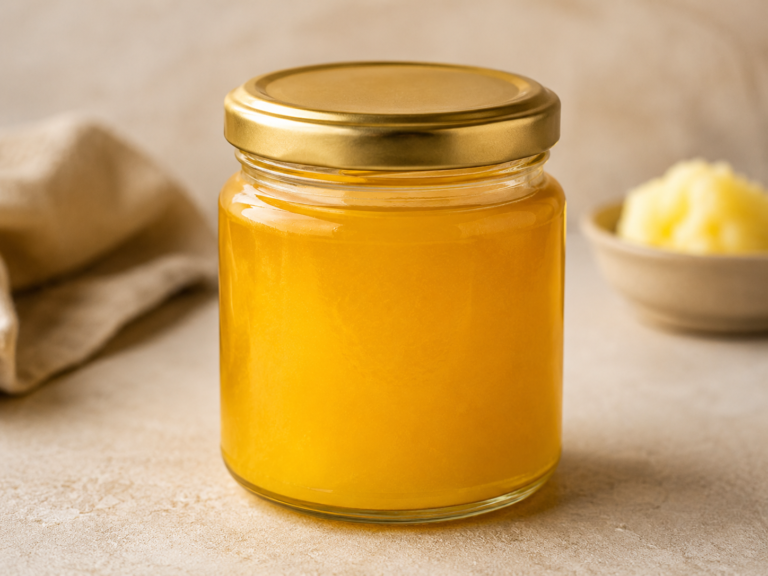
This is why ghee sourced from cows grazing on ancient rainforest land is not the same ingredient as ghee from cows raised in conventional agricultural settings. The fatty acid profile, the fat-soluble vitamin content, and the overall bioactive complexity of the ingredient differ in ways that are measurable and meaningful for skin.
The Malaysian Rainforest: A Case Study in Ancient Forest Skincare
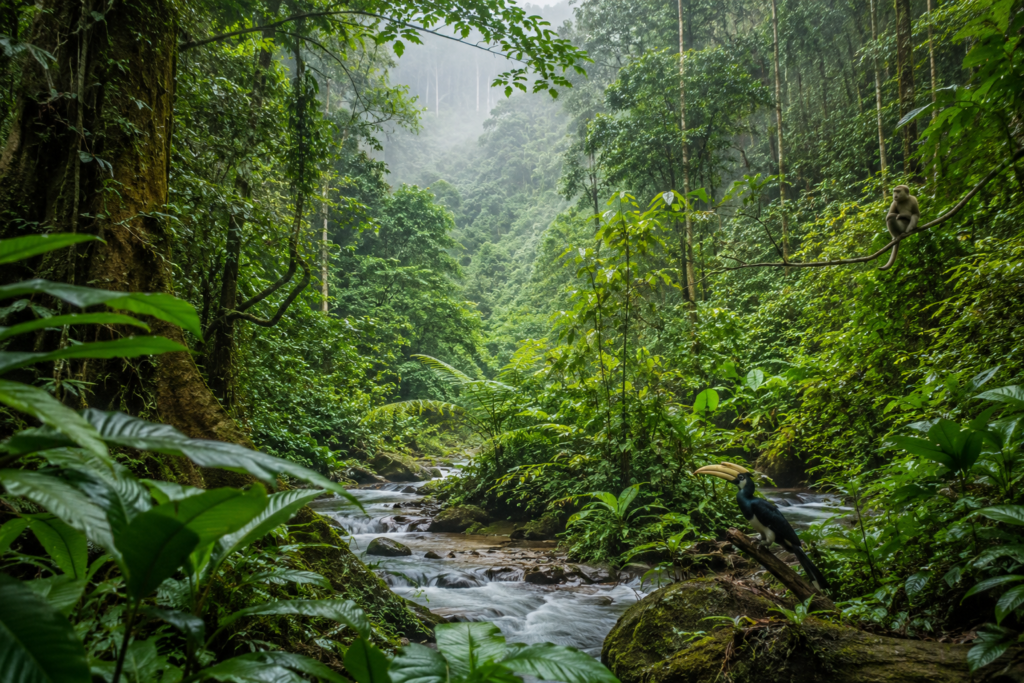
The Malaysian rainforest is home to an estimated 185,000 species of animals and 12,500 species of plants. To put that in context, the entire European continent has approximately 12,500 plant species total. The Malaysian rainforest contains that same biodiversity in a fraction of the land area.
This extraordinary biodiversity is a direct product of 130 million years of evolution. The plants, microorganisms, and animals that live in this environment have been co-evolving and developing increasingly complex biological relationships for longer than most of the world’s major ecosystems have existed.
For skincare, the implications are significant. Botanical ingredients sourced from this environment carry a depth of phytochemical complexity that reflects millions of years of biological refinement. Ghee produced from cows grazing on land adjacent to this ancient forest carries the nutritional signature of those plants through the food chain, resulting in a more complex and bioactive fat than conventionally produced ghee.
This is the foundation of what makes ancient forest skincare a genuinely meaningful category rather than a marketing claim.
Biocompatibility: Why Ancient Ingredients Work With Human Skin
One of the consistent findings in skincare research is that the most effective ingredients tend to be those that are most biocompatible with human skin, meaning they work with the skin’s existing biology rather than imposing a foreign chemical reaction on it.
Ancient forest skincare ingredients tend to score exceptionally well on biocompatibility for a simple reason: humans evolved in environments with similar biodiversity. Our skin’s lipid barrier, its fatty acid composition, its response to plant-derived compounds, these are the products of millions of years of co-evolution with the natural world.
When you apply an ingredient whose molecular profile has been shaped by millions of years of evolution in a biodiverse environment, you’re applying something your skin has a degree of biological familiarity with. This is why traditional botanical skincare ingredients used for thousands of years, many of which originated in ancient forest environments, tend to cause fewer reactions and integrate more effectively than novel synthetic compounds.
The fatty acids in ghee from ancient forest-adjacent land closely mirror the natural lipid composition of human skin. This isn’t coincidence. It’s the product of a long shared evolutionary history between the animals that produce the fat, the plants they eat, and the human biology that processes it.
Sustainability and Ancient Forest Skincare
The conversation about ancient forest skincare cannot happen without addressing sustainability. Ancient forests are among the most threatened ecosystems on earth. Sourcing ingredients from these environments carries an ethical responsibility that goes beyond ingredient quality.
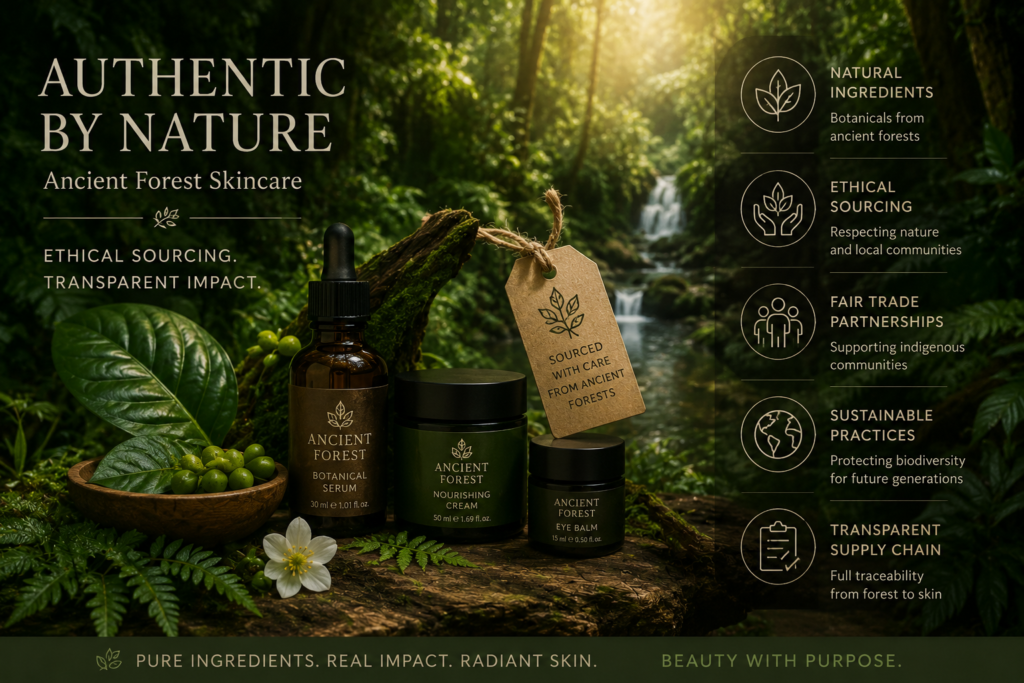
Responsible ancient forest skincare means sourcing from brands that actively support the preservation of the ecosystems their ingredients depend on. This includes ethical land management, no-deforestation sourcing commitments, and transparent supply chains that can be traced from the forest to the formula.
It also means understanding that the value of an ancient forest extends far beyond the ingredients it produces. Ancient tropical rainforests contain biodiversity that holds secrets to medicine and beauty that science is only beginning to understand. Preserving them is not just an environmental responsibility. It’s a condition for the long-term viability of ancient forest skincare as a meaningful category. Zaphira Nature
For a deeper understanding of how ancient forest biodiversity is formally recognized and protected, the UNESCO World Heritage documentation on ancient rainforest ecosystems provides authoritative context on why these environments are considered irreplaceable.
How to Identify Genuine Ancient Forest Skincare
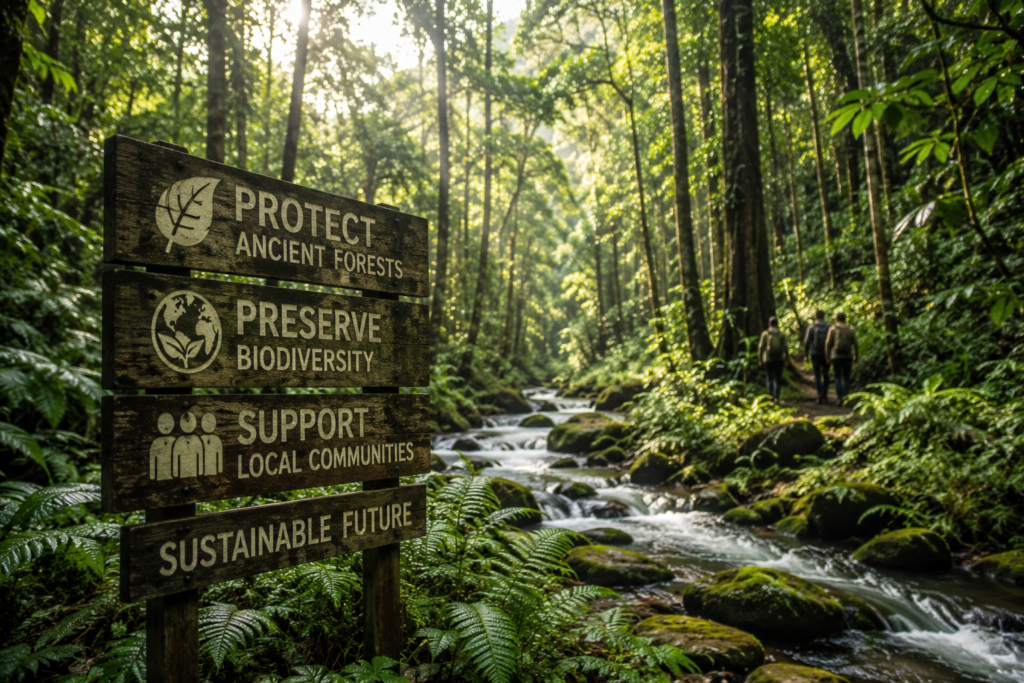
The term “ancient forest skincare” is not yet regulated, which means brands can use it loosely. Here’s how to evaluate whether a brand’s ancient forest claims are meaningful.
Look for specific sourcing information. A brand making genuine ancient forest skincare claims should be able to tell you exactly where their ingredients come from, the age and biodiversity credentials of that ecosystem, and how they ensure their sourcing supports rather than depletes it.
Look for traceability from farm to formula. The most credible ancient forest skincare brands control their supply chain from the source. This typically means owning or partnering directly with farms or cooperatives within or adjacent to the ancient forest environment, rather than purchasing through commodity ingredient brokers.
Look for evidence of environmental commitment. Brands that genuinely rely on ancient forest ecosystems for their ingredients have a strong incentive to protect those ecosystems. This typically shows up as formal commitments to no-deforestation, support for conservation initiatives, or direct land stewardship.
Be skeptical of vague claims. “Inspired by the rainforest” or “contains exotic botanicals” without specific sourcing information is marketing language, not ancient forest skincare.
The Bottom Line
Ancient forest skincare is not a trend. It’s a recognition that the age and biodiversity of the environment in which an ingredient grows shapes that ingredient’s complexity, bioactivity, and ultimately its effect on skin.
130 million years of evolution produces ingredients that shorter agricultural timescales simply cannot replicate. For consumers who care about both the quality of what goes on their skin and the preservation of the ecosystems that produce it, ancient forest skincare represents one of the most meaningful directions in natural beauty.
The forests that make it possible are irreplaceable. The ingredients they produce reflect that.