3 Steps : How to Build a Minimalist Skincare Routine for Sensitive Skin
If your skin reacts to almost everything, the answer probably isn’t another product. A minimalist skincare routine for sensitive skin actually comes down to three steps, not twelve, and that’s the whole point. Fewer ingredients means fewer things that can set off redness, stinging, or that tight, angry feeling after you wash your face.
I learned this the hard way. For years I had a bathroom shelf that looked like a small pharmacy, and my skin was worse for it. The day I cut everything back to the basics was the day my face finally calmed down.
Why Less Is Actually More for Reactive Skin
Here’s the thing nobody tells you when you’re standing in the skincare aisle: every product you add is another roll of the dice. Fragrances, essential oils, strong acids, layers of actives all stacked on top of each other. Each one is a possible trigger. When your skin is sensitive, your barrier is already a bit compromised, and piling on products just gives it more to fight.
A minimalist skincare routine for sensitive skin works because it removes the guesswork. If something goes wrong, you only have three suspects instead of fifteen. That alone makes troubleshooting so much easier.
I’m not going to pretend I figured this out on my own. My dermatologist in the city basically told me to strip everything back and add things in one at a time, slowly. It was annoying advice at first. It also worked.
Step 1: A Gentle, Non-Stripping Cleanser
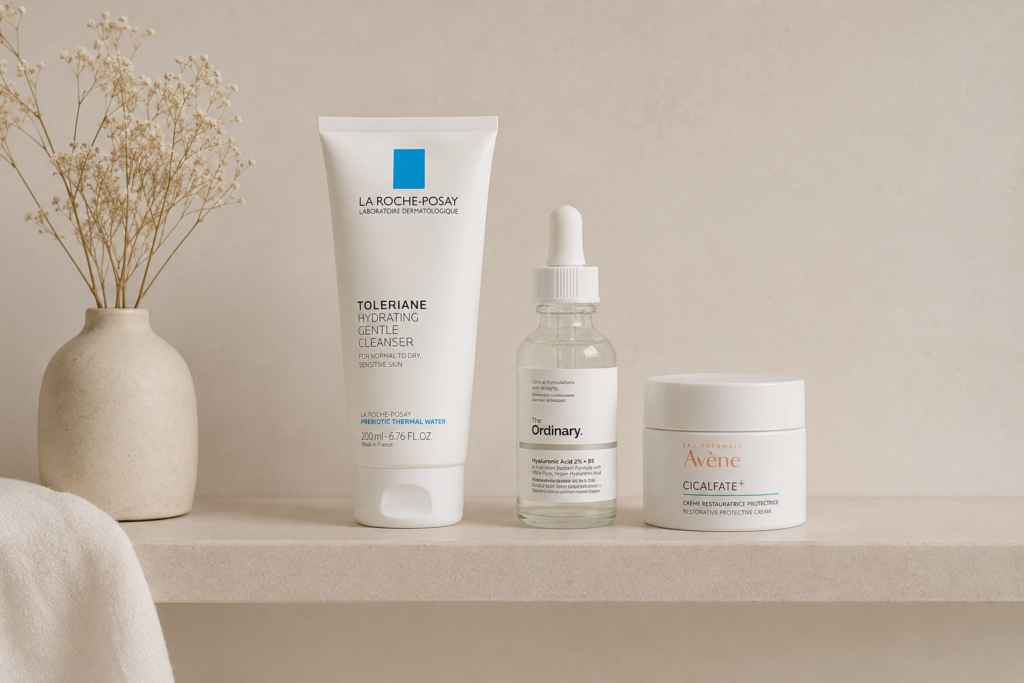
Cleansing is where most sensitive skin routines go wrong. People reach for foaming washes that squeak, and that squeaky-clean feeling is actually your skin telling you it’s been stripped. You want the opposite. A cleanser that lifts off the day without taking your barrier down with it.
Look for something low on surfactants, fragrance-free or very lightly scented, and pH-balanced. Cream and mousse textures tend to be gentler than gel foams. The goal is skin that feels clean but comfortable, never tight.
If you’ve got reactive skin, you also want to avoid double cleansing every single night unless you’re wearing heavy makeup or sunscreen. Once in the evening is usually plenty. Honestly, on a lazy day I’ll just rinse with water in the morning and save the cleanser for night. That’s allowed. Your skin won’t fall apart.
For more on why barrier-friendly cleansing matters, this breakdown of calming botanical ingredients is worth a read, especially if you’re drawn to gentle, plant-based formulas.
Step 2: One Hydrating, Barrier-Supporting Serum
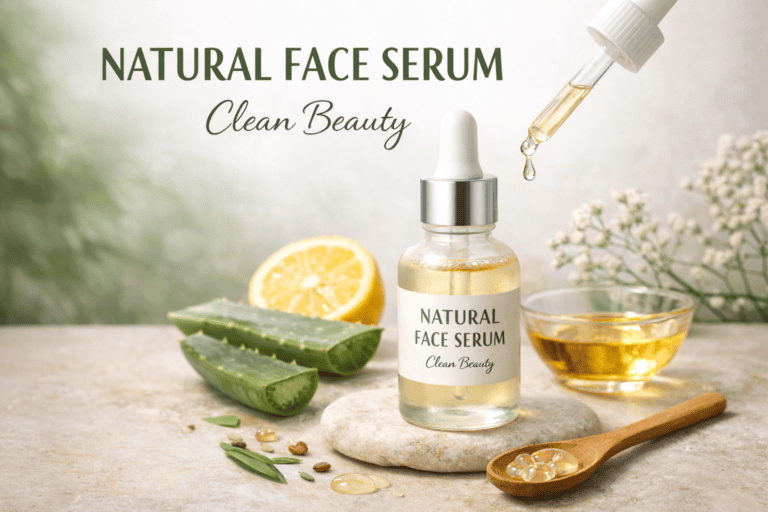
This is the step that does the heavy lifting. Instead of layering a hydrating toner, then an essence, then a serum, then a moisturizer, you pick one well-formulated product that hydrates and supports your skin barrier in a single move. This one decision is what makes a minimalist skincare routine for sensitive skin actually doable.
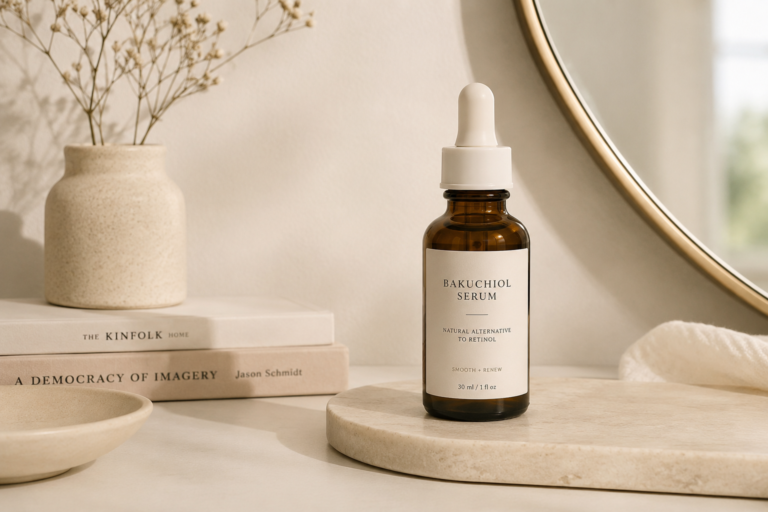
What you’re looking for here is hydration plus calm. Ingredients like hyaluronic acid and glycerin pull in moisture. Soothing actives like bisabolol and bakuchiol bring down redness and reactivity without the irritation you sometimes get from stronger anti-aging ingredients. Bakuchiol in particular is a gentler stand-in for retinol, which is great news if your skin can’t handle the real thing.
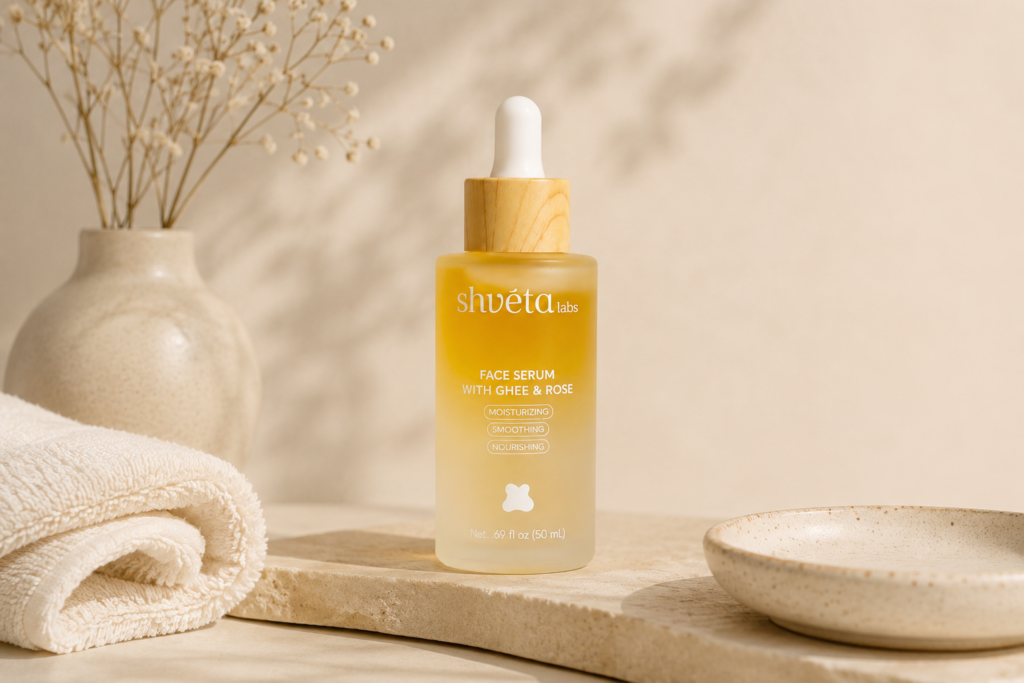
The serum I keep reaching for is the Face Serum with Ghee & Rose by Shvéta Labs. It’s built around exactly that combination, hyaluronic acid for hydration, bisabolol and bakuchiol to calm things down, and ghee for that soft, nourished finish. It does the work of two or three products on its own, which is the whole idea of a minimalist routine.
If your skin runs dry as well as sensitive, ghee is a quietly brilliant ingredient. I went deep on how ghee works as a facial treatment if you want to understand why it shows up in so many gentle formulas.
A quick note on patch testing. Even with the gentlest serum, dab a little behind your ear or on your wrist and wait a day before going all in. I skip this step constantly and then regret it, so learn from me and don’t.
Step 3: Sunscreen in the Morning, Plain Moisturizer at Night
The third step changes depending on the time of day, and this is the only place I’ll let a minimalist routine bend a little.
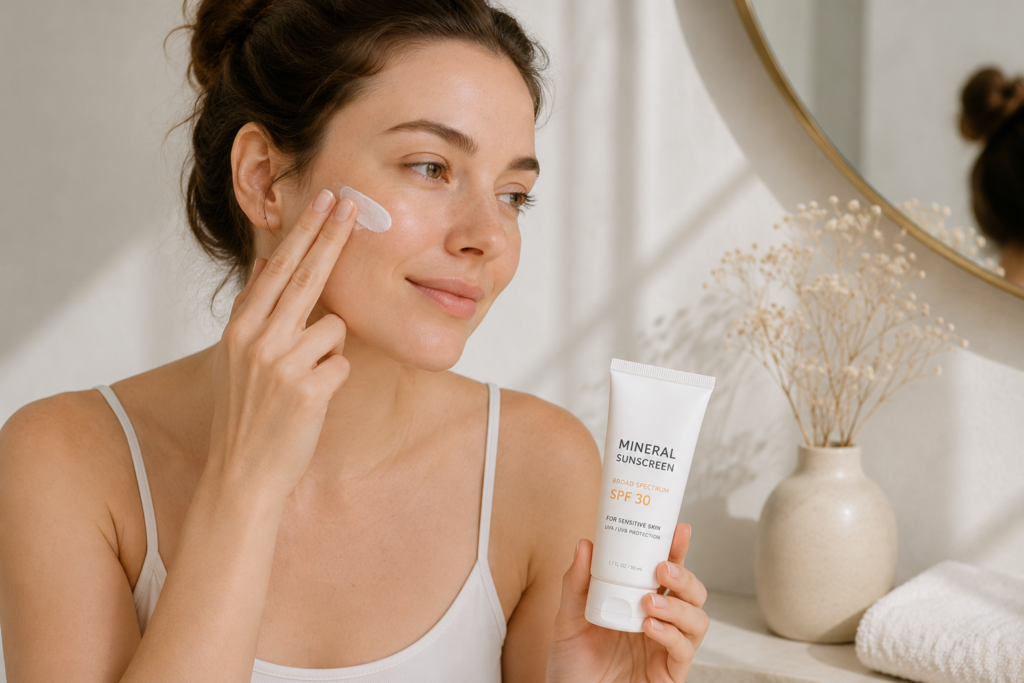
In the morning, your final step is sunscreen. Full stop. There’s no point calming and hydrating your skin all night if you’re going to let UV undo it by lunchtime. For sensitive skin, a mineral sunscreen with zinc oxide tends to sit better than chemical formulas, which can sting or burn reactive skin. Pick one that feels comfortable enough that you’ll actually wear it every day, because the best sunscreen is the one you don’t dread putting on.
At night, if your serum already leaves your skin feeling comfortable, you might not need a separate moisturizer at all. If you do, keep it simple and fragrance-free. A basic ceramide or squalane cream is plenty. You’re sealing in the serum, not adding a tenth ingredient to the mix.
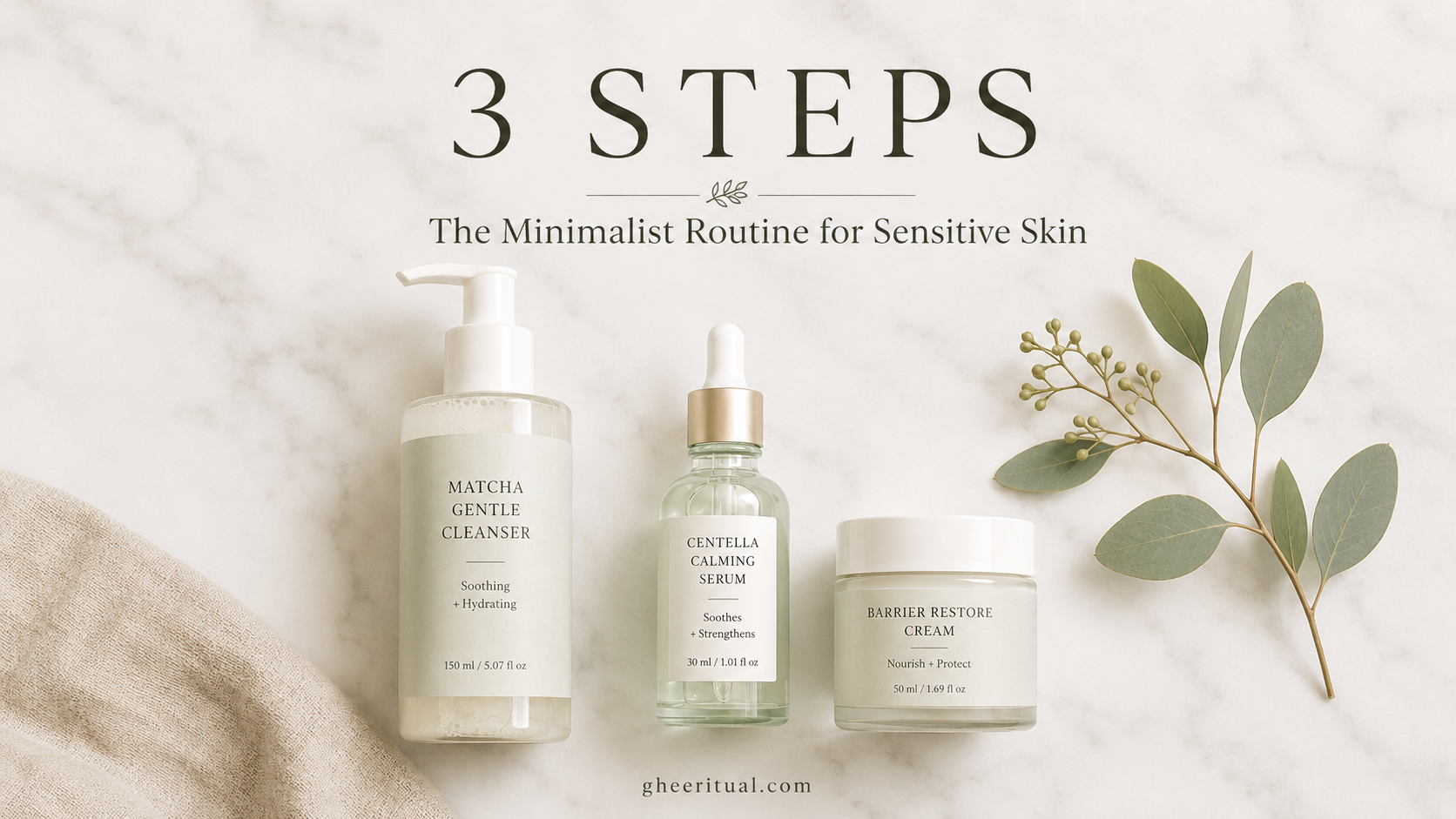
That’s the full minimalist skincare routine for sensitive skin. Cleanse gently, hydrate and calm with one good serum, protect or seal depending on the time of day. Three steps. No drama..
How Long Before a Minimalist Skincare Routine for Sensitive Skin Shows Results
Give it three to four weeks before you judge anything. Skin turns over on roughly a month-long cycle, and a barrier that’s been irritated for a while needs time to settle. The first week can even feel a little boring, like nothing is happening. That’s actually a good sign. Boring means your skin isn’t reacting, and for sensitive skin, calm is the goal.
If something does flare up, you’ll know exactly which of the three products to suspect. That’s the hidden gift of keeping it minimal. You can troubleshoot in an afternoon instead of running a two-month investigation.
I held onto my ten-step routine for far too long because it felt like I was doing something. A minimalist skincare routine for sensitive skin felt almost lazy at first. My skin has been calmer in the last year than it was in the previous five, so I’ve made my peace with lazy.