Bakuchiol Serum for Sensitive Skin: A Beginner’s Guide
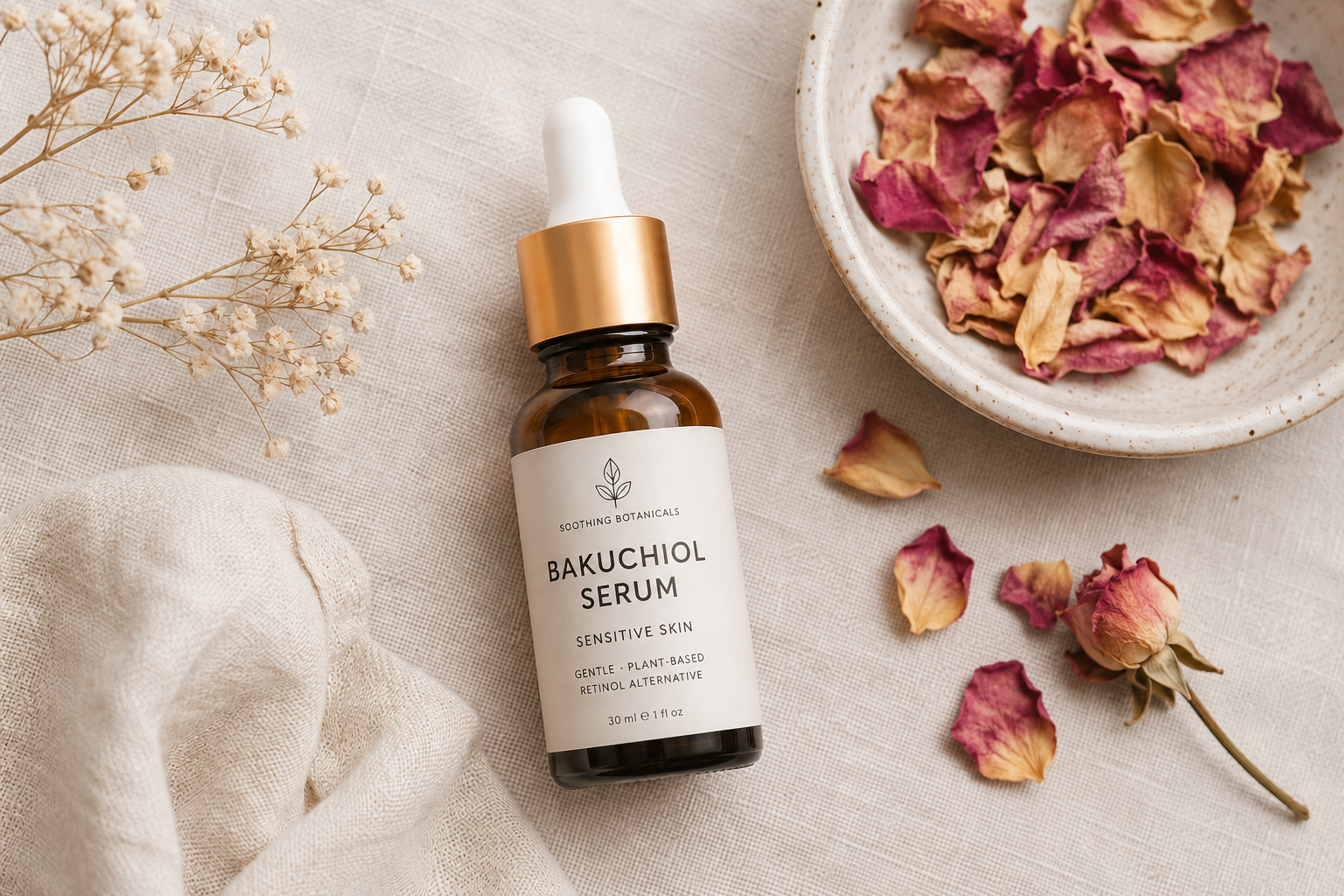
If retinol has ever left your face red, peeling, or stinging in a way that made you wonder what you did to deserve it, you’ve probably seen the word bakuchiol pop up as a gentler option. A bakuchiol serum is the plant-based alternative that’s been quietly taking over the sensitive skin corner of the internet, and there’s a reason it keeps showing up in dermatologist recommendations and clean beauty lines alike.
I’ll be honest, I was skeptical the first time I tried one. My skin reacts to almost everything, my dermatologist in Brooklyn keeps a running list of ingredients I should avoid, and the idea of a “natural retinol” sounded like marketing fluff. Then I actually stuck with one for two months. This guide walks through what it is, why it tends to play nicely with reactive skin, and how to use it without overcomplicating your routine.
What Is a Bakuchiol Serum, Exactly?
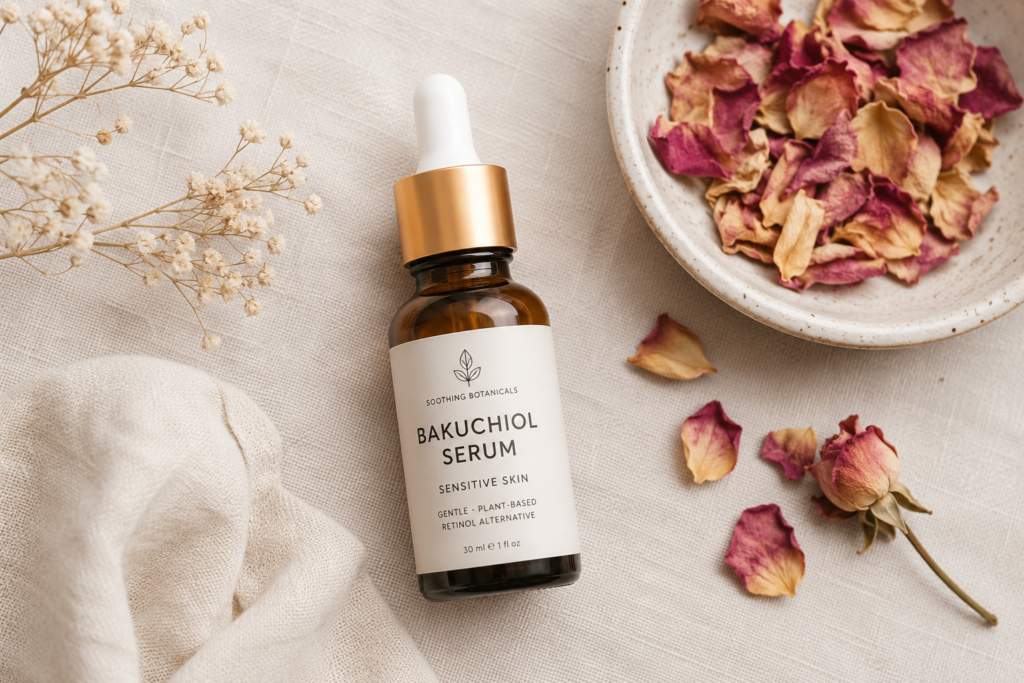
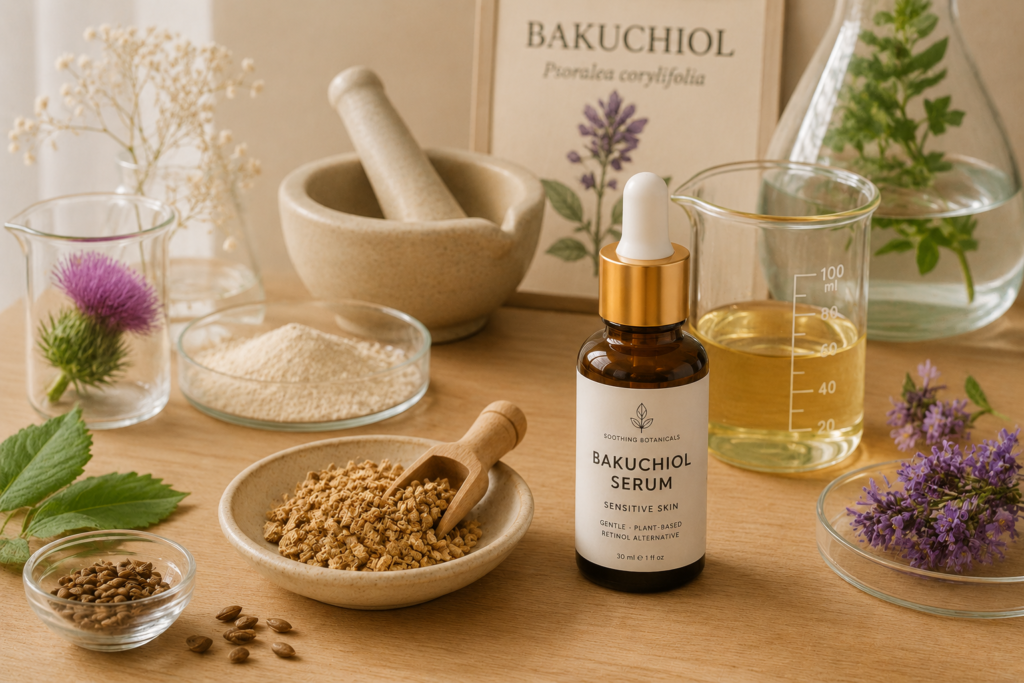
Bakuchiol (pronounced buh-KOO-chee-ol) is a compound extracted from the seeds and leaves of the Psoralea corylifolia plant, used in traditional Indian and Chinese medicine for centuries before Western skincare caught on. A bakuchiol serum is simply a leave-on treatment, usually water or oil-based, that delivers this compound to your skin in a stable, usable form.
The reason it gets called “natural retinol” is functional, not chemical. Bakuchiol triggers similar pathways in skin cells, encouraging collagen production and faster cell turnover, but without the structural resemblance to vitamin A that makes retinol so irritating for some people. The molecule is gentler in how it interacts with the skin barrier, which matters enormously if you’re someone who flushes easily or breaks out in tiny bumps the second a product feels too strong.
Most formulas land between 0.5% and 1% bakuchiol, which is the range backed by the available research. Higher isn’t automatically better here.
Why Bakuchiol Works for Sensitive Skin
The headline reason: it doesn’t cause the classic retinization period. With retinol, the first three to six weeks are often a circus of dryness, flaking, and stinging while your skin adjusts. Bakuchiol tends to skip that phase entirely.
A few specific bakuchiol benefits matter most for reactive skin types:
- It’s photostable, meaning you can use it morning or night without it breaking down in sunlight. Retinol is the opposite, which is why it’s a strictly-PM ingredient.
- It plays well with other actives like vitamin C, niacinamide, and AHAs. With retinol you have to play a careful game of “what can I layer this with.”
- It’s safe to use during pregnancy and breastfeeding, which is a category of “things retinol cannot say.”
- It tends not to thin the skin barrier the way retinol can in higher doses.
If your skin runs sensitive, dehydrated, or barrier-compromised, this is the active that lets you chase anti-aging benefits without the collateral damage. I think of it as the slow-and-steady option, which suits how I do most things anyway.
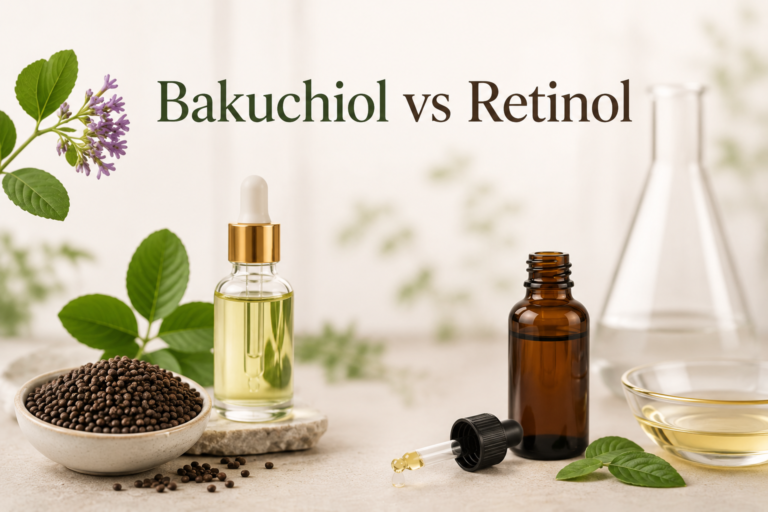
For a side-by-side breakdown of the two, the full comparison of bakuchiol versus retinol for sensitive skin covers the science in more detail.
The Research Behind Bakuchiol Serum
The often-cited 2019 study in the British Journal of Dermatology compared 0.5% bakuchiol to 0.5% retinol over twelve weeks. Both groups saw similar reductions in wrinkles and hyperpigmentation. The bakuchiol group reported significantly fewer side effects like scaling and stinging. That’s the study that put it on the skincare map.
Other research has shown it helps with fine lines and elasticity, post-inflammatory hyperpigmentation, mild acne markers thanks to some antibacterial activity, and overall skin tone and texture.
I want to be fair about this. Bakuchiol research is younger than retinol research. We have decades of data on retinoids and only a handful of solid studies on bakuchiol so far. The results look promising and consistent, but I’d describe the evidence as encouraging rather than conclusive. That’s still a lot more than most “natural” actives can claim.
How to Use a Bakuchiol Serum
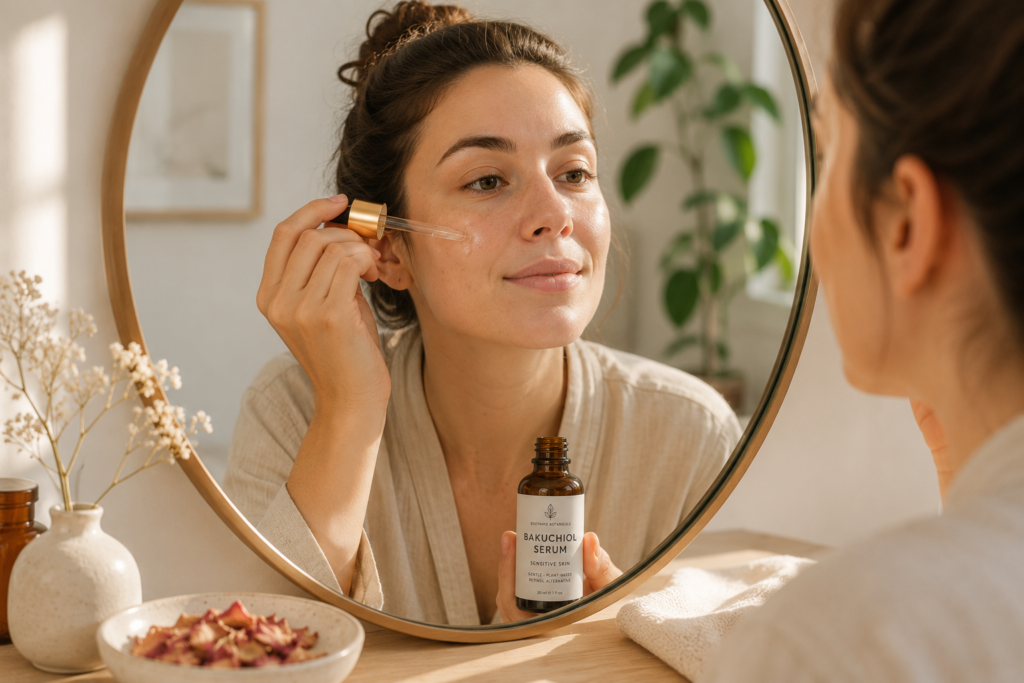
This part is refreshingly simple. After cleansing and toning (if you tone), apply two to three drops to slightly damp skin. Pat in, follow with a moisturizer to seal it.
A few practical pointers on how to use bakuchiol:
- Start with once a day for the first week. Even though it’s gentle, your skin still needs to meet the active.
- Move up to twice a day if your skin handles it well. Morning and night is the sweet spot for most people.
- Always apply broad-spectrum SPF in the morning. Bakuchiol won’t make you photosensitive, but anti-aging without sunscreen is pouring water into a leaky bucket.
- Give it twelve weeks before judging results. This is not a one-week ingredient.
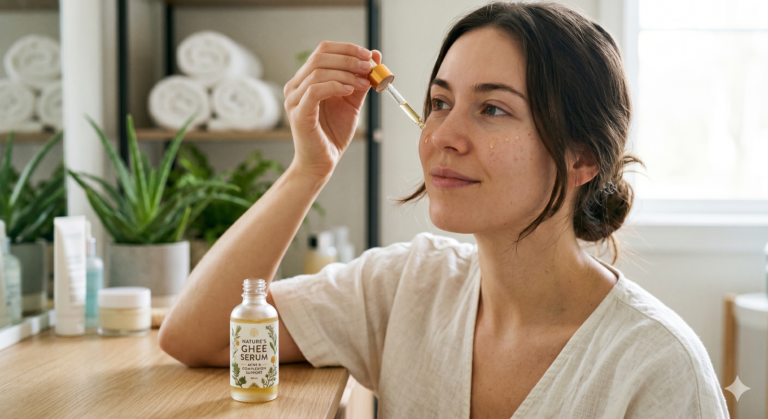
For the carrier, I personally prefer a bakuchiol serum with a richer base, the kind that feels nourishing rather than astringent. The Face Serum with Ghee & Rose from Shvéta Labs is one I keep coming back to, partly because the bio-activated ghee base doesn’t fight with reactive skin the way some alcohol-heavy formulas do. There are other lovely options out there, but for sensitive skin I lean toward formulas that prioritize barrier support alongside the actives.
What to Look For When Choosing a Bakuchiol Serum
Not every bakuchiol serum is created equal. A few things to scan the label for:
- Concentration between 0.5% and 1%. Higher claims without third-party testing are usually marketing.
- Stable packaging. Opaque or violet glass protects the compound from light. Clear bottles are a bad sign.
- Short ingredient list. For sensitive skin, fewer ingredients means fewer potential triggers. Be cautious of formulas stacking five other actives on top, since that’s where irritation creeps in.
- No essential oils high on the list. Peppermint, citrus, and lavender in high amounts are sneaky irritants even in otherwise gentle products.
You’ll also see bakuchiol oil sold as a single-ingredient option diluted in a carrier like squalane or jojoba. These work, but the concentration is harder to verify. A formulated serum gives you more control over what you’re actually getting.
Bybi bakuchiol is one of the more well-known affordable options on shelves right now, and there’s nothing wrong with starting at that price point. Higher-end formulas tend to layer in supporting actives like peptides or niacinamide, which is nice but not strictly necessary if you have a working routine already.
Bakuchiol Serum vs Bakuchiol Oil vs Bakuchiol Eye Cream
These three formats keep getting compared, so here’s the short version.
A bakuchiol serum is the most versatile format. Lightweight, usually water or oil-based, designed to layer well with the rest of a routine. This is what I’d start with.
A bakuchiol oil is essentially the same active in a heavier oil carrier. Great for very dry skin or as a final step in a layered routine, but it sits more on the surface and can feel occlusive if you’re acne-prone.
A bakuchiol eye cream is formulated specifically for the thinner, more delicate skin around the eyes. The concentration is usually lower, and the texture is richer. If your main concern is fine lines around the eyes, an eye-specific formula is worth it. Otherwise, a regular serum applied carefully to the eye area works fine for most people.
If you’re building a minimalist skincare routine for sensitive skin, one bakuchiol serum used morning and night is usually all the anti-aging firepower you need.
A Few Honest Cautions
Bakuchiol is gentle, not invisible. A few things to keep in mind:
- Some people are still sensitive to it. Rare, but it happens. Patch test on the inside of your forearm for two nights before going full-face.
- Don’t expect retinol-speed results. The clinical results show similar outcomes over twelve weeks, but the trajectory is slower and steadier.
- If you’re already on prescription retinoids, switching is a step down in potency. That can be the right move for some skin types, but be clear with yourself about what you’re trading.
My yoga teacher, who has the kind of clear skin that makes you suspect genetics rather than products, swears by an approach of “less but more consistent.” That tracks with how bakuchiol works. The people who see the biggest changes are the ones who actually use it every day for three months, not the ones chasing intensity.
The Bottom Line
For sensitive skin, a bakuchiol serum is one of the few anti-aging actives that delivers visible results without making your routine feel like a hostage situation. Start with a low-concentration formula, give it twelve weeks, and pair it with daily sunscreen. The slow path here is also the most sustainable one, and your skin barrier will thank you for it.